Share this:






One year after receiving a lung transplant at Mayo Clinic, Greg McKenzie has a simple appreciation for something many people rarely think about: breathing fresh air on his own.
The 59-year-old account manager who resides in West Palm Beach, Florida, has always led an active lifestyle, playing basketball, running, fishing and even learning to surf. But those activities started becoming more difficult due to shortness of breath, which he initially attributed to old age. Then, in January of 2025, he went to a local emergency department with chest pain, thinking he was having a heart attack.
Turned out his heart was fine. A doctor told him his lungs were the problem and diagnosed him with interstitial lung disease, inflammation and progressive scarring of lung tissue that makes it hard to breathe and get enough oxygen into the bloodstream.
From an active lifestyle to oxygen-dependent
His condition continued to decline, and he relied on supplemental oxygen, no longer able to play even a few minutes of basketball or carry things down the stairs at home. A lung biopsy resulted in both lungs collapsing. Greg was hospitalized and informed that he needed a lung transplant.
As he grew weaker, he couldn’t even walk without oxygen and eventually needed it around the clock. His doctor referred him to Mayo Clinic, where he was approved for transplantation.

During a Nov. 3, 2025, appointment at Mayo Clinic in Florida, Greg learned his condition had worsened enough that he needed to be hospitalized.
After a few 'dry runs,' as Greg calls them, when a donor lung became available but ended up not being viable, the right one arrived. He underwent transplant surgery on Nov. 9.
Dr. Maher Baz, a transplant pulmonologist, was part of his care team.
"When we first saw Greg, he was on oxygen and experienced breathlessness with any activity," he says. "Lung transplant recipients are generally more debilitated and definitely weaker than other solid organ transplant patients, as a majority of them are reliant on steroids, which cause muscle weakness, to treat their native lung diseases."
Facing challenges after transplant
Although the surgery went well, Greg did experience some health challenges, including an episode where he aspirated after choking on breakfast one day that led to intubation, a blood clot in his leg that traveled to his lung, and two incidents of organ rejection, which Dr. Baz says is about average in the first year. Greg must stay on antirejection medications for the rest of his life.
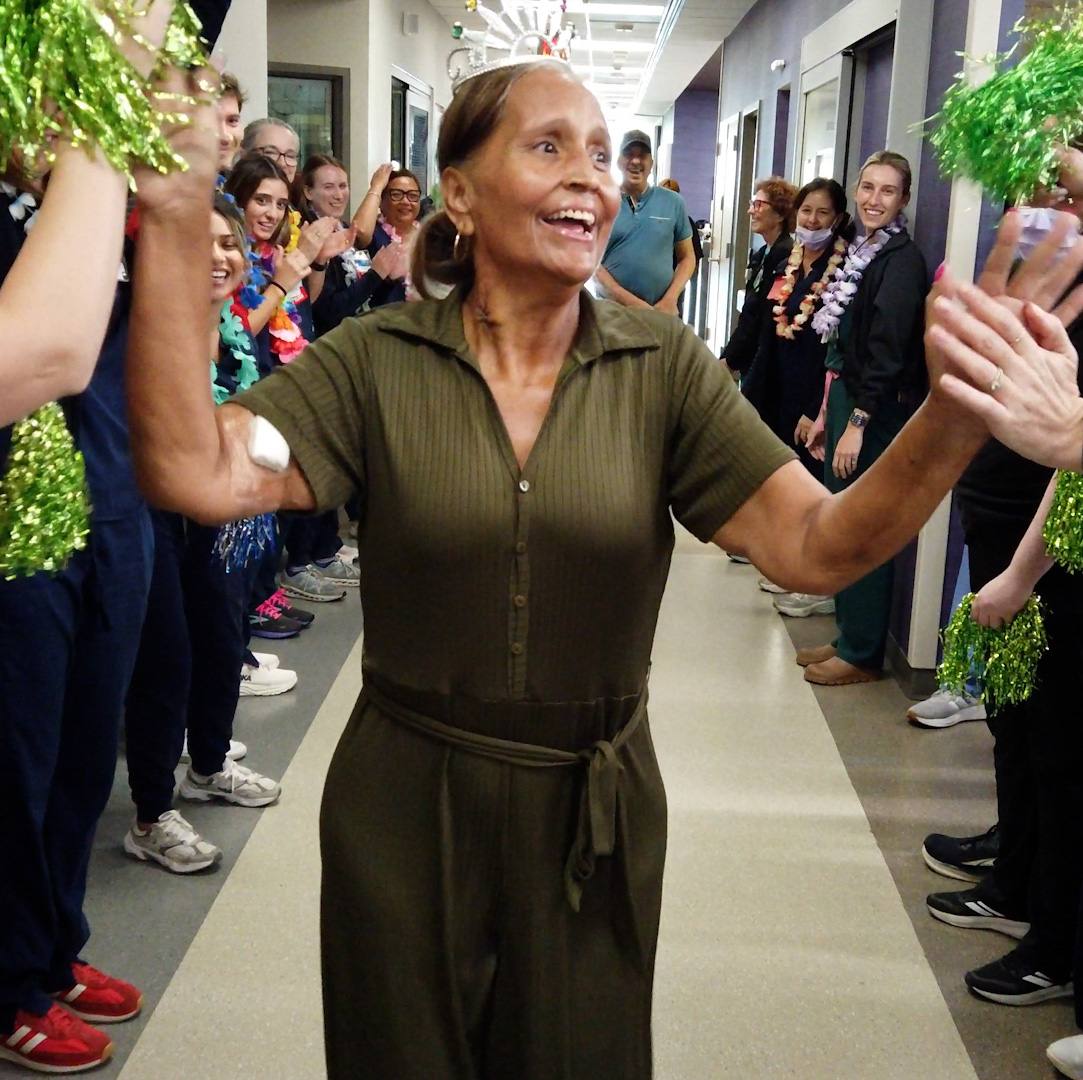
He overcame every obstacle that came his way, and through it all, he remained in good spirits. He continued rehabilitation while staying at the Gabriel House of Care, a housing unit for transplant recipients on the Mayo Clinic campus in Florida, with his mother, who was always by his side.
"Since his discharge, he has had a rather smooth and excellent outcome," Dr. Baz says. "Quality of life is important and does improve in the majority of patients, but increasing longevity is the main reason we proceed with transplant."
Today, Greg is completely off supplemental oxygen and working on rebuilding his strength. He isn't yet running or playing the sports he once enjoyed, but he's walking briskly for 30 minutes twice a day and continuing the exercises he learned during rehabilitation.
"I definitely think the transplant was a huge success," he says. "I don't know if I'd be here today if I didn't do it."
Gratitude for a second chance
For Greg, recovery isn't measured only in miles walked or daily life without an oxygen machine. It's measured in time.
His mother lives next door, and he says the time he now enjoys with her is invaluable. He can also spend more time with his son.
As Thanksgiving approaches, he finds himself giving thanks for his family, including his donor family and Mayo Clinic care team.
"All the people, the floor nurses, doctors, aides, rehabilitation staff and shuttle drivers, I appreciate all of them," he says. "They helped me through a roller coaster of emotions, and my entire experience feels like a dream."
Reflecting on his one-year post-transplant milestone, Greg says he no longer takes anything for granted, and he sums up what he's now regained in a few words: "Appreciation for life, a second chance."
Outcomes and patient resources
Mayo Clinic is one of the nation's leading medical facilities for the diagnosis and treatment of lung disease, and Mayo Clinic in Florida's Lung Transplant Program ranked No. 1 in the nation for one-year graft survival in the July 2026 Scientific Registry for Transplant Recipients report.
For more information about transplant support groups, visit the webpage or call the phone number at the designated Mayo Clinic locations:
Arizona: 800-344-6296
Florida: 904-956-3309
Minnesota: 866-227-1569
Transplant patients can also join an online support group through the Mayo Clinic Connect blog.