-
Featured News
Mayo Clinic remembers visionary cardiologist Dr. Robert L. Frye
Share this:





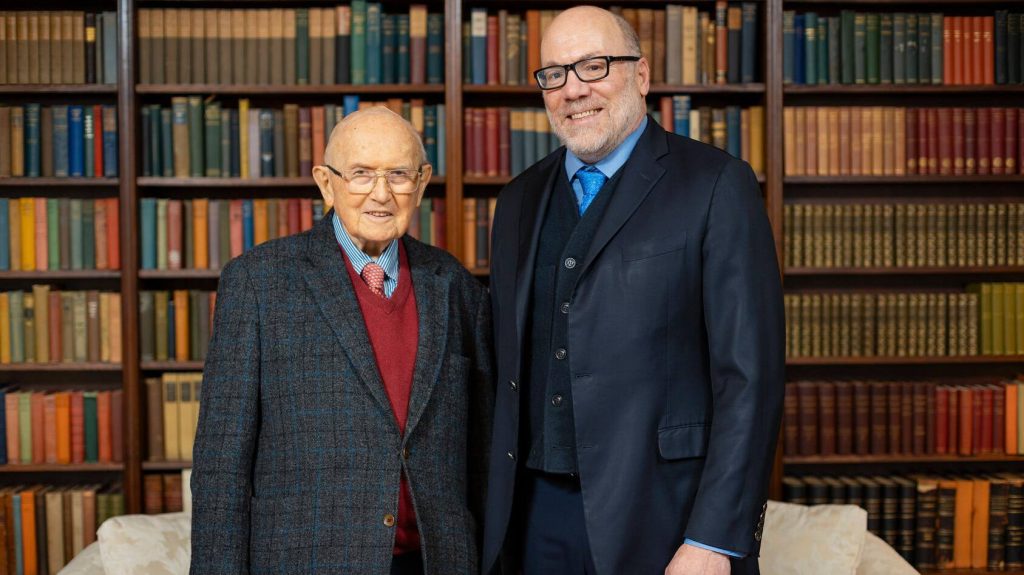
Dr. Frye’s pioneering work transformed cardiac catheterization from an experimental procedure into a cornerstone of routine cardiovascular care.
Robert L. Frye, M.D., professor emeritus of Cardiovascular Medicine, passed away on Aug. 4 at age 94. Dr. Frye helped shape cardiovascular medicine at Mayo Clinic and beyond through his pioneering work in coronary angiography, an X-ray procedure using contrast dye to show blood flow through the heart's blood vessels, as well as his visionary leadership and mentorship of generations of cardiologists.
After earning his medical degree from Vanderbilt University School of Medicine in Nashville, Tennessee, and completing training at the National Heart Institute and Johns Hopkins University in Baltimore, Dr. Frye joined Mayo Clinic in 1961 as a special appointee in Cardiology — a position meant to last just one year. Instead, it marked the beginning of an extraordinary career and enduring commitment to Mayo Clinic.
Dr. Frye went on to become one of Mayo Clinic's longest-serving staff members, retiring in 2025 after more than 60 years of service.
"Through decades of leadership, innovation, and commitment to our patients, Dr. Frye strengthened Mayo Clinic and advanced the practice of cardiovascular medicine for all of healthcare," says Gianrico Farrugia, M.D., president and CEO of Mayo Clinic. “His legacy will endure through the patients he served, the colleagues he inspired, including myself, and the generations of physicians who will continue his work."
Shaping the future of cardiovascular medicine
Dr. Frye was a key figure in building Mayo Clinic's modern cardiovascular program, integrating clinical care, research and education. During his tenure as co-director of the Cardiac Catheterization Laboratory (1965–1974), he helped transform the laboratory into one of the country's premier centers for invasive cardiovascular diagnosis and moved cardiac catheterization from the experimental arena to routine use in the hospital. He was co-editor of "The Mayo Clinic Cardiac Catheterization Laboratory: History, Research, and Innovations," published in 2021, which chronicles the development of one of the world's premier catheterization programs.
Dr. Frye held numerous leadership positions throughout his time at Mayo Clinic, having served as chair of what was then the Division of Cardiovascular Diseases (later to become the Department of Cardiovascular Medicine) from 1974 to 1984 and chair of the Department of Internal Medicine from 1987 to 1999. He also served as president of the staff of Mayo Clinic in 1983, a one-year elected position. He continued to shape the field of cardiovascular research and clinical care throughout that time, serving as a principal investigator of the NIH-sponsored Bypass Angioplasty Revascularization Investigation (BARI) in the 1990s and exploring the use of coronary angiography — at the time, a diagnostic procedure — as a cornerstone of evidence-based coronary artery disease management, particularly among patients with diabetes.
Dr. Frye received numerous honors throughout his distinguished career; among them, he was named the Rose M. and Morris Eisenberg Professor (1986-2006) and received the Distinguished Clinician Award (1995) at Mayo Clinic, as well as the American College of Cardiology Distinguished Fellowship Award (1995) and the American Heart Association Distinguished Achievement Award (2007).
His impact at Mayo Clinic is recognized by multiple named positions, including the Norman Blane and Billie Jean Harty Chair, Department of Cardiovascular Medicine, Honoring Robert L. Frye, M.D.; the William S. and Ann Atherton Professor of Cardiology Honoring Robert L. Frye, M.D.; the Thomas J. Watson Professor in Honor of Dr. Robert L. Frye; and the Department of Cardiovascular Medicine's Robert L. Frye, M.D., Visiting Lecturer. In addition, seven named scholarships and research funds were created in his honor.
A heart for service
Dr. Frye and his late wife of 70 years, Margaret Ellen, were loyal benefactors whose support helped advance Mayo Clinic’s mission for many decades. Most recently, the Frye family provided generous support to create the Robert L. & Margaret Ellen Frye Rose Garden at Mayo Clinic in Rochester. The garden will leave a lasting legacy of hope and healing as part of Mayo Clinic’s Bold. Forward. Unbound. reimaging of how healthcare building should be built to better support better healthcare outcomes.
In his leadership roles at Mayo Clinic as well as the American Heart Association, the American College of Cardiology and the Heart Rhythm Society, Dr. Frye mentored generations of cardiologists who continue to advance the field today. He also left a mark on countless patients. One patient shared this message with him in 2025: "I have been sick since I (was) 13. I am now 19, and it is thanks to your efforts, compassion and care that I received a diagnosis as well as solutions to my health issue. ... It means the world to me, truly. You have changed my life, and I am grateful for everything you've done."
"For so many at Mayo Clinic, Dr. Frye represented the very best of who we strive to be," says Paul Friedman, M.D., the Norman Blane and Billie Jean Harty Chair, Mayo Clinic Department of Cardiovascular Medicine Honoring Robert L. Frye, M.D. "He led with humility, kindness, purpose and an unwavering focus on the needs of patients. Those who worked with him will remember not only his brilliance and accomplishments but also the warmth, compassion and quiet steadiness he brought to every interaction. He inspired by example that reminded us that meaningful work is made even more powerful when it is carried out with humanity, generosity and a deep commitment to others."
In addition to his passion for roses and spending time with his large extended family, Dr. Frye enjoyed opera, skiing and supporting local football and swim teams. He also was a huge proponent of local farmers’ markets.