-
Biotherapeutics
Mayo Clinic collaborates on ARPA-H award to develop a bioprinted liver for acute liver failure
Share this:





Mayo Clinic is a collaborator on an Advanced Research Projects Agency for Health (ARPA-H) award for an innovative project accelerating the development of a bioprinted liver. The project is aimed at reducing shortages of transplanted livers and liver organ rejection in people with acute liver failure. The award that will be up to $28.5 million is in collaboration with Carnegie Mellon University, which will be leading this project team for the ARPA-H Personalized Regenerative Immunocompetent Nanotechnology Tissue (PRINT) program.
Patients needing organ transplants are challenged with long wait lists, organ shortages and a lifetime of expensive immunosuppressive drugs that can cause significant side effects. Some patients end up waiting years to receive an organ and often die in the process if a match isn't found. PRINT focuses on restoring normal tissue function, serving as a bridge to transplantation. The initiative combines expertise in bioprinting technology with a regenerative medicine approach to 3D print organs on demand, eliminating the need for immunosuppressive drugs.
Through the Liver Immunocompetent Volumetric Engineering (LIVE) project, Mayo Clinic will help develop the standardization of mass-producing, phase-appropriate, current Good Manufacturing Practice (cGMP-ready) cell manufacturing. It also will oversee quality assurance as well as manage the Food and Drug Administration interactions needed to bring LIVE technology into clinical practice.

"The goal is to provide enough support for a patient's own liver to regenerate, potentially reducing the need for organ transplantation. This work aims to lessen reliance on donor livers and help alleviate national wait-list pressures, aligning with Mayo Clinic's mission to address unmet patient needs," says Julie Allickson, Ph.D., chief technology officer of the Mayo Clinic Center for Regenerative Biotherapeutics (CRB) and the lead principal investigator for Mayo Clinic on this project.
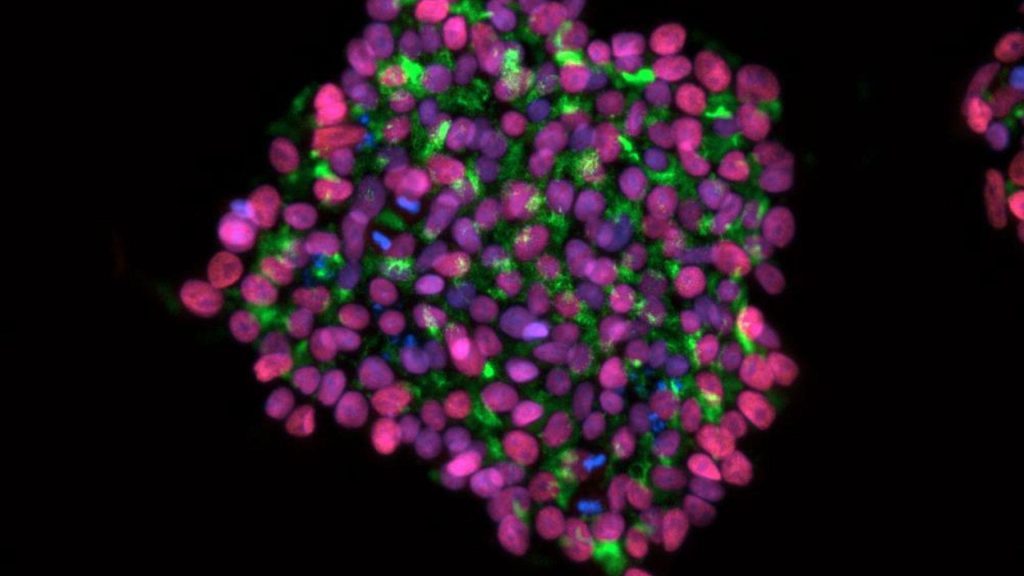
In Mayo's research project, CRB will make massive numbers of special liver cells (hepatocytes, hepatic stellate cells and endothelial cells), ensuring their quality and consistency through rigorous testing and storage rules. This involves creating and storing cell collections, such as induced Pluripotent Stem Cell (iPSC) lines. These cells are adult cells reprogrammed to act like versatile stem cells, capable of becoming almost any cell type and potentially avoiding immune rejection. Also included are hypoimmune cell lines, designed to be less likely rejected by the body after transplantation. Lastly, the project will scale up production of 50 billion cells for preclinical safety and efficacy studies, adhering to phase-appropriate cGMP regulations and strict quality standards for biomanufacturing in Mayo's state-of-the-art facilities.
Mayo Clinic teams have been working to transform transplantation by developing new preservation techniques to extend organ viability, refining methods to repair marginal organs and expanding donor access through advanced imaging, data science and bioengineering. These advances have an immediate impact on patients waiting for a lifesaving organ transplant and offer more opportunities for successful matches and better long-term outcomes. Collaborations, such as the one with Carnegie Mellon University, aim to bring hope to more patients. Both organizations have partnered for several years on this important work.
The goal of the LIVE project, which will be conducted across collaborating institutions including on Mayo Clinic's Rochester campus, is to develop the cGMP-compliant cellular component of a bioprinted liver, providing data that can be used to advance first-in-human clinical trials.
Mayo's team also includes Julie Heimbach, M.D., transplant surgeon and the director of the Transplant Center at Mayo Clinic in Rochester; Robert Huebert, M.D., transplant hepatologist and physician-scientist; Shennen Mao, M.D., transplant surgeon; C. Burcin Taner, M.D., transplant surgeon and chair of Department of Transplant at Mayo Clinic in Florida as well as Drew Witter, manager of regulatory and compliance; Thomas Morse, senior research regulatory analyst; and Cameron Jones, senior director of quality assurance; Cynthia Wilkins, Ph.D., senior director of process development; Tony Defusco, senior director of quality control; Snigda Rai, senior director of advanced biomanufacturing; and Suzanne Glass, grants manager, all with the Center for Regenerative Biotherapeutics.
This publication was supported by the Advanced Research Projects Agency for Health (ARPA-H) under Award Number D25AC00460-00, providing up to $28,520,065 to Carnegie Mellon University for a 60-month period. The content is solely the responsibility of the authors and does not necessarily represent the official views of the Advanced Research Projects Agency for Health.