-
Featured News
When caregivers become patients: A story of heart, healing and friendship
Share this:





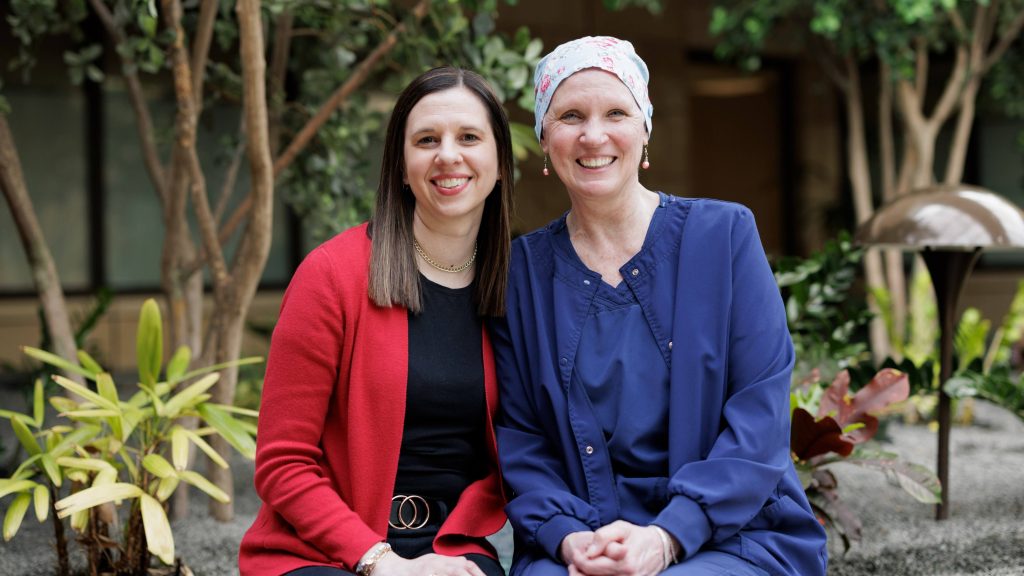
Jenny Gottfredsen and Shar Ballentine were accustomed to being on the other side of the hospital bed.
Both nurses at Mayo Clinic Health System in Eau Claire, Wisconsin, spent their days teaching, supporting colleagues and advocating for patients. Within days of one another, however, both began navigating serious diagnoses of their own — experiences that strengthened their friendship and deepened their understanding of vulnerability, resilience and patient-centered care.
Careers grounded in care
Jenny's interest in healthcare began early in life. After earning a degree in cardiopulmonary rehabilitation, she went on to complete nursing school and build a career in cardiology. For more than a decade, she cared for patients with heart disease before joining Mayo Clinic seven years ago. Today, she works in Nursing Professional Development while continuing to support cardiology teams.
Shar brings decades of experience in healthcare. After more than 20 years in academic medicine in Madison, Wisconsin, she relocated to the Eau Claire area in 2021 to be closer to family and begin a new chapter. As a seasoned nurse and team lead, she quickly became a mentor to colleagues — including Jenny, who leaned on Shar's experience as she transitioned into an educator role.
What began as a professional collaboration grew into a close friendship built on trust, humor and shared values.
A conversation and an unexpected turn
That trust mattered the day Shar asked Jenny to meet privately.
After a routine mammogram led to additional imaging and a biopsy, Shar learned she had breast cancer. Healthy and active with no family history of cancer, she struggled to reconcile the news. She chose to tell Jenny face-to-face. As Shar shared her diagnosis, she noticed Jenny glance at her smartwatch — checking her heart rate rather than a message.
Moments later, Jenny began experiencing chest pain and arm discomfort. She initially attributed it to anxiety and hesitated to seek care. Shar listened carefully. She asked questions, reflected Jenny's words back to her and stayed present — a familiar Mayo Clinic approach rooted in listening first.
That hesitation is something Dr. Fearghas O'Cochlain, a Mayo Clinic Health System interventional cardiologist involved in Jenny's care, says he sees far too often.
"Unfortunately, it happens more often than we'd like. Especially in younger, otherwise healthy people, the first thought is usually, 'It's a pulled muscle,' or 'It's something else.' Heart disease isn't top of mind. Most people haven't experienced what cardiac pain feels like before — it's internal, unfamiliar and hard to describe — so they explain it away," Dr. O'Cochlain says.
"We do see women, in particular, attributing symptoms to anxiety. Anxiety is real, but it typically doesn't come out of nowhere and feel completely different from anything you've experienced before," he adds. "New, persistent or escalating symptoms — especially chest tightness, arm pain or shortness of breath — shouldn't be ignored. We would much rather see someone in the emergency department and reassure them than ask later why they didn't come in sooner. Care begins with the call."
Shar allowed Jenny time to process while gently encouraging her to get checked. Eventually, Jenny agreed to go to the emergency department — as long as Shar went with her.
From educator to patient
Once evaluated, Jenny's electrocardiogram was abnormal and lab work showed elevated troponins, a protein released into the bloodstream when the heart muscle is damaged. Cardiology teams moved quickly, and she was taken to the cardiac catheterization laboratory (“cath lab”) — a place she knew well, now from a very different perspective.
She was diagnosed with spontaneous coronary artery dissection (SCAD), a rare cause of heart attack that more often affects younger, otherwise healthy women. Jenny required three stents, an intra-aortic balloon pump, intubation and several days in the coronary care unit.
The diagnosis was unexpected. Jenny was active, health-conscious and well-versed in cardiology — yet she suddenly found herself on the other side of a condition she had rarely encountered in nursing.
That surprise is common, Dr. O'Cochlain says, and underscores an important message about awareness — even for people who appear otherwise healthy.
"Everyone needs to be aware of the signs and pay attention to their own body — especially what feels different," he says. "You're healthy until you're not. Even young, active women are not immune. It's not productive to live in constant fear of a diagnosis, but it is important to know what's normal for you. When symptoms come out of the blue or feel irregular, they deserve to be evaluated."
Despite Jenny's background in cardiology, SCAD was new to her. The experience gave her a deeper understanding of what patients face when diagnoses are unexpected and frightening. For Shar, supporting Jenny during her hospitalization while beginning her own cancer treatment was challenging but also grounding.
Both women leaned on humor and honesty as they adjusted to being seen not as nurses and caregivers, but as patients.
Parallel paths, shared support
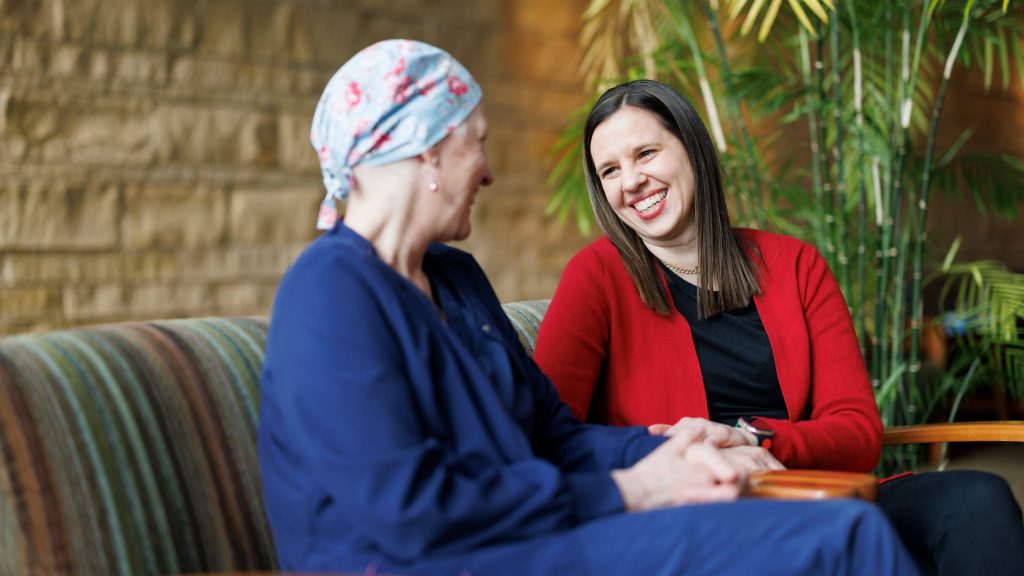
As Jenny began cardiac rehabilitation, Shar showed up, standing nearby during workouts, offering encouragement and conversation. When Shar began chemotherapy, Jenny checked in before and after each treatment, understanding the mental weight of waiting for labs, results and side effects.
Both were learning how to stay present in their own experiences while continuing to support one another. They made space for difficult days, talked openly and continued moving forward together. "This was chosen for us," Shar says. "So we choose how we're going to make it through."
Living Mayo Clinic values together
Throughout their care, Mayo Clinic's team-based approach was evident. Jenny benefited from close coordination between local cardiology teams and specialists at Mayo Clinic in Rochester, Minnesota.
That collaboration is intentional, Dr. O'Cochlain says, and especially important in complex cardiac events like SCAD.
"The Mayo Model of Care is what we strive for every day," he says. "We work as a group to care for the patient in front of us, and that means having world experts readily available to one another. It allows us to leverage the best knowledge at the best time in the best way for the patient.
"In Jenny's case, once we addressed the acute issues in the cath lab, we were able to integrate expertise from Rochester's specialized SCAD team in the Women's Heart Clinic to guide her outpatient follow-up. We can work seamlessly across locations, even when we aren't in the same place."
Shar's oncology care reflected careful attention to both treatment and quality of life.
Equally meaningful was how colleagues lived Mayo Clinic values in everyday moments — listening, advocating and showing up as people first.
Moving forward
Today, Jenny is feeling well and continuing follow-up care locally. She continues to share her story to raise awareness about SCAD and the importance of listening to symptoms, even when they don't seem to fit expectations.
Shar’s treatment continues, now transitioning to radiation and ongoing immune therapy, but so does her optimism and her friendship with Jenny. She encourages others to stay current on recommended screenings, especially mammograms.
Their relationship, shaped by mentorship and strengthened through shared experience, reflects the power of connection in healing.
They remain nurses and advocates, with a deeper understanding of what it means to be a patient and what it looks like when care begins with listening.