Share this:





Colorectal cancer is the second-leading cause of cancer-related deaths in the U.S. One in 5 patients is diagnosed with metastatic disease, meaning the colorectal cancer has spread beyond the colon, often to the liver.
When surgery isn't an option, a liver transplant may be a lifesaving alternative. Mayo Clinic leads in this approach, combining expertise in oncology and transplantation to offer new hope for patients with advanced colorectal cancer.
Dr. Kris Croome, a Mayo Clinic transplant surgeon, explains how expanding treatment options improves outcomes.
Journalists: Broadcast-quality video (1:05) is in the downloads at the end of this post. Please courtesy: "Mayo Clinic News Network." Read the script.
Learning that colorectal cancer has spread to the liver can be overwhelming. Because the liver is the most common site of spread, affecting about half of patients, a liver transplant may offer hope when other treatments aren't an option.
"Liver transplant for colorectal metastases is an important evolution in transplant oncology and turns a historically palliative disease into one where cure is possible," says Dr. Croome.
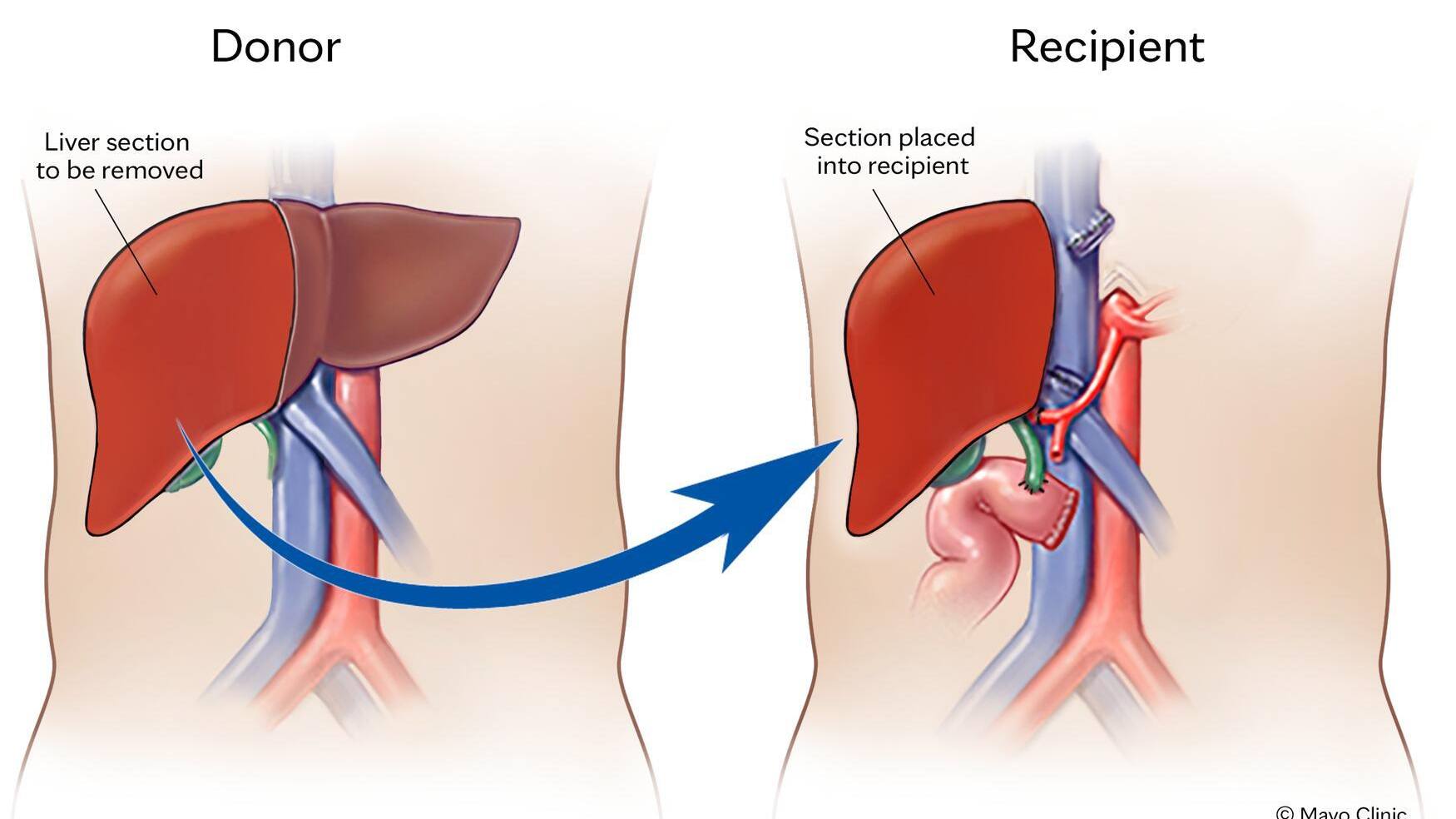
It's a complex process that requires experts from multiple teams working together before transplant.
"Usually, it's at least six months of chemotherapy, and we would like to see that the tumors are responding and that we're not seeing any spread of disease anywhere else," he says. "We really want the disease to be isolated to the liver as the primary tumor. So the tumor in the colon needs to be removed ahead of time."
Liver transplants can significantly improve survival in advanced colorectal cancer, with five-year survival rates exceeding 70%.
"It's the care that patients receive leading up to that and afterward as well, and we really take pride in that," says Dr. Croome.
Related posts:
- Mayo Clinic Minute: Advancing colorectal cancer care through innovation and screening
- When a healthy life meets an unexpected colon cancer diagnosis
- Mayo Clinic Minute: AI advances help care teams find hard-to-see colon polyps