Share this:





Colorectal cancer is increasingly affecting younger adults — a concerning trend. Dr. Eric Dozois, a Mayo Clinic colon and rectal surgeon, says about 10% of patients diagnosed in 2026 will be under age 50, compared with 3% to 4% just 25 years ago.
As the trend continues, Mayo Clinic surgical teams are using innovative, minimally invasive approaches to treat colon and rectal cancer — helping patients recover faster after surgery.
Dr. Dozois says screening helps detect and treat colorectal cancer early, and improvements in surgery are helping patients maintain quality of life.
Journalists: Broadcast-quality video (0:55) is in the downloads at the end of this post. Please courtesy: "Mayo Clinic News Network." Read the script.
"We are seeing a pattern of younger patients with colorectal cancer, and when I say younger, I mean patients under age 50," says Dr. Dozois.
Colon cancer is often treated with surgery.
"When we see patients with a new colon cancer, we're often recommending surgery, which is to remove a segment of the colon," he says.
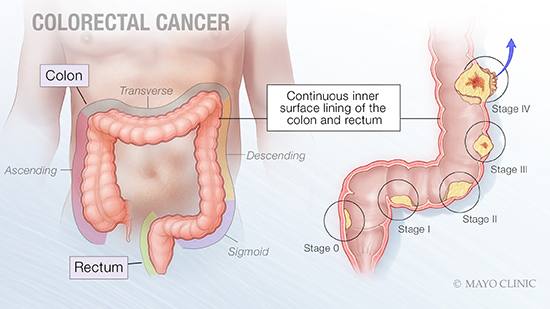
Rectal cancer may require a combination of therapies.
"It may get treatment with chemotherapy, radiation and surgery. It might be all three, and that's what we call a multimodality approach," Dr. Dozois says.
Minimally invasive surgery, including laparoscopic and robotic approaches, uses small incisions, cameras and specialized instruments/
"Patients can recover more quickly, they have less complications, and they can get back to their activities and work in a much quicker fashion than they used to in the past," he says.
Importance of colorectal cancer screening
"Screening is critical. Why? Because it saves lives."
Related post:
- Mayo Clinic Minute: AI advances help care teams find hard-to-see colon polyps
- Mayo Clinic Q and A: So you’re having a colonoscopy: What to expect
- Mayo Clinic Minute: Warning signs of colorectal cancer in younger adults