-
Orthopedics/Sports
Mayo Clinic Q&A: Addressing ACL injuries in women
Share this:





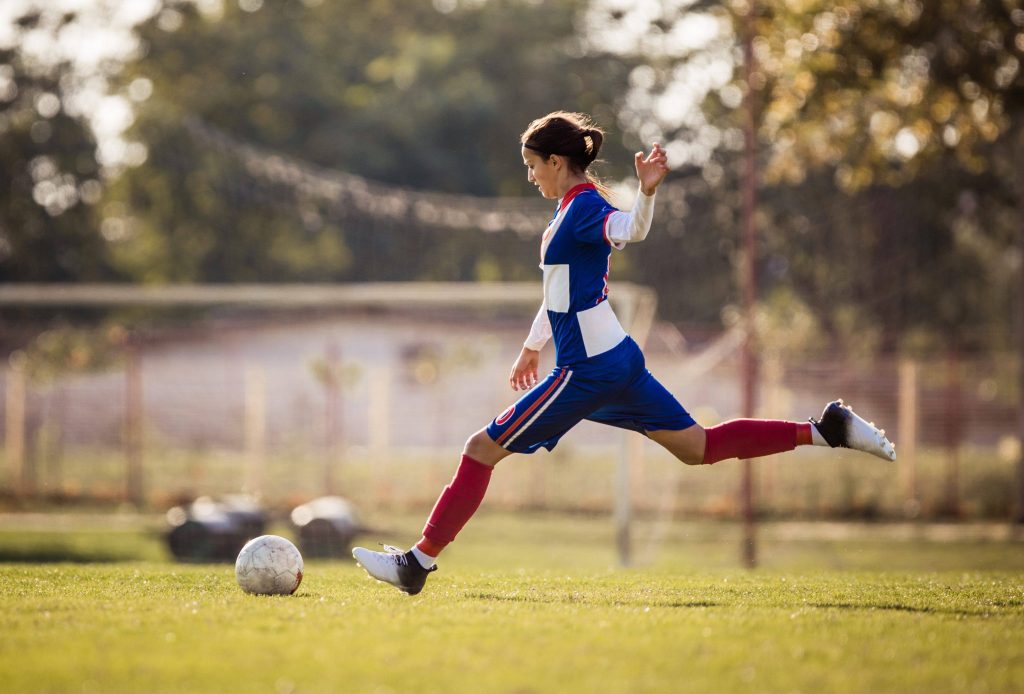
DEAR MAYO CLINIC: My daughter is on her high school soccer team and has seen teammates sidelined with ACL injuries. What can she do to prevent this from happening to her?
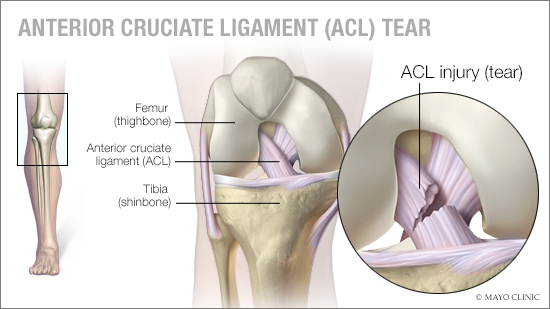
ANSWER: No one wants to hear the distinctive pop of an ACL tearing or rupturing, which typically means the player's season is at an end. The ACL, or anterior cruciate ligament, is located inside the knee and provides stability during movements such as cutting, turning, twisting and jumping.
Risks of ALC injuries
Women and girls are up to 8 times more likely to experience ACL injuries than men. While the causes are still being studied, several factors may contribute to the increased risk:
- More girls and women are participating in competitive sports.
- Women's wider pelvises create a greater angle from the hip to the knee, which changes how force travels through the knee.
- The ACL in women is thinner than in men.
- The strength of women's quadriceps — the muscles in the front of the thigh — is greater than the strength of their hamstrings — the muscles in the back of the thigh. The opposite is true in men. When women land from a jump, their quads can overpower their hamstrings, reducing the stability of their knees.
- Recent research is exploring the effect of hormones on the ACL during the menstrual cycle. One hormone, relaxin, does just that — relaxes women's ligaments before giving birth. It's also at higher levels in their bodies leading up to their period, which may relax the ACL and make it more prone to injury.
Prevention
Awareness of the factors behind increases in injuries can lead to improved training for women that addresses proper technique, muscle strength, balance and biomechanics. One resource for helping prevent ACL injuries is the FIFA 11+ Warm-up Program. It was developed by an international group of experts and is available online for free.
Divided into three segments, each segment has its own set of exercises with progression levels to add difficulty and variation. The exercises pay special attention to knee strength and position. Although this 20-minute warmup was developed for soccer players, it can be translated to any sport, from basketball to pickleball.
Whether you follow this program or something similar, players should commit to strength, balance and knee-position work for at least 10 minutes, three or more times a week. There's a push to incorporate this kind of training into youth, high school and college programs.
No one is completely protected from ACL injuries, which range from sprains to partial tears to ruptures. With a partial tear, segments of the ligament remain connected. A rupture rips the ligament in two.
Treatment
If you experience an injury, you may seek treatment first from a sports medicine or orthopedics clinician. They'll ask questions about how the injury happened and if contact was involved. About 70% of injuries are noncontact and may have been caused while pivoting or landing from a jump. Typically, patients undergo an MRI to clarify the extent of the injury.
If it's a sprain, treatment may involve wearing a knee brace while the ligament heals, which can take weeks to months. Intensive physical therapy to strengthen the knee and alleviate biomechanical imbalances is a mainstay of treatment. Once the ACL heals, the athlete may return to their sport.
If the ACL is torn, the severity of the tear will determine if surgery is needed. A rupture requires surgery to reconstruct the ACL using a graft from the patient's patellar, quadriceps or hamstring tendon. No matter the type of graft, athletes can expect at least nine months of recovery and rehabilitation before returning to play.
For any ACL injury, part of recovery is regaining confidence in the injured knee. Physical therapy can help restore and reinforce confidence.
Recovery
While the recovery period may be up to a year or more, return-to-play rates are excellent — around 80%. However, once athletes return to play, there's a risk of reinjury, especially for those in their teens and early 20s. About 1 in 4 athletes will experience a second ACL injury.
Studies show that reinjury to the reconstructed knee is similar for men and women. However, some studies report women have a greater risk of ACL injury in the opposite knee. So prevention through strength and biomechanics training is key.
Before an injury happens, youth and student athletes should consider a biomechanical assessment by their team's athletic trainer, a sports medicine specialist or a physical therapist.
While this approach will lessen injuries, it won't completely prevent them.
Deanna Brinks, M.D., Physical Medicine and Rehabilitation, Sports Medicine, Mayo Clinic Health System, Mankato, Minnesota
Related Articles