-
Transplant
Mayo Clinic Q&A: What is life like after an organ transplant or donation?
Share this:






DEAR MAYO CLINIC: A close friend of mine recently received an organ transplant, and another acquaintance is considering becoming a living donor. What is life really like after an organ transplant or donation?
ANSWER: Organ transplantation is often described as a second chance at life, and for many people, that description is accurate. The purpose of a transplant is to restore health for people with end-stage organ failure so they can return to a near-normal life.
Whether someone receives an organ or chooses to donate one, the experience doesn't end when surgery is over. Recovery, adjustment and follow-up care all become part of life afterward.
In the first few weeks after a transplant, patients are recovering from major surgery and healing from the incision. As they recover, they gradually become more active. Some patients say they notice improvements soon after surgery and begin to feel better early in recovery. Even so, the body still needs time to heal; many patients say they begin to feel fully back to normal within about six to eight weeks.
Before a transplant, people with organ failure often live with significant limitations that affect their energy, activity and daily routines. After recovery, many are able to return to work, travel, family life and other activities they previously had to give up.
After organ transplant
A transplant also comes with long-term medical responsibilities. One of the most important is taking anti-rejection medications, which help prevent the immune system from attacking the new organ.
Most transplant recipients take these medications every day, often twice daily. As with any medication, side effects are possible. However, many people tolerate these medications well and eventually incorporate them into their daily routines.
After a transplant, patients have several follow-up visits. As they stabilize, those visits become less frequent. Routine lab tests every few months help the care team watch for signs of rejection.
How long a transplanted organ lasts depends on the type of organ and how closely a patient follows the treatment plan. The liver, for example, has a remarkable ability to regenerate. Some people are still living with the same transplanted liver more than 40 years after surgery.
Kidneys don't regenerate the same way the liver does. On average, a kidney transplant from a living donor can last a little more than 20 years, although many last much longer. Taking medications as prescribed and keeping regular follow-up appointments help transplanted organs function well over time.
Beyond physical recovery, receiving an organ transplant can also bring emotional changes.
Many recipients express deep gratitude toward the donor who made their transplant possible. Some become more involved in raising awareness about organ donation and helping others understand the need for donors. For many recipients, being part of that community is meaningful.
At times, transplant recipients may struggle with complicated feelings, such as guilt or a sense of indebtedness to the donor. Healthcare teams often help patients understand that the donor's decision to give an organ is separate from the recipient's situation. Organ donation is ultimately a personal decision made by the donor or donor family.
Becoming a living donor
For people considering becoming living donors, recovery also varies depending on the type of donation. Kidney donation is the most common form of living organ donation and is often performed using minimally invasive techniques. Many donors stay in the hospital for one night and are encouraged to begin walking the same day as surgery.
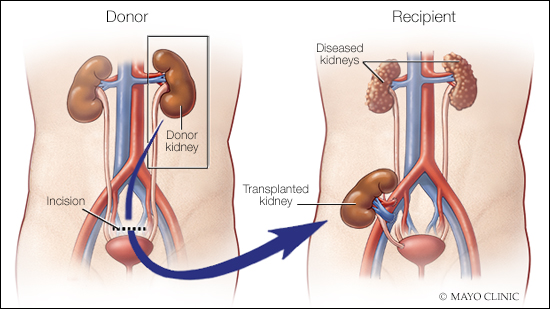
While any surgery carries risks, studies suggest that most living donors go on to live healthy lives after they heal from the operation.
Ultimately, organ transplantation is possible because of the generosity of donors willing to help someone else in need. For people living with end-stage organ failure, a transplant can restore health and independence in ways they may not have imagined possible. For donors, the decision to give an organ offers the chance to save another person's life.
Timucin Taner, M.D., Ph.D., Transplant Surgery, Mayo Clinic, Rochester, Minnesota
Related Articles