Share this:





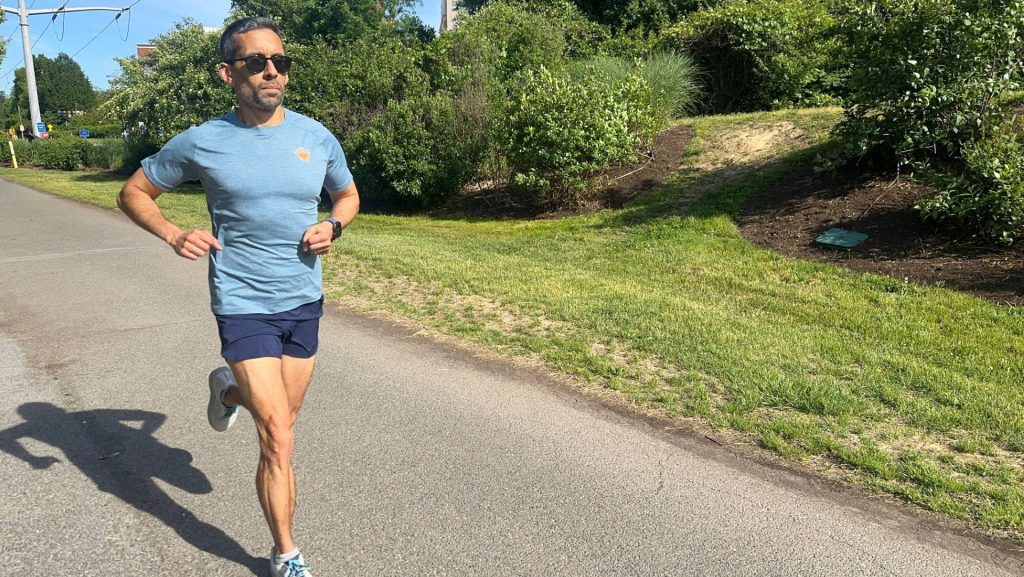
After years of testing performed at multiple hospitals that could not explain his intense, and sometimes painful, symptoms, long-distance runner Mike Singh found answers through an athlete-specific approach at Mayo Clinic, helping him adapt his routine and continue running.
A marathon moment that raised questions
In November 2018, long-distance runner Mike Singh was competing in a marathon when he suddenly felt that something was not quite right.
"I was on mile 22 or 23,” Mike remembers. "All of a sudden, I felt sort of out of breath, lightheaded. I thought I was having a heart attack."
However, as a confident athlete who had completed many races, Mike kept going and finished the race without further incident.
It would not be a one-time experience, though. The symptoms would often return during Mike's runs, usually when he pushed himself at longer distances.
More than just exercise
Running is, and has long been, a central part of Mike's routine.
"It's not just exercise for me," he says. "Running is a huge part of my life and identity. The thought of losing that was a lot to process."
Mike runs daily and trains for races throughout the year. So when something did not feel right during that 2018 marathon, it stood out significantly to him.
Years of tests, no answers
Early on, Mike sought care at multiple hospitals and medical centers, undergoing extensive testing.
Despite numerous evaluations, the results always came back the same — no explanations, no real answers. Still, the symptoms continued during Mike's long runs, and so did the uncertainty.
"I passed all those clinical tests with flying colors," Mike says. "But all that did was leave me with questions, unanswered questions."
Up to that point (nearly four years into Mike's medical odyssey), no one had been able to re‑create the symptoms he experienced while running.
Mike decided to visit the Mayo Clinic Sports Cardiology Clinic in Rochester, Minnesota, hoping a different approach could finally explain what others could not.
Re-creating the run
At Mayo Clinic, the Sports Cardiology team met Mike and focused on understanding when and how his symptoms occurred. As Mike described the clinical signs, the team immediately identified one key detail: Mike's symptoms typically began several miles into his long-distance runs.
Instead of relying on standard tests, the team focused on re-creating the exact conditions that triggered his specific symptoms.
"If symptoms are not reproduced on a stress test, you can't definitively say the test is negative," explains Nadia Elfessi, a physician assistant on Mike's care team in Sports Cardiology.
"My care team said, 'Let's just do whatever is necessary to re-create those symptoms,'" Mike says.
To do that, Mike ran long enough to trigger the exact symptoms he experienced during long-distance races. Then, while those symptoms were still occurring, the Mayo Clinic team moved immediately into testing.
Because Mike's symptoms had eluded diagnosis for years, the team also developed a customized testing protocol to evaluate whether abnormal vagus nerve activity was contributing to the problem. Drawing on Mayo Clinic's expertise in cardioneural ablation, specialists temporarily blocked vagal activity with medication and had Mike exercise again under carefully monitored conditions.
For the first time, the team was able to observe changes in Mike's heart rhythm as they happened. While the testing ruled out vagus nerve overactivity as the cause of Mike's symptoms, it revealed an underlying problem with his heart's electrical conduction system, helping the team arrive at a diagnosis and management plan tailored specifically to him.
Finding the cause
Now, Mike had an answer.
"They adapted the protocols to fit my situation," Mike says.
Dr. Guru Kowlgi, a cardiac electrophysiologist at Mayo Clinic, says the team's approach focused on recreating the exact conditions that triggered Mike's symptoms — something that had not happened during years of previous testing.
Once the symptoms were reproduced, the team identified a disruption in the electrical communication between the heart's upper and lower chambers that occurred only during intense exertion. The findings led to a diagnosis of exercise-induced chronotropic incompetence, a rare condition in which the heart cannot appropriately increase its rate during physical activity.
"It took a level of creativity and time that went beyond a standard evaluation," Dr. Kowlgi says.
Why it was difficult to detect
Exertion made the difference.
"High-level athletes, like Mike, may only experience symptoms when they're pushing themselves at nine-tenths or even ten-tenths of maximal performance," says Dr. Darrell Newman, a cardiologist and director of Mayo's Sports Cardiology Clinic.
Choosing a path forward
With a diagnosis in hand, Mike's medical odyssey was over. He now had options. He now had hope that he could possibly pursue his love of running throughout the rest of his life.
One option was a pacemaker to help regulate Mike's heart rhythm, but it was unclear whether it would improve his symptoms enough to return him to his desired level of performance. Rather than pursue a pacemaker, Mike chose a personalized management plan focused on adjusting his training and monitoring his symptoms during exercise. As part of that approach, he uses wearable technology to track his heart rhythm and capture electrocardiogram (ECG or EKG) recordings that he can share with his Mayo Clinic care team.

Still running — with a different approach
Today, Mike still runs regularly, but his approach has changed.
"It's a little bit of an inversion," he says. "Instead of my heart adjusting to my level of effort, I have to do the opposite and adjust my level of effort to my heart rate."
"I can take that ECG, send it to the Mayo team and get pretty quick feedback," he says.
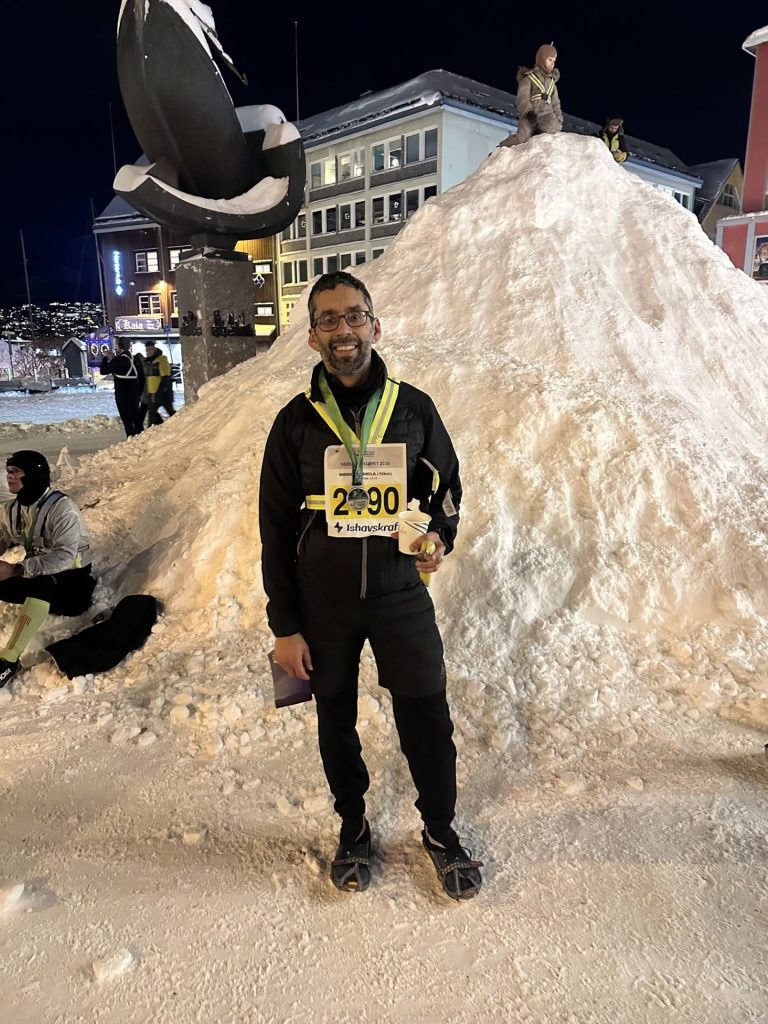
Today, Mike continues to run (and compete), adjusting his effort but not giving up.
"I'm still able to do it," Mike says. "Working with the experts at Mayo Clinic, I am able to continue living my lifestyle. I just enjoy running so much. It is a huge part of my life, and the Mayo care team was able to give that back to me."
A new understanding
For Mike, having answers made the difference.
"It wasn't a simple answer, and not having any answers after so many years of searching can be defeating and also disheartening," Mike says. "But having this team of experts at Mayo just take time with me, work with me and find the information changed everything. In a manner of speaking, they saved my life, and they've allowed me to continue living that life."
Today, Mike continues to run (a lot), adjusting his effort but not giving up the part of his life that matters so much to him.