Share this:





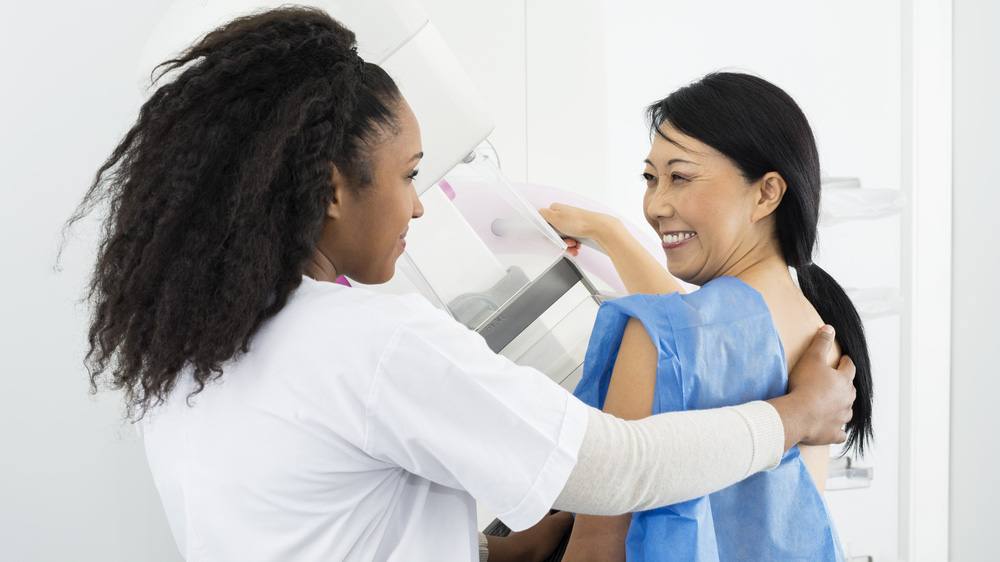
DEAR MAYO CLINIC: I've always heard that women should begin getting mammograms at a certain age, but now I'm hearing that breast cancer screening can be based on a person's individual risk. How do healthcare professionals determine when and how someone should be screened? And are there newer screening options available for people at higher risk?
ANSWER: Breast cancer screening isn't necessarily one-size-fits-all. While there are general recommendations for when women should begin screening, healthcare professionals also evaluate each patient in context. For women at average risk, screening mammograms generally begin around age 40 and may be recommended every year or every other year. But age is only one part of the picture. Your personal and family history, breast density, and other risk factors can help your healthcare team develop a screening plan based on your individual risk.
Family history is an important part of that assessment. During a routine health visit, your healthcare team may ask whether a mother, sister, aunt or grandparent has had breast cancer. Having a first-degree relative, such as a mother or sister, with breast cancer may lead to a recommendation to meet with a genetic counselor. A genetic counselor reviews your family history, creates a family tree and completes a risk assessment. Based on that information, genetic testing may be offered. Talk openly with family members about their health history. If a relative has had breast cancer, find out when they were diagnosed, the type of breast cancer they had and the treatments they received. This information can be helpful to your healthcare team.
A person's breast cancer risk depends on more than genetics alone. Inherited genetic factors account for only about 5% to 10% of breast cancers. Other factors healthcare professionals may consider include:
- Age.
- Age when menstrual periods began.
- Age at menopause.
- Whether you've had children.
- Whether you've breastfed.
- Alcohol use.
- Smoking.
- Obesity.
Together, these factors can give your healthcare team a more complete picture of your breast cancer risk.
A person's breast density also can help guide screening decisions. Breast density is grouped into four categories:
- Category A: Mostly fatty tissue.
- Category B: A mixture of fibroglandular and fatty tissue.
- Category C: Moderately dense tissue.
- Category D: Extremely dense tissue.
Dense breast tissue is important for two reasons. First, the denser the breast tissue, the more difficult it can be to see through the tissue on a mammogram. Second, glandular and fibrous connective tissue can be more susceptible to breast cancer. Younger women and women with thinner builds may tend to have denser breast tissue, although breast density varies from person to person.
Having dense breasts doesn't necessarily mean you need additional imaging. Your healthcare team will consider breast density along with your other risk factors. For some people, particularly those at higher risk, supplemental screening may include breast MRI, molecular breast imaging or contrast-enhanced mammography.
Advances in imaging also are improving how breast tissue can be evaluated. Three-dimensional mammography, also called digital tomosynthesis, adds a third dimension to traditional two-dimensional mammography. This allows breast radiologists to examine breast tissue in greater detail and look for findings such as calcifications or areas that may be difficult to see. Artificial intelligence also is increasingly being used in modeling and detection to identify tissue patterns that may help healthcare professionals evaluate changes in breast tissue.
Better imaging also may help healthcare teams avoid unnecessary procedures. In the past, a questionable area seen on a two-dimensional mammogram might have led to a fine-needle aspiration, biopsy or lumpectomy to determine whether cancer was present. With improvements in imaging and detection, healthcare professionals may sometimes be able to monitor an area with follow-up imaging, such as another scan in six months, to determine whether it remains stable rather than immediately performing a procedure.
Most importantly, remember that your screening plan may look different from someone else's. A friend with dense breasts may be advised to have additional imaging, for example, but that doesn't necessarily mean you need the same screening. Your healthcare team can consider your age, family history, breast density and other risk factors together to determine which screening approach is appropriate for you.
Graham King, M.D., Menopause and Breast Specialist, Family Medicine, Mayo Clinic Health System, Mankato, Minnesota