Share this:





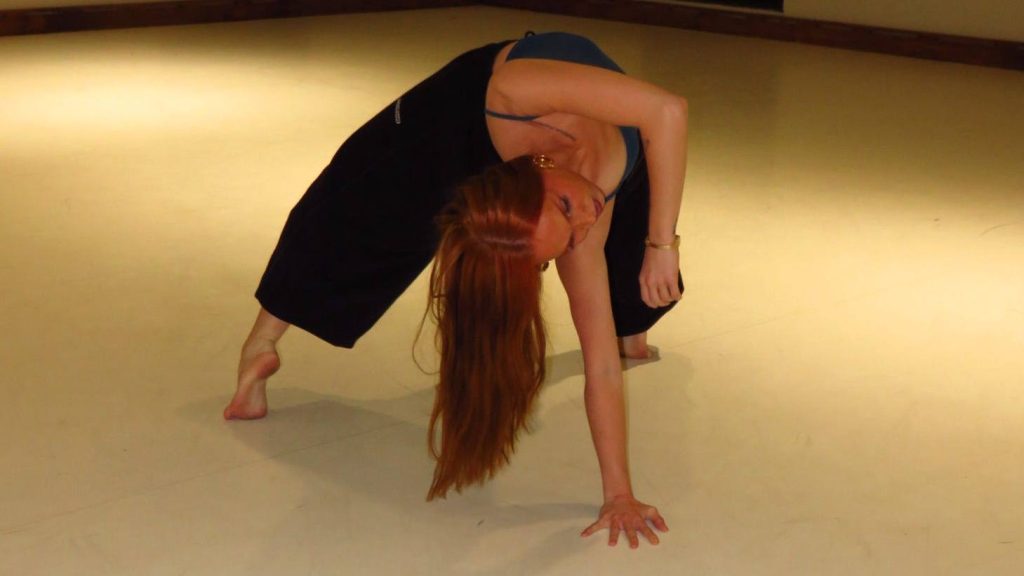
Dancing is more than just a hobby or passion for 22-year-old Reagan McDaniel. It's her life's calling. When she entered the Bachelor of Fine Arts program at Jacksonville University in Florida as a dance major, Reagan felt like she was on her way to the life she had dreamed about.
But after finishing a challenging dance routine during the fall recital of her freshman year, Reagan felt a sharp ache in her left hip. She stretched, and it felt better the next day. However, when the pain kept returning sharper and lasting longer, Reagan got the nagging sensation that something was wrong.
"I continued to dance on it for months," says Reagan. "I know a lot of dancers have chronic pain. I thought this hip pain might just be something I would have to learn to live with."
After five months of progressive pain, Reagan finally mentioned it to her mother, who works in the medical field. Her mom, who previously underwent surgery for a hip labral tear, recognized the signs and made an appointment for Reagan with a sports medicine and orthopedic specialist at Mayo Clinic in Florida, where she works.
Crushing news
Reagan met with Dr. Luke Spencer Gardner, an orthopedic surgeon specializing in hip surgery. As Reagan's mom suspected, an MRI revealed a torn hip labrum, the cartilage lining the hip joint socket.

Dr. Spencer Gardner explained that Reagan had femoroacetabular impingement (FAI). FAI occurs when the ball-and-socket of the hip joint don't fit together properly, and the hip bones rub together. In Reagan's case, a bony protrusion on the ball caused the misalignment. It's not uncommon for extra bone to develop during natural growth and development, but when it pinches the labrum, it can lead to tearing. Repetitive or twisting motions, like those used in dancing, are also a contributing factor and can make tearing more likely.
"I remember getting the news that I had been dreading," says Reagan. "I was so upset. But my mom assured me that Dr. Spencer Gardner would take good care of me, and sure enough, he did."
Hip preservation surgery times 2
Reagan tried physical therapy to reduce the pain, but between her dance schedule and the severity of her tear, she was not making good progress. Dr. Spencer Gardner suggested hip preservation surgery to fix Reagan's structural hip injuries and eliminate her pain so she could get back to dancing. Hip preservation also has added long-term benefits by helping prevent early onset osteoarthritis and delaying the need for hip replacement.
In November of her sophomore year, Reagan underwent a hip arthroscopy and labral repair. Dr. Spencer Gardner fixed the tear and shaved down the bone spur, operating through small incisions using a tiny camera called an arthroscope and specialized instruments.
The minimally invasive surgery was an outpatient procedure, and Reagan went home the same day with no complications. The expected recovery time for the procedure is typically six months.
But less than two months later, Reagan once again experienced the nagging feeling that something was wrong. This time, the pain was in her right hip.
"I had just started my spring semester and was still using a crutch to recover from the first surgery, when I felt the same kind of pain," says Reagan. "I told myself that my hip was just sore from overcompensating during my recovery, but soon I was back in front of Dr. Spencer Gardner and getting another MRI."
Imaging showed a similar labral tear and smaller FAI in her right hip. At the end of January, less than eight weeks after her first surgery, Dr. Spencer Gardner performed a second hip preservation surgery (arthroscopy and labral repair) on Reagan's other hip.
"I remember being in that hospital the second time and wondering whether I was ever going to dance the same way I had before," says Reagan. "Then I locked in and made the decision that I wanted to be back dancing by six months from my first surgery."
The road back to dancing
Physical therapy was critical to Reagan's recovery. The physical therapists at Mayo Clinic guided and supported Reagan as she pushed to regain her strength and restore flexibility. Four months after the second surgery, Reagan started easing back into dance.
"I was worried I might get injured again, but I know my body well enough to know when to start," says Reagan. "I began with marking, a dance term for performing movements on a much smaller scale to mentally rehearse and then working yourself up to bigger and bigger movements."

Reagan spent time learning choreography and teaching at several local studios. She worked hard to make up for all the dance training she missed. Somewhere along the way, she found herself drawn to hip-hop.
"While I was not fully back by the six-month mark, I was doing hip-hop at that point," says Reagan. "Hip-hop doesn't require as much leg lifting and floorwork as other dance styles, so it was easy to start with it. But I realized how much I loved it."
Dancing toward a bright future
Reagan is forever thankful to her entire team at Mayo Clinic. The nurses helped calm Reagan when she was nervous about anesthesia. The physical therapists pushed her and supported her quick recovery. Dr. Spencer Gardner gave Reagan back the gift of dancing.
After college graduation, Reagan has plans to move to Los Angeles, where she will be pursuing a career in professional dancing.
"I'm finally back to where I was before my surgeries," says Reagan. "I may not be as flexible as I used to be, but I have the same strength and movement quality I had before. And my passion for dancing is stronger than ever."
Related post:
Related Articles