-
Research
Inside new efforts at Mayo Clinic to decode and repair the brain using data (VIDEO)
Share this:





At Mayo Clinic, neuroscientists are seeking to understand — and ultimately restore — brain function through advanced computational tools, neuromodulation technologies and multidisciplinary collaboration.
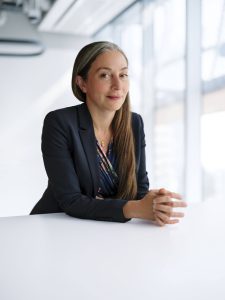
These new efforts are led by Gelareh Zadeh, M.D., Ph.D., a neurosurgeon and scientist. Dr. Zadeh specializes in neuro-oncology and has clinical expertise in treating brain tumors such as gliomas and meningiomas. Her research focuses on the molecular and genomic landscape of these tumors to advance precision medicine and improve targeted therapies.
Dr. Zadeh is the David C. and Flora C. Pratt Distinguished Chief Medical Officer for Mayo Clinic Platform, Department of Neurologic Surgery chair at Mayo Clinic in Rochester and the William J. and Charles H. Mayo Professor I of neurosurgery at Mayo Clinic College of Medicine and Science. She is also one of the leaders of the Bioelectronics Neuromodulation Innovation to Cure (BIONIC) initiative, which aims to advance care for complex neurological conditions by uniting clinical insight with cutting-edge engineering to deliver novel diagnostics and therapies.
In this conversation, Dr. Zadeh reflects on the path that led her to neurosurgery, what inspires her and why she believes the medical field is at a turning point in its ability to diagnose, treat and even prevent neurodegenerative diseases.
Watch: Dr. Gelareh Zadeh explains BIONIC
Journalists: Broadcast-quality sound bites are available in the downloads at the bottom of the posts. Name super/CG: Gelareh Zadeh, M.D., Ph.D./Chair-Neuro Surgery/Mayo Clinic
Q: You've said you didn't start out intending to pursue medicine. What originally interested you, and how did you end up in neurosurgery?
A: I actually always wanted to study mathematics. I loved problem-solving — finding the solution at the end of an equation. I began an actuarial mathematics program, but at one point I had to drop a key course. That pushed me to rethink what I really wanted. Friends suggested I take the MCAT and apply to medical school, so I did.
At first, I didn't enjoy medicine. It felt like memorizing facts rather than solving problems. But then I took neuroanatomy with an incredible teacher — a retired neurosurgeon — who made the logic of the brain come alive for me. I shadowed neurologists but didn't feel the same pull. Then one day the neurosurgeons invited me to observe in the operating room. The very first case changed everything. As soon as I saw the brain — its surface, its vessels, its beauty — I knew. This was what I wanted to do.
Interestingly, that neuroanatomy instructor, Dwight Parkinson, had been the first neurosurgeon in Canada and trained at Mayo Clinic. So, in a way, being here now feels like coming full circle.
Q: What about the brain fascinated you so deeply?
A: Its logic. The connectivity of the brain — how different parts work together so I can see you, speak to you, feel an emotion, react — is extraordinarily elegant. Even now, when we stimulate the brain during surgery, I'm amazed at how finely tuned and individual it is. Each person's wiring is like a fingerprint. We know the general map, but the details are uniquely theirs. That complexity still inspires me every day.
Q: You later pursued a doctorate in molecular biology. How did research become part of your path?
A: When I started neurosurgery, I missed the kind of problem-solving I enjoyed in math. At the time, molecular biology was "the language" you needed to understand if you wanted to advance the field, just like AI is today. So I pursued a Ph.D. in the molecular biology of brain tumors and eventually expanded into genomics and epigenomics.
That work shaped how I think. Can we use the unique molecular signatures of tumors to predict behavior? Can computational tools integrate huge data sets to personalize treatment? That journey led naturally to the ideas behind the BIONIC initiative — that the brain's electrical and physiological signatures could also be measured, analyzed and used to guide personalized care.
Q: You've said neurosciences are still in their "infancy." What are the biggest challenges today?
A: We understand anatomy well, especially thanks to brain banking. But what we don't fully understand is function — what changes in a living brain as it degenerates, adapts or recovers. To repair the brain, we need to understand its electrical and physiological activity, not just its structure.
We also need massive data sets. The way your brain functions when you're speaking to me is different from when you're silently thinking. How do we capture that complexity? How do we create feedback loops that respond to an individual's needs in real time? That requires computational power, advanced algorithms and technologies that can deliver precise stimulation.
Q: What role does Mayo Clinic play in making this possible?
A: What drew me here is that we have bioengineering, bioelectronics, computational science and clinical neurosciences integrated within one department. That is rare. It allows us to design the technologies we need — from neuromodulation devices to wearable sensors — and to combine them with clinical expertise and large-scale data.
Q: What is BIONIC, and how would you explain its purpose to a nonscientist?
A: BIONIC is a multidisciplinary ecosystem aimed at restoring brain function. It brings together bioengineers, data scientists, neurosurgeons, neurologists, neuroscientists and neuropathologists — people who don't traditionally work side-by-side — to solve shared problems.
Think of it as several pillars:
- Discovery and data: Collecting and integrating massive data sets across electroencephalograms, MRI, intraoperative recordings and more.
- Technology development: Creating neuromodulation tools, wearables and cellular therapies.
- Clinical translation: Designing clinical trials and regulatory pathways to bring new therapies to patients.
- Disease-specific programs: Focusing on epilepsy, stroke, movement disorders, psychiatric illness and others.
Together, these pieces create an environment where innovations can move from concept to real-world impact.
Q: What are your short-term and long-term goals for the BIONIC initiative?
A: In the short term, we aim to make different brain data streams "speak the same language" so they can be analyzed together. We're also developing what I call the new "brain bank," a repository not of postmortem tissue but of live electrophysiological activity.
In five to 10 years, I hope we will have expanded closed-loop neuromodulation for several conditions and made it part of standard care, both at Mayo Clinic and beyond.
Q: What keeps you motivated in such a demanding field?
A: Solving the puzzle. We can replace joints and transplant organs, but we cannot yet restore lost neuronal function. Now, for the first time, we have the computational and engineering tools to change that. This is the moment to act and build the next generation of therapies that preserve and restore the brain.