Share this:






DEAR MAYO CLINIC: My doctor told me my cancer has spread to my brain. What treatments are available, and what should I expect next?
ANSWER: Brain metastases, sometimes called "brain mets," occur when cancer that began elsewhere in the body spreads to the brain.
Treatment may include surgery, focused radiation, whole-brain radiation, medicines or a combination of these approaches. There's no single treatment plan that's right for everyone. Your healthcare team may recommend an individualized plan based on many different factors.
How do doctors decide which treatment is right for you?
Brain MRI scans will help your care team assess the size, location and extent of brain metastases. Treatment planning also depends on several other considerations, including:
- The number of tumors. Your team will determine whether there is one brain metastasis, a few or many.
- Their size and location. A tumor's position may affect whether it can be removed safely and whether it's pressing on an area that controls an essential function.
- Your symptoms. Brain metastases may cause headaches, seizures, weakness, confusion or other symptoms.
- Cancer elsewhere in the body. Your team will consider whether cancer outside the brain is controlled or progressing.
- The tumor's molecular features. These are the specific genetic characteristics of cancer. Understanding them may help your team predict how the cancer could behave and identify treatments that may work.
- Your priorities. Your goals and quality of life are important parts of treatment planning.
When is surgery recommended for brain metastases?
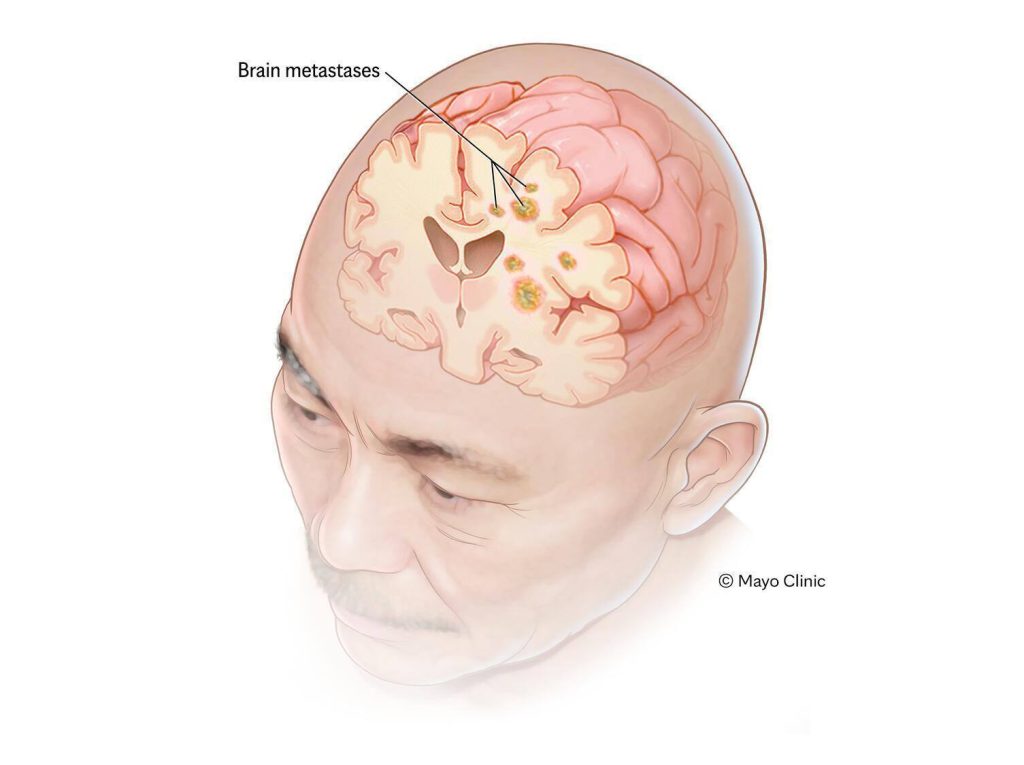
Surgery may be considered when a brain metastasis can be safely reached and removing it fits into your overall cancer treatment plan. It may be recommended when a tumor is large, is causing pressure in the brain, is producing symptoms that require relief, or when tissue is needed to confirm the diagnosis or perform molecular testing.
The surgical approach depends on the tumor's size and location. Some tumors may be treated using minimally invasive techniques. If a tumor is near an area that controls speech, movement or another essential function, awake brain surgery may allow the surgical team to monitor those functions during the procedure.
How is radiation therapy used to treat brain metastases?
Radiation therapy uses powerful beams of energy to destroy cancer cells. The type of radiation recommended depends on factors such as the number and location of the tumors, whether surgery is part of the plan, whether medicines may help control the cancer, and how treatment could affect your quality of life.
- Stereotactic radiosurgery is commonly used to treat brain metastases. Despite its name, it doesn't involve an incision. It delivers highly focused radiation to specific areas of the brain while limiting exposure to nearby healthy tissue. Treatment often is completed in one or a few sessions.
- Whole-brain radiation treats the entire brain and may be considered when cancer is more widespread within the brain.
Can medicines treat cancer that has spread to the brain?
Systemic therapies are medicines that travel through the bloodstream to treat cancer throughout the body. They include chemotherapy, immunotherapy, targeted therapies and other cancer medicines.
In the past, brain metastases often were treated first with surgery or radiation because many cancer medicines had difficulty reaching tumors in the brain. Advances in treatment are changing that approach. Some targeted therapies and immunotherapies can treat certain brain metastases, depending on the type of cancer and its molecular characteristics.
For example, a tumor with a particular genetic mutation may respond to a medicine designed to target that mutation. Not everyone has a mutation for which a targeted treatment is available. When one is identified, however, systemic therapy may help treat cancer in the brain and elsewhere in the body.
Often, the question isn't which single treatment to use but which combination to use and in what order. For example, surgery may be recommended first to relieve symptoms or obtain tissue for testing, followed by focused radiation. Chemotherapy, immunotherapy or other medicines also may play a role in treating cancer throughout the body.
Because these decisions are complex, treatment planning often involves specialists from neurosurgery, medical oncology, radiation oncology and other areas. Ask your healthcare team what each treatment is intended to accomplish, why the treatments are being recommended in a particular order and how the plan reflects your priorities.
Although there is no one-size-fits-all approach, a coordinated evaluation can turn a complicated set of choices into a clearer path forward.
Ian Parney, M.D., Ph.D., Neurosurgery, Mayo Clinic, Rochester, Minnesota