-
Research
Mayo Clinic researcher redefines the brain’s immune connection
Share this:






Early in his medical training, Sarosh Irani, B.M., B.Ch., D.Phil., met a patient who would change the course of his career. The woman, in her mid-30s, arrived at the hospital confused, trembling and wracked by seizures. She was losing her memory and her ability to walk. Yet unlike many with such severe neurological decline, she recovered completely.
Her turnaround came after the clinical team discovered a particular antibody in her blood — proof that her immune system had attacked her brain. When they suppressed that immune response, her symptoms disappeared. The discovery not only changed that woman's life but also opened a window into a new, potentially reversible, facet of medicine — one in which the immune system itself could explain devastating brain diseases.
That revelation propelled Dr. Irani into a field that bridges neurology and immunology, one that continues to expand today from his laboratory at Mayo Clinic in Florida.
A burgeoning field
Dr. Irani's first passion was psychiatry. "I wanted to understand disorders of the mind," he recalls. But he found that the field lacked the molecular footholds that could make its mysteries scientifically tractable. “You couldn't put your hands on the biology,” he says. "There were too many inferences and not enough mechanisms."
He turned to neurology just as scientists were discovering that neurological conditions could, in fact, be autoimmune diseases.
Dr. Irani joined, and subsequently led, the University of Oxford's autoimmune neurology lab, where he helped identify several antibodies that define distinct syndromes — including the antibodies LGI1 and CASPR2, now standard diagnostic markers for treatable forms of various autoimmune neurological conditions.
"What was once a medical curiosity has become a thriving field," says Dr. Irani, who came to Mayo Clinic in 2023. "Twenty years ago, there were no known antibodies affecting the brain. Now we know 20 or 30 such antibodies, and each one represents a potential cure."
Toward Precure
For Irani, these discoveries connect directly to Mayo Clinic's Precure initiative, which aims to predict and prevent disease before symptoms appear. "There are very few examples in medicine where we have a tractable handle on what's causing the disease," he explains. "Here we know the antibodies cause the disease. So the question is simple: How and why are they made? If we can work out causation, we can get close to pre-cure."
His lab is tackling that question through two complementary approaches: exploring patients' genetic predispositions and studying their immune cells. One variant, for example — in an HLA gene involved in presenting proteins to the immune system — appears in more than 90 percent of patients with a particular autoimmune neurological condition.
But genes alone do not tell the whole story. Irani suspects that environmental triggers, such as infections or even medications, act as the final push. "It's likely a multi-hit process," he says. "You need the gene, a misbehaving immune cell and an environmental spark."
His lab is studying patients' own immune cells to trace where this autoimmune process begins. Evidence increasingly points to the periphery, not the brain, as the starting point. That idea is supported by emerging research on the brain's lymphatic drainage system, which helps clear waste and immune molecules.
Early clues to autoimmunity
Recently, Dr. Irani and colleagues showed that biomarkers of neurodegeneration can be detected in the lymph nodes of the neck. These lymph nodes drain byproducts and proteins resulting from brain activity via a network of tiny lymphatic vessels.
Using ultrasound-guided fine-needle aspiration — a quick sampling technique similar to drawing blood — the team measured several proteins including amyloid beta and tau, proteins that build up in Alzheimer's disease, as well as other markers of brain cell health. They found that almost all of these proteins were found in much higher quantities in the lymph nodes than in the blood, especially one called phosphorylated tau (pTau181), which was 266 times more concentrated.
Strikingly, pTau181 levels in lymph nodes decreased with age, suggesting that the brain's ability to clear toxic proteins through lymphatic drainage declines over time — potentially contributing to diseases like Alzheimer's. The discovery also challenges one of medicine's oldest assumptions: that the brain is "immune-privileged" and largely sealed off from the body's immune system.
"This is the first direct evidence that brain proteins accumulate in cervical lymph nodes in living people," says Dr. Irani. "It opens up a minimally invasive way to study how the brain clears waste — and how that process falters with age."
Lymph node aspiration is far less invasive than spinal taps, yet it could offer powerful insight into brain health, aging, and disease progression.
Brain on fire
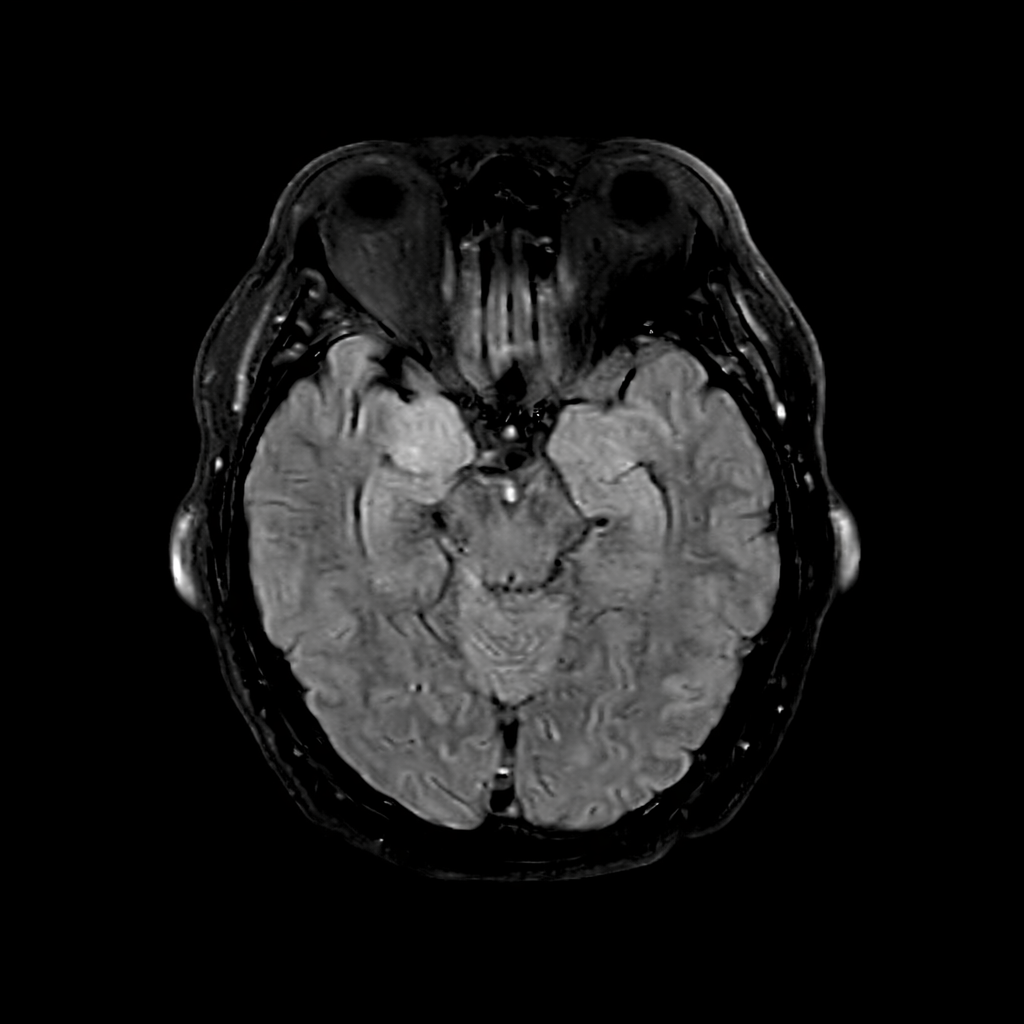
Dr. Irani's research has come full circle with a new study in The Lancet Psychiatry. The research focuses on patients with autoimmune encephalitis — a condition popularized by the book and movie "Brain on Fire"— whose illnesses often first appear to be psychiatric. The work shows that these patients can be distinguished from others by a simple scoring system based on how rapidly symptoms appear and how they evolve.
"It's a mixture of symptoms — depression, anxiety, psychosis, sleep and eating disturbances — all unfolding over days," he says. "If clinicians recognize that pattern early, we can treat it before irreversible brain injury occurs."
Current therapies for autoimmune encephalitis rely on broad immunosuppression — powerful drugs that quiet the entire immune system and leave patients vulnerable to infection. Dr. Irani envisions a more refined approach that involves the selective silencing of only the harmful immune cells while preserving the rest.
"We want to pick off just the bits causing trouble," he says. "If we can identify exactly what the immune system is attacking, we can teach it tolerance only to that target."
That vision, he believes, could extend to other conditions where the immune system plays a role, potentially informing treatments for dementia, cancer and even common psychiatric disorders. "We're trying to translate these observations to more widespread diseases," he says. "There's enormous potential."