Share this:





Physicians-in-training explore how emerging technologies, including humanoid robots, could help support healthcare teams and improve patient care
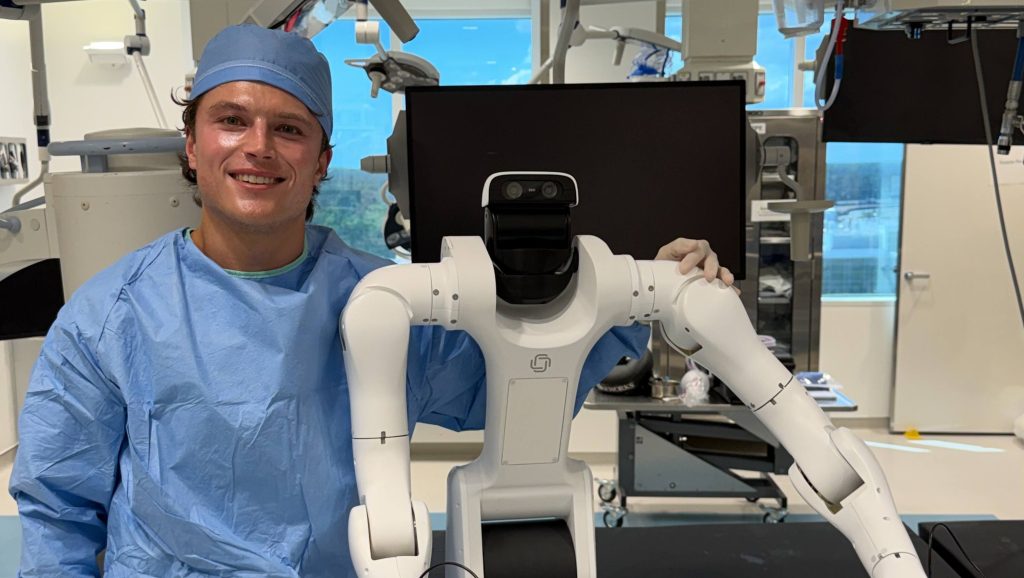
In a simulation lab at Mayo Clinic in Florida, a humanoid robot carefully retrieves medical supplies, organizes equipment and helps prepare a cardiac catheterization laboratory.
The robot moves slowly, and its capabilities are still being tested. But for the physicians gathered around it, the project represents something much larger than robotics.
It’s one example of how Mayo Clinic residents are gaining hands-on experience evaluating how emerging technologies might support healthcare teams – all while keeping clinical judgment, decision-making and patient care firmly in human hands. Through Mayo Clinic's Internal Medicine Residency Innovation and Entrepreneurship Track, residents work alongside engineers, innovators and industry collaborators to evaluate new ideas and address real-world healthcare challenges.
Developing new skills to solve healthcare challenges
The resident-led project is exploring whether humanoid robots could someday assist with routine tasks in cardiovascular care settings.
While the technology is still in the early stages of development, residents and faculty with Mayo Clinic School of Graduate Medical Education are exploring how robots might support healthcare professionals with tasks such as organizing supplies, retrieving equipment and helping prepare procedure rooms. The goal is not to replace clinical expertise, but to evaluate whether technology could assist with activities that occasionally require a member of the care team to step away from other responsibilities.
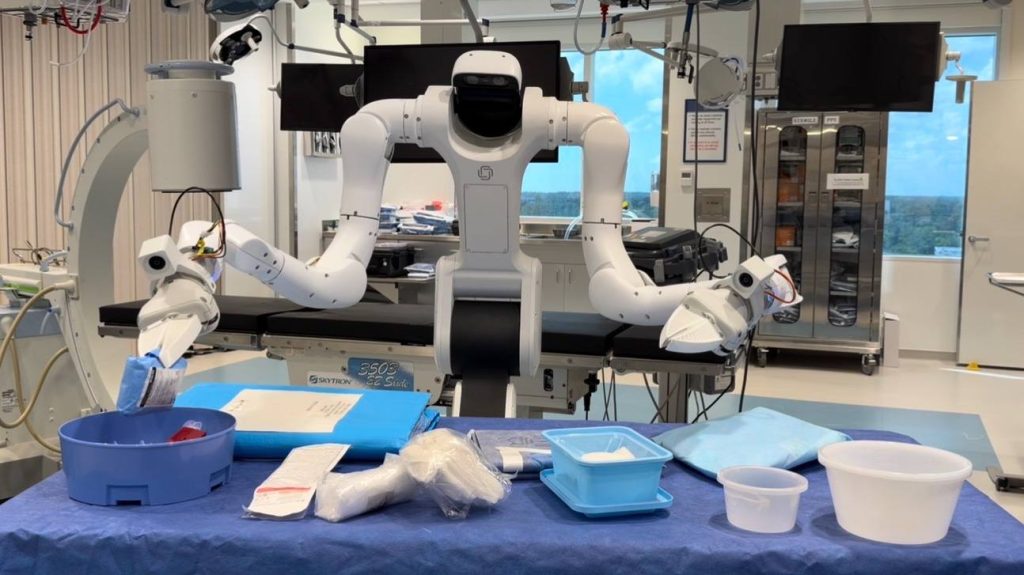
For Guy Robinson, M.B.B.S., a resident in the innovation track, the project provided an opportunity to learn skills far outside traditional medical training.
"I had zero coding knowledge," Dr. Robinson says. "I didn't understand the language at all."
Working with the robot manufacturer, Mayo Clinic engineers and fellow residents, Dr. Robinson spent weeks learning programming fundamentals and experimenting with code. Early successes were modest.
"At first, simply getting the robot to move its arm felt like a major accomplishment," he says.
Within a month, however, the team had advanced to programming more complex actions with the help of artificial intelligence-assisted coding tools.
Learning how innovation happens
According to Abdallah El Sabbagh, M.D., director of the Internal Medicine Residency Innovation and Entrepreneurship Track, projects like this grow out of Mayo Clinic's broader culture of innovation.
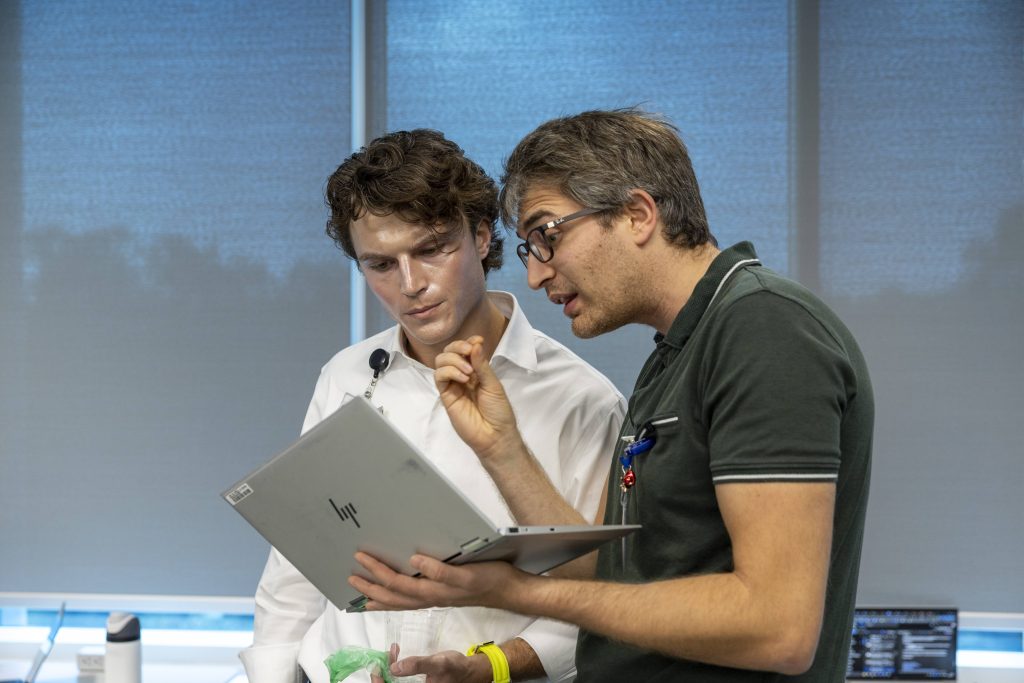
Residents participate in educational programs, mentorship opportunities and hands-on projects designed to help them identify challenges in healthcare and explore potential solutions.
One of those experiences is Mayo Clinic's Clinical Innovation and Entrepreneurship program, which brings together physicians, innovators and other collaborators to help transform ideas into practical applications.
"CIE helped change the way I think about innovation," Dr. Robinson says. "It emphasized that innovation is not simply having an idea but identifying a real clinical need and then taking practical steps toward implementation."
Rena Hale, Ph.D., director of the Clinical Innovation and Entrepreneurship program, says helping learners connect unmet needs with practical solutions is a central focus.
"Dr. Robinson brought that curiosity with him, and through the program developed the skills and confidence to act on it," Dr. Hale says. "Whether designing a new technology or exploring the potential of humanoid robotics, the underlying question remains the same: How can we make healthcare better for patients and the teams who care for them?"
That mindset shaped the robotics project from the beginning.
Rather than starting with the technology and searching for potential uses, the innovation team first engaged physicians and catheterization laboratory staff to better understand day-to-day workflows and identify areas where additional support might be valuable. Those conversations highlighted several routine tasks that can require team members to briefly step away during busy procedural workflows.
That input helped define the problem the team was trying to address and identify practical use cases for early proof-of-concept testing. Residents, engineers and innovation leaders then worked together to develop and evaluate robotic workflows based on those frontline insights.
A model for innovation training
Mayo Clinic's approach recently received national attention.
In an article for the New England Journal of Medicine Catalyst, physician leaders highlighted the growing need for innovation education during clinical training and pointed to Mayo Clinic's Internal Medicine Residency Program in Florida as an example of how residents can gain meaningful experience evaluating new technologies and developing solutions for healthcare challenges.
The robotics project demonstrates what that type of training can look like in practice.
Residents from multiple Mayo Clinic campuses have contributed to the effort. Dr. Robinson helped lead hands-on programming work in Florida, while Kiyan Heybati, M.D., a Mayo Clinic Alix School of Medicine graduate and current resident in Rochester, continued contributing remotely. Mayo Clinic engineers provided technical expertise, and innovation leaders helped connect residents with resources and mentorship.
Together, residents, engineers, innovation leaders and frontline clinical staff contributed perspectives that helped move the project forward, combining technical expertise with firsthand understanding of the clinical environment.
"Residents understand the clinical implications,” Dr. El Sabbagh says. “They can work closely with software engineers and bring ideas forward."
The project also highlights how innovation opportunities can appeal to learners with a wide range of interests. Some residents enter training with backgrounds in technology or entrepreneurship. Others discover those interests during residency and gain the confidence to pursue them.
Dr. El Sabbagh says the goal is not for every resident to become a programmer or entrepreneur. Instead, residents learn how to identify meaningful problems, collaborate across disciplines and evaluate how new ideas might be implemented safely and effectively in healthcare settings.
For Dr. Robinson, that experience has expanded his understanding of what it means to train at Mayo Clinic.
"I realized that we deliver the best care in the world because we also advance care the most," he says. "That's what makes this place special."
Related Articles