Share this:






After 41 years with Crohn's disease, Moi Monroe underwent ostomy surgery at Mayo Clinic in Florida. A few years later, he cycled from Alaska to Florida, and his bag didn’t slow him down.
When Moi Monroe walked into Mayo's ostomy class, his first thought was, "What am I doing here?"
The next day, he was scheduled for surgery to remove his colon and add an ostomy, often called a "bag," to his side. At age 62, Moi was one of the youngest patients in the room. Yet he had been suffering from Crohn's disease for over half his life.
For most of that time, it had only affected the first few inches of his colon. His latest scan, however, revealed it was rapidly spreading.
It had seemed like the right time to act, but as Moi looked around the classroom, he felt a flicker of doubt.
Then the instructor began to speak. When she revealed she was an "ostomate," relief washed over Moi. The day before, the woman who'd helped with his paperwork had shared the same. Their stories felt like a sign he was in the right place.
That sense deepened as Moi opened his ostomy kit. Inside was a pamphlet with a photo of people swimming and cycling.
"I could hardly get on a bike anymore," he says. "I'd wondered if I was going to be able to do that after the surgery. This felt like huge confirmation. After that, I never looked back."
Moi was ready to move forward — and with Mayo's help, he'd soon be back on two wheels.
Making his home at Mayo
Moi's health journey began in 1978 when he was diagnosed, at age 21, with Crohn's disease. For years, he saw a local physician. But as he got older, Moi wanted continuity of care across several specialties.
He found that at Mayo Clinic in Florida. That's also where he met Donna Shelton, a nurse practitioner in Gastroenterology, who quickly became his advocate, or as he says, his "angel."
Shelton never failed to answer his questions quickly. As new drugs emerged, she helped him decide which ones to try. "She was just always there," says Moi.
Unfortunately, Moi's disease didn't respond to treatment. In 2019, after his Crohn's suddenly spread, they began to discuss surgery more seriously.
Both knew his disease was stealing his joy. Too often, he was saying "no" to things he loved, like playing with his grandkids or hopping on his bike. An ostomy could give him back so much, but it was also a permanent decision that takes time to embrace.
"It's a big step to take out the colon," says Dr. Michael Picco, the Mayo Clinic gastroenterologist who has cared for Moi for nearly 20 years. "Patients might think an ostomy will be an awful thing. But it actually gives them control again — a much more predictable lifestyle."

After 41 years of Crohn's, and lots of prayer and research, Moi said "yes" to surgery. "He jumped in and faced it the way he does everything else — to the 'nth' degree," says Shelton. "He's always all in."
This didn't surprise Dr. Picco, who describes Moi as courageous and forward-thinking, always looking for the next step toward healing.
Moi saw that same commitment from his care team. "You never feel like they've forgotten who you are," he says. "If you have four appointments in a day, each one is going to know everything about your medical history. And they'll tie it all together."
Finding Moi again
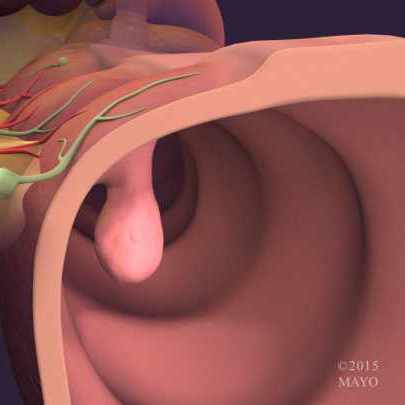
In late 2019, Dr. Luca Stocchi, a Mayo Clinic colon and rectal surgeon, removed Moi's entire colon and created an opening, or stoma, in his side. Connecting Moi's small intestine allowed waste to exit into a bag.
"The next day, all the pain from my Crohn's was gone," says Moi.
His only regret was not doing it sooner.
Just a few months later, Moi was cycling cross-country with a buddy. Then, in 2023, the pair planned a 4,500-mile trip from Alaska to Florida to raise money for childhood cancer awareness.
Without a colon, which plays a key role in hydration, Moi knew the journey would be difficult. But he was determined to get back to doing what he loved. "Patients with this indestructible attitude are such an inspiration to me," says Dr. Stocchi. "Moi was not going to let the bag stop him."
For 45 days, Moi cycled 100 miles a day, pushing his body harder than ever. His bag stayed tucked against his side with the help of a special belt, even across the rugged terrain of British Columbia.
Not once did he have to worry about abdominal pain — he could just enjoy the ride.
Expanding his horizons
Moi hasn't stopped there. Other postsurgical wins include catching 500-pound bluefin tuna in Canada and reeling in sailfish in Costa Rica.


"I can do anything," says Moi. "I can go offshore fishing all day. I can ride my bike for a hundred miles at a time. I can travel with my wife without holding anyone back."
These days, that means lots of visits to see their grandkids. "They were growing up before my eyes, and I couldn't share the joy with them," he says, teary-eyed at the memory. Now, "Papa," as the kids call Moi, is no longer hurting on the sidelines.
This, he says, is the greatest outcome of his surgery.
"I really can't ask for anything more," he says. "Thanks to Mayo, I've gotten my life back."