Share this:





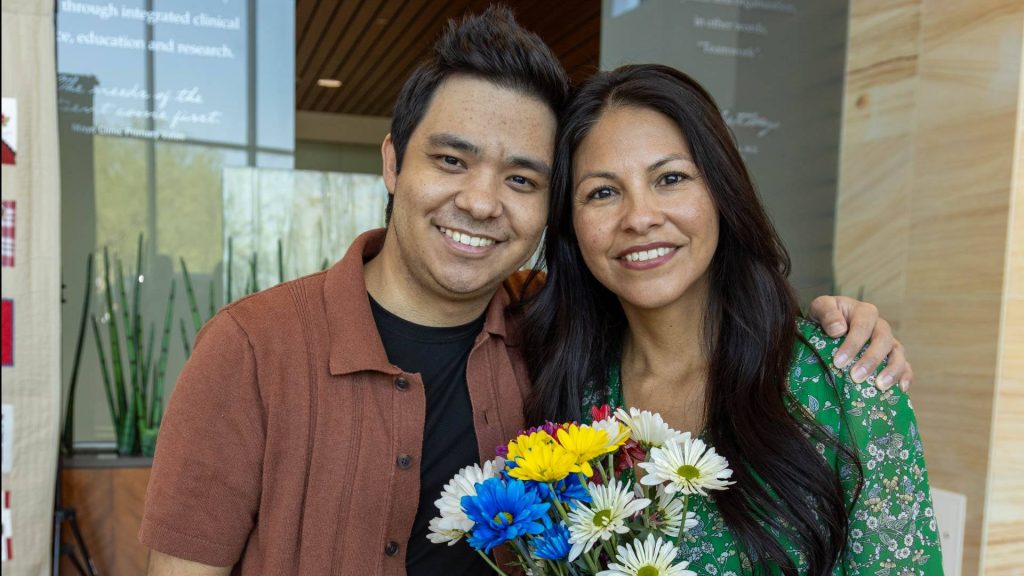
When Ruby Norland of Las Vegas decided to donate a kidney to her 29-year-old son, Ramiro Alvarado, she assumed determination and love would be enough. But after a series of evaluations at another transplant center, Ruby heard the word she feared most: no.
"I cried out of anger and frustration," she recalls. "I felt devastated and helpless."
Even though Ruby was a match, she was told her case was too complex. She had a small kidney stone and unusual anatomy. Instead of one artery, the right kidney had two, with the main artery branching very close to the aorta. Although her left kidney was not complex, Ruby was told the risks were too great to leave her with a single kidney that had a stone.
That's when Ruby was referred to Mayo Clinic.
Watch: Mother refuses to give up on son and finds a way forward
Journalists: Broadcast-quality video (2:43) is in the downloads at the end of this post. Please courtesy: "Mayo Clinic News Network." Read the script.
The path forward to donation
Ramiro had been on dialysis for eight months, three to four hours a day. For him, it was physically and emotionally challenging. "When my mom first offered to donate her kidney, I was stunned. I could never have asked anyone to do something so profound for me. She decided almost instantly, without a second thought," says Ramiro. "Donating an organ is not just a medical act. It is an act of love."
During her first call, Ruby remembers the coordinator pausing before responding, not to say no, but to say that Mayo wanted to take a closer look. The Mayo Clinic team reassured her that their technology and surgeons were well equipped to handle complex cases like hers, offering hope instead of focusing on obstacles to donation.
Experience meets complexity
The transplant team evaluated her kidney stone risk, studied her anatomy in detail and worked through what donation would mean for her long-term health. The outcome was one other centers hadn't reached: Ruby was approved to donate her left kidney, while keeping the kidney with complex anatomy and the small stone, along with a long-term plan to reduce future risk. Mayo Clinic Transplant Center physicians have studied predictors of future kidney stones and have helped develop donor guidelines.
"My test results didn't show a high risk of recurring kidney stones, and I felt confident about keeping my right kidney," says Ruby. When Ruby received the call that she was approved, she cried again, but this time out of relief. "When I told my son, he didn't believe me at first," she says. "Then it sank in, and we just held each other."
The transplant itself was a success. "The testing was thorough, and the team was honest about the risks," Ruby says. "That made me feel prepared, not afraid."
"It is our responsibility to not only identify but also comprehensively understand risks for potential donors, ensuring that decisions are guided by the expertise of our clinical team as well as input from the donor. Often, complex donor anatomy leads to denial at other centers. However, our approach at Mayo Clinic allows us to assist many donors successfully," explains Dr. Carrie Jadlowiec, medical director of the Living Donor Program at Mayo Clinic in Arizona.
"My care team never minimized my risks," Ruby says. "They just refused to stop at no."
Ruby says the moment that stays with her most is waking up after surgery and hearing that her son's new kidney was already working.
Her recovery was smooth, and today she's back to hiking, practicing hot yoga and strength training and looking forward to her first Mother’s Day after the transplant.
For Ramiro, having more energy, freedom and a renewed sense of gratitude for everyday moments that once felt out of reach drives his days. "I am not just surviving anymore. I am living again," he says. "There was a time when I avoided looking too far into the future because it felt like a privilege I could not count on. Now, I find myself making plans and looking forward to what comes next."
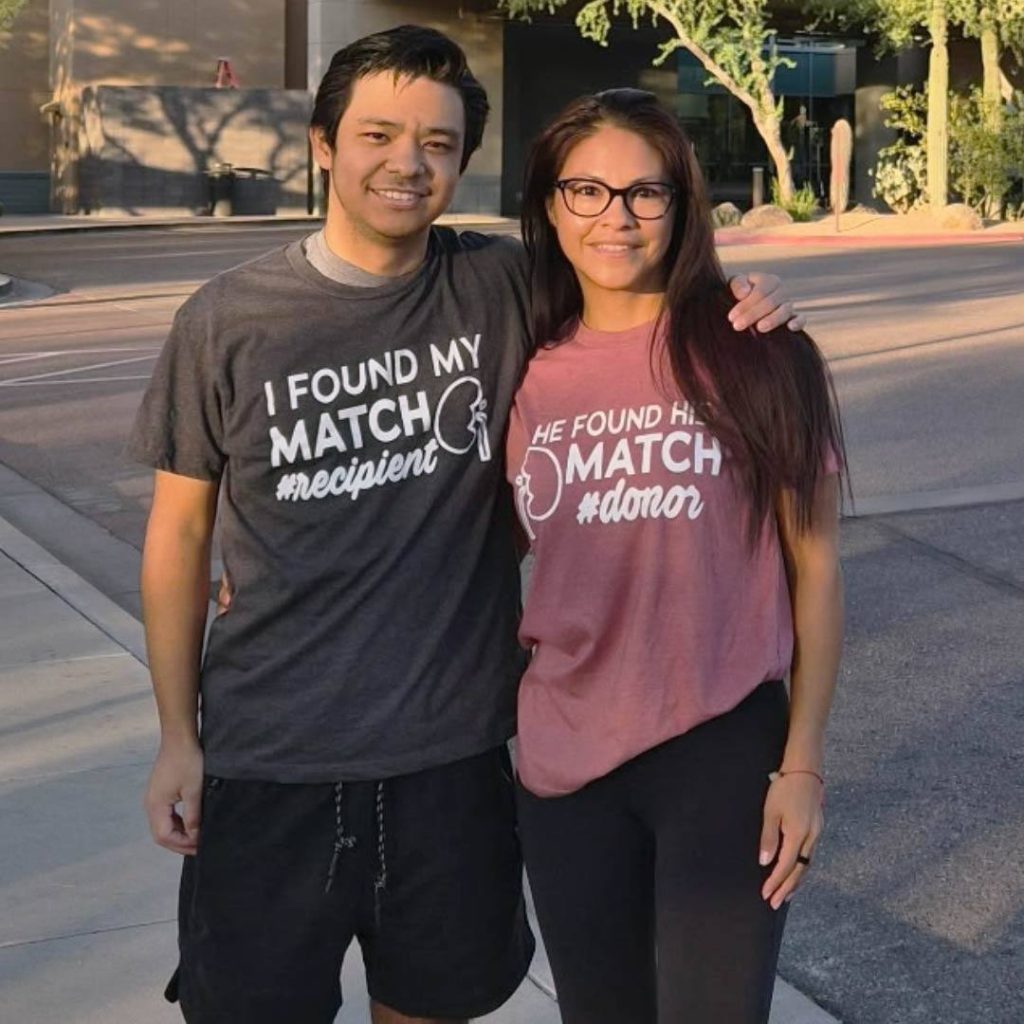
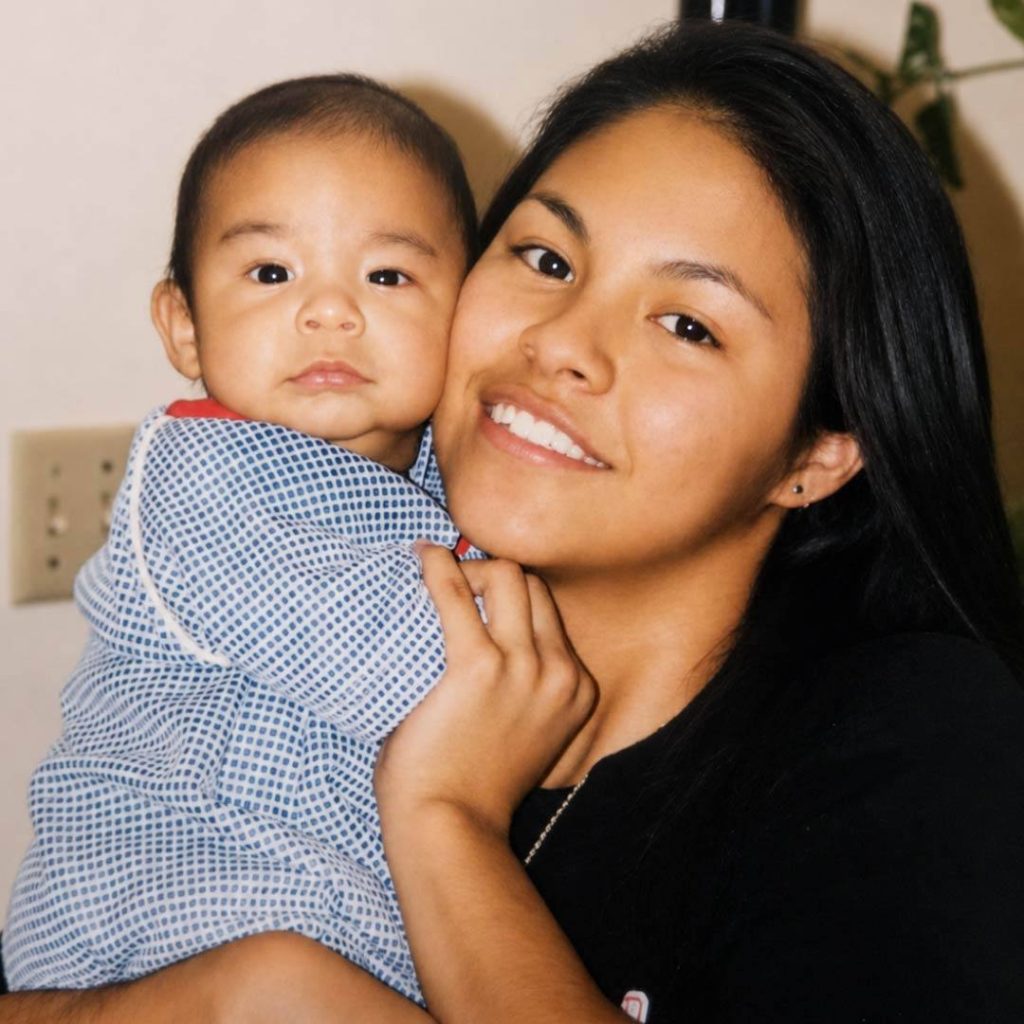
For Ruby and her son, the transplant is no longer the center of the story; it's the turning point. What remains is many more Mother’s Days in their future together. And for Ramiro, every day reminds him of the incredible gift his mom gave him.
Becoming an organ donor
Living kidney donation is available at all Mayo Clinic sites, where multidisciplinary teams prioritize patient needs, even in complex cases. Ruby's story is just one example of what's possible, thanks to the Transplant Center's support from Mayo Clinic's depth of expertise. This collaboration enables Mayo Clinic to care for patients facing extraordinary challenges while advancing transplant medicine.
Learn more about Living Kidney Donation at Mayo Clinic.
Related posts:
- How innovation is shaping the future of transplant care (VIDEO)
- Transplant Center at Mayo Clinic in Arizona sets a five-year national record for solid organ transplants (VIDEO)