-
Health & Wellness
Rochester Emergency Department offers peer support as a step toward sobriety
Share this:





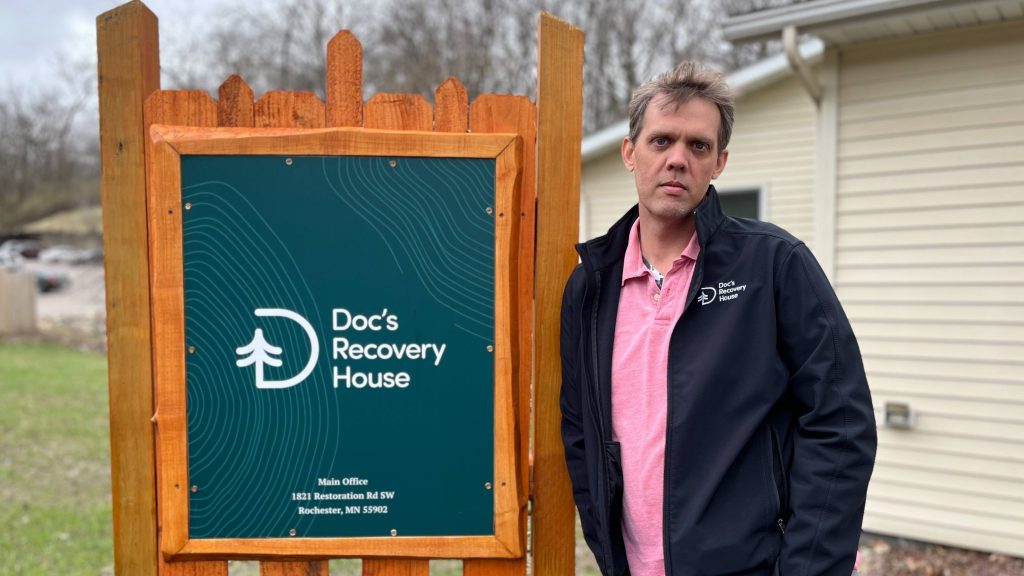
With support from a Mayo Clinic Community Contributions grant, the Peer Recovery Program at Mayo Clinic's Emergency Department in Rochester, Minnesota, helps patients struggling with substance use find hope and healing.
Seven years ago, Cedric Weathersbee spent many nights on a family friend's front porch. Although he couldn't go inside for breakfast, he was grateful for a spot to sleep.
At age 37, after years of alcoholism, Cedric was homeless, out of work and estranged from his family. Without a clear path forward, he began contemplating suicide. "I couldn't see my life without drinking," he says, "and I knew I didn't want a life with drinking in it."
Then he arrived at the Saint Marys Emergency Department (ED) at Mayo Clinic in Rochester.
Cedric doesn't know how he got there, but he does remember meeting Cheryl Laugen, a peer support specialist from Recovery is Happening. With funding from a Mayo Clinic Community Contributions grant, the Rochester nonprofit provides on-call support for ED patients facing substance-related crises.
It's by design that every peer support specialist has their own story of substance use.
"They bring the compassion and empathy of lived experience to the bedside," says Dr. Robert Hyde, an emergency medicine physician at Mayo Clinic.
Right away, Cheryl could see Cedric had hit rock bottom. She knew how critical it was to meet him there.
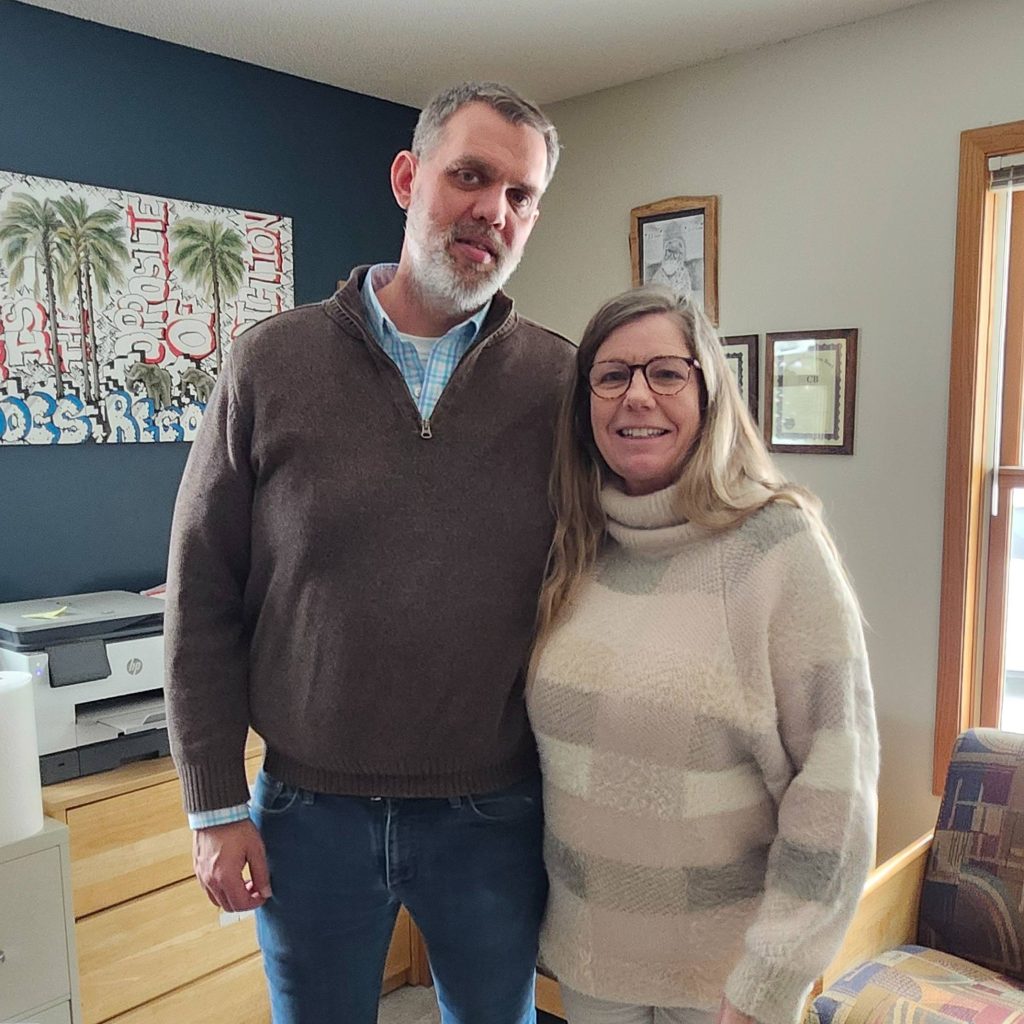
"For individuals like us, these moments of desperation are when our brain says, 'I have to make changes,'" she says. "But that window of opportunity is often very small."
As Cedric shared, Cheryl smiled. That little human kindness, long absent from his life, gave him courage.
"There was no judgment. There was no telling me what to do," says Cedric. "Cheryl instilled hope in me that things could be better. She motivated me to try to move forward."
A community of support
Substance use is a key community health priority for Olmsted County. Often intersecting with needs related to housing, employment and mental health, it requires a coordinated network of support.
"ED visits manage acute problems, but substance use disorder needs long-term management," says Dr. Hyde. "Peer supporters are a bridge to recovery. Often, they're the most impactful part of the patient's visit."
After addressing immediate needs, peer support specialists can help patients create a recovery plan, connect them to local resources, or even accompany them to treatment facilities.
It was Cheryl who told Cedric about Doc's Recovery House, a sober living community, where he moved after detoxing at a rehabilitation facility. Eleven months later, he was ready to begin rebuilding his life.
But Cedric's journey to healing — and helping others — wasn't finished yet.
Discovering a new purpose
Some months later, Cedric began drifting away from his support system. When a bad day at work became a bad week, he checked into an extended stay hotel and started drinking. Even after relocating to his brother's house, he didn't stop — and soon he was facing an ultimatum: sober up or leave.
Cedric decided to detox one more time.
As his body recovered, his mind wandered to all the times he could have died or gone to jail but hadn't. He'd tried to quit drinking 30 or 40 times, and despite so many relapses, he was still here.
Could there be a purpose behind it all?
"There were just too many coincidences," Cedric says. "I concluded that something greater than myself was looking out for me." After a lifetime of atheism, "that cracked the door to spirituality," which led to long-term sobriety. He'll celebrate his sixth "sober birthday" in February.
His spiritual revelation also led to a realization — he wanted to devote his life to serving others.
Shortly after detoxing, Cedric took a class that taught him to support others as Cheryl had supported him. After joining Doc's Recovery House as a peer support specialist, he also became a licensed alcohol and drug counselor. Now the men's program manager, Cedric has guided hundreds of residents toward healing.
"It brings me great joy to see that man I met in the Emergency Department giving back in a meaningful way — to see how far he's come and talk to people he's helped," says Cheryl. "He's come full circle."
Although he doesn't work in the hospital setting, Cedric emulates Cheryl in every interaction.
"I try to support and empower others to do what they want to do," he says. "It's about walking alongside them."
Every time he sees Cheryl at a recovery event, Cedric thinks about their first encounter at Saint Marys.
"That was the first step toward where I am today," he says. "I'm really grateful to be in Rochester. I'm grateful I'm sober. What I have now is happiness and actual purpose."
Learn more
- Visit Rochester Recovers, a Mayo-supported website, to find recovery resources in the Rochester, Minnesota area.
Related Articles