-
Cancer
Tomorrow’s Cure: The quiet beginnings of leukemia
Share this:





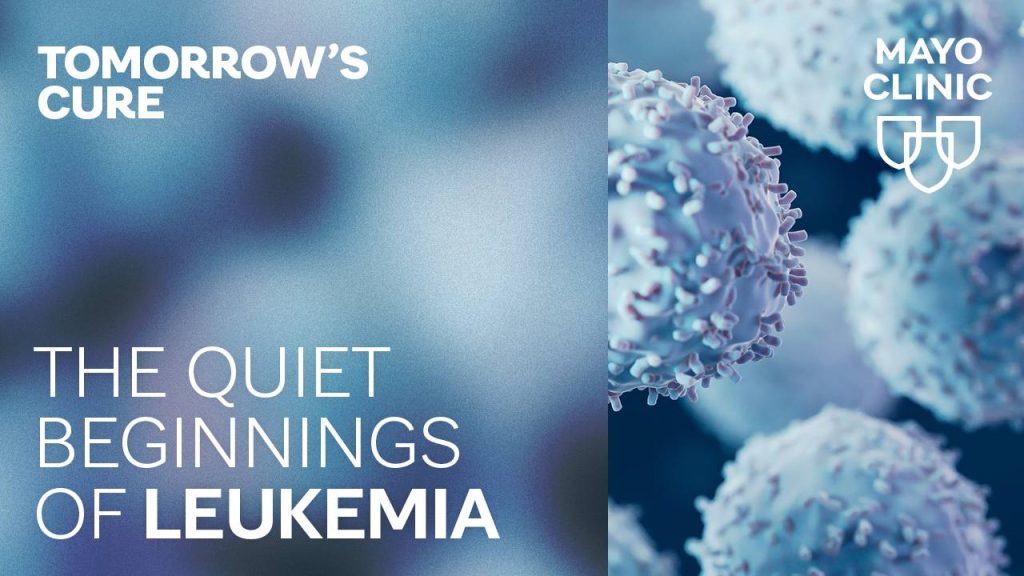
This episode of "Tomorrow's Cure" explores how a type of blood cancer, chronic lymphocytic leukemia (CLL), is hard to detect early in its development and how monoclonal B-cell lymphocytosis (MBL) may be a precursor to CLL. The discussion focuses on how genetics can help shape the understanding of how likely people are to develop CLL from MBL and the cell analysis that aids this discovery.
Mayo Clinic experts Sameer Parikh, M.B.B.S, a hematologist, and Susan Slager, Ph.D., a lymphoma researcher, join Gerald Marti, M.D., a hematologist for the National Institutes of Health as they talk about Dr. Marti's discovery and naming of MBL. Dr. Marti recounts how MBL was first identified in the late 1990s when researchers studied blood samples from people linked to hazardous waste Superfund site investigations, using lab methods to classify immune cells by their "fingerprints."
A routine blood test for complete blood count can reveal many things to healthcare professionals, but in this CLL and MBL research, the teams explain how flow cytometry, a more detailed way to "scan" individual blood cells to learn more, comes into play.
As the group discusses the research, they discuss what early detection can mean beyond the identification of such scans. Using polygenic risk scores that combine what is known about blood cells and genetic histories can help identify how combinations of small, inherited genetic differences can become a single risk estimate: each genetic variant nudges risk only a little, but together they can help explain why some people are more likely to develop CLL.
The conversation highlights where the guests think things could go next, including AI tools that might speed up cell analysis or help detect subtle warning signs earlier, while Mayo Clinic programs like the Hematology Precursor Clinic— and the broader Precure initiative — work to identify risk earlier and, over time, develop better ways to counsel and support patients.
The researchers talk with host Cathy Wurzer about where genomic testing and treatments are headed and what it will take to achieve these insights at scale.
Listen to the latest episode of "Tomorrow's Cure" wherever you get your podcasts. You can explore the full library of episodes and guests on the show's page.