Share this:





Technology is changing how doctors detect colon cancer. New AI-enhanced imaging tools help physicians find subtle polyps that might otherwise be missed. Learn more from Dr. Michael Wallace, a Mayo Clinic gastroenterologist.
Journalists: Broadcast-quality video (1:09) is in the downloads at the end of this post. Please courtesy: "Mayo Clinic News Network." Read the script.
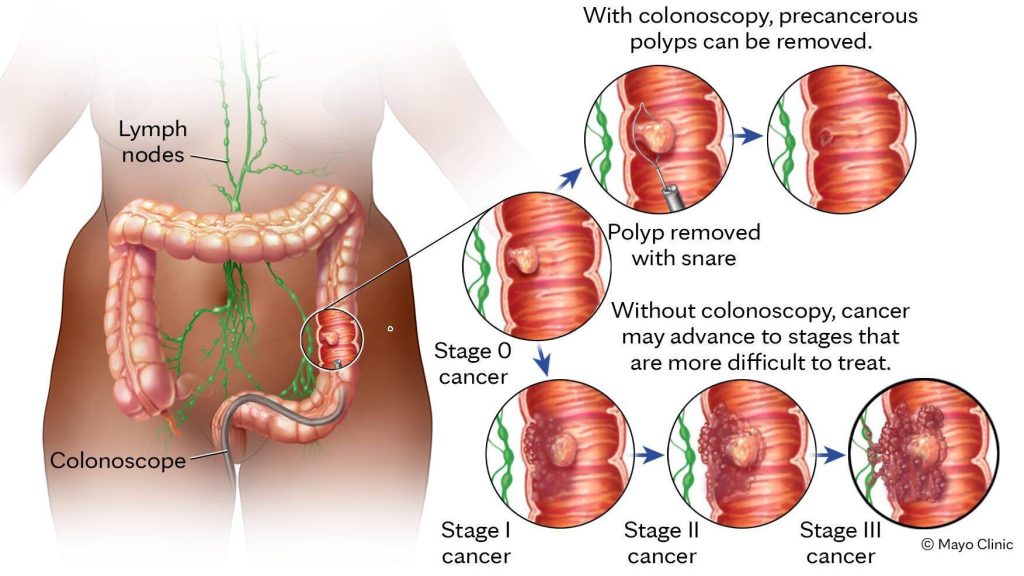
Polyps in the colon can vary in size and shape. Some are more mushroom-shaped, but that's not always the case.
"Some polyps spread out more like a bed of moss; they're flat," says Dr. Wallace.
Advances in imaging and tools help care teams detect and treat difficult polyps.
"Technology has been clearly shown to improve our ability to find more polyps and reduce the miss rate for some of these flat, subtle polyps," says Dr. Wallace.
Early detection leads to better outcomes.
"Stage 1 cancer, so-called T1 cancer, we can actually remove that through an endoscope or through a colonoscope, specifically, in a curative way," says Dr. Wallace. "This is something that has had profound implications for patient care."
Dr. Wallace adds that the most important step is to get screened.
"Whatever test you choose, get screened," Dr. Wallace says. "This is a preventable cancer. It's one of the very few cancers that we can almost completely prevent. So getting screened starting at the age of 45 — one caveat is — if you have a family history of colon cancer, you need to start even earlier."
Related posts:
- Mayo Clinic Q&A: Treating colorectal cancer with surgery
- (VIDEO) Transforming colon cancer care through precision medicine
- (VIDEO) Treatment options for advanced colorectal cancer