-
Transplant
A mom’s MS diagnosis led to treatment that put the disease on pause (VIDEO)
Share this:






Eveline Pitone is celebrating her family and her health this Mother's Day. After being diagnosed with multiple sclerosis, she faced challenging symptoms and uncertainty about her future.
Following a bone marrow transplant, she is now in remission and rediscovering the life she once feared MS might take away.
Watch: A mom's MS diagnosis leads to treatment that put the disease on pause
Journalists: Broadcast-quality video (2:15) is in the downloads at the end of this post. Please courtesy: "Mayo Clinic News Network." Read the script.
"At the end of a really long day of moving, my arm went numb. And then it moved into my leg, and then it moved into my face," says Eveline Pitone.
The sudden onset of symptoms sent Eveline to seek care near her home in Philadelphia.
"On Jan. 4, 2018, they said, 'You have MS,'" Eveline explains. "My first thought was my kids. Am I giving this to my kids? Is this something that I'm passing down? Am I going to see my kids grow up?"
Eveline noticed balance issues, vertigo and other symptoms. She stepped away from work to focus on her health.

"I used to be impacted by debilitating fatigue," Eveline says. "I would go to bed at 7 at night. I would wake up in the morning at 6 and felt like I hadn't slept."
She went through years of standard therapies to treat multiple sclerosis.
"I continued to have new lesions that showed up on my scans," Eveline says.
"Every time it got to the point that I would go to a scan, I knew, I just knew."
"Despite proper treatment in good hands, she continued relapsing," says Dr. Ernesto Ayala, a Mayo Clinic hematologist and oncologist.
Eveline learned about autologous bone marrow transplantation, and she turned to Mayo Clinic for a second opinion.
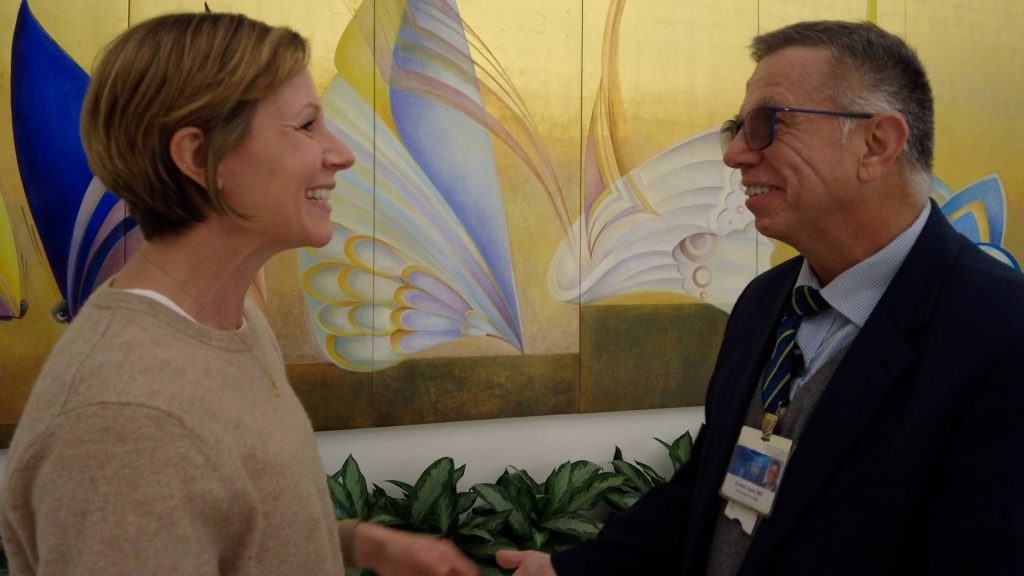
"In any patient with autoimmune disease, some of the immune cells that we have are misguided and targeting your own body," says Dr. Ayala. "Lymphocytes direct most of your immune responses. So a proportion, a small proportion, of those lymphocytes, is targeting your own body structures."
Autologous bone marrow transplantation has been used to treat severe autoimmune diseases for more than 20 years in patients who do not respond to other treatments. The process uses chemotherapy, then the body's own stem cells to reduce the effects of the disease.
"We allow the patient to start anew, to start from zero, to start producing new cells, new lymphocytes that have not been sensitized to the body and that will respect the body," says Dr. Ayala.
"A lot of patients were experiencing eight to 10 years of remission, which, there's a lot you can do in eight to 10 years," Eveline says.
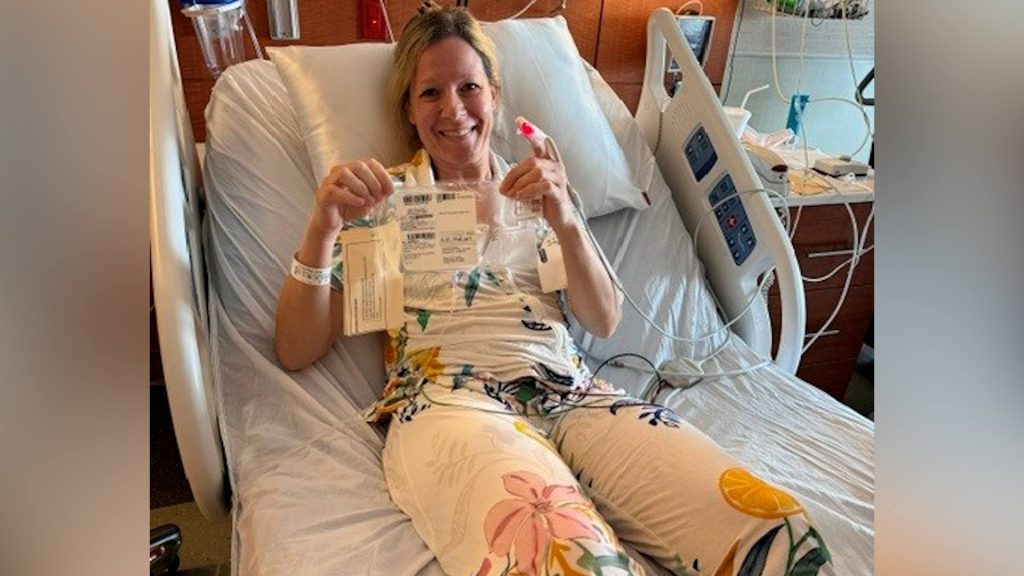
Eveline went through treatment in August 2024. Now, over a year later, Dr. Ayala says she's free of disease.
"Her MRIs are clear. She only has the scars from the previous lesions," he says.
"Slowly I'm letting this reality, that this is my new reality, sink in, and that it's here to stay," Eveline says.
Now in remission, Eveline is feeling less fatigued, experiencing more with her family and has returned to work.
"I forget I have MS," she says. "I am doing things and going through life the way I used to before I was diagnosed. That heavy weight that was sitting on my shoulders, that was hanging over my head, it's not there. It feels freaking amazing. Freaking amazing!"

Related posts:
- Mother refuses to give up on son and finds a way forward (VIDEO)
- How innovation is shaping the future of transplant care (VIDEO)
- Multiple sclerosis fuels artist’s work (VIDEO)