Share this:





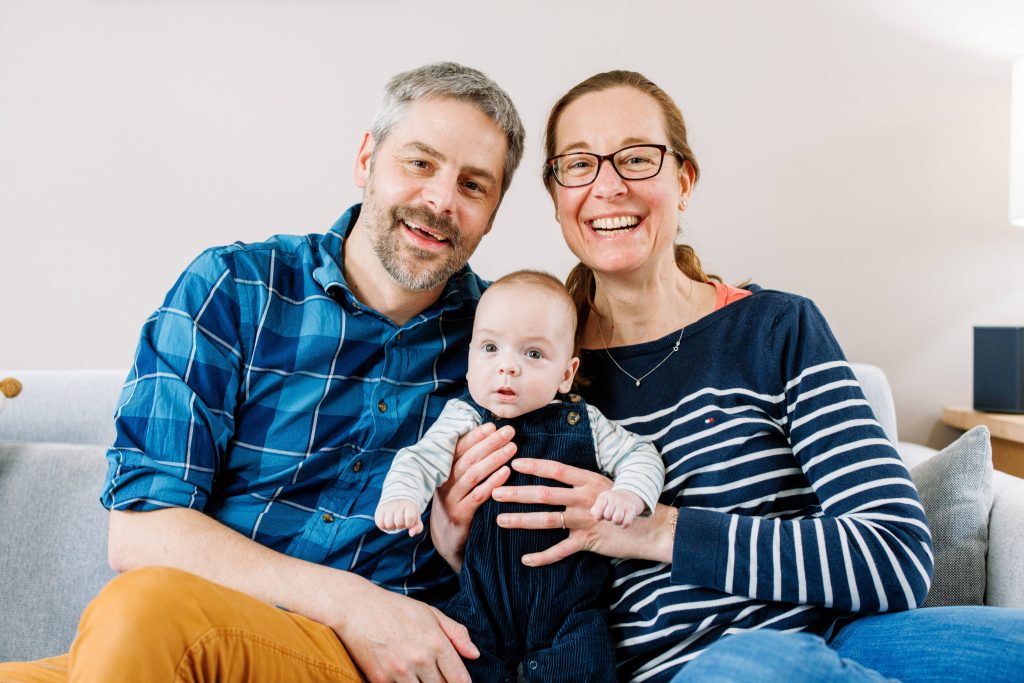
A multidisciplinary team at Mayo Clinic worked together to guide urgent, complex surgical care for a first-time expectant mother
At 27 weeks pregnant, Aude Watrelot arrived at Mayo Clinic in Rochester, Minnesota, nearly blind.
For months, the university professor from Ames, Iowa, had been losing her vision little by little. At first, the changes were subtle. Lights seemed dimmer. Contrast became harder to distinguish. But as her symptoms rapidly worsened, Aude was facing a diagnosis that threatened not only her future, but one of life's most precious moments.
Without prompt treatment, she faced permanent blindness — and the possibility that she might never see her son's face.
Vision loss worsens
Aude's symptoms began in June 2025, at a time when she and her husband, Nicolas Delchier, were preparing for a long-awaited new chapter: welcoming their first child after a successful second in vitro fertilization (IVF) attempt.
What began as slight visual changes soon became debilitating. Nicolas began helping Aude write emails, respond to text messages and manage everyday tasks because she could no longer see well enough to do them on her own. Around the same time, Aude's mother noticed her pupils appeared unusually dilated and urged her to seek more testing.
Following a visit to her ophthalmologist — who found nothing immediately concerning — Aude went to her local emergency department to search for answers.
After extensive testing, an MRI revealed the reason her world had been going dark: a large, previously undetected tumor at the base of her skull, near the pituitary gland.
Given the complexity of her condition and the risks posed to both mother and baby, Aude was transferred immediately to Mayo Clinic in Rochester for further evaluation and treatment.
The diagnosis
At Mayo Clinic, the seriousness of her condition became clear. Aude's care team explained that the mass in her brain was a benign meningioma — one of the most common types of primary brain tumors, accounting for about one-third of all reported brain tumor cases.
Its location made it especially dangerous. By then, the tumor was placing relentless pressure on her optic nerves and was threatening other delicate areas of the brain and related functions.
The diagnosis forced Aude and Nicolas to confront frightening uncertainty about both her health and their baby's future.
"Of course I was scared for myself," Aude says. "But more than anything, I was terrified for our baby. I kept thinking: What does this mean for him? Is he going to be OK?"
Planning care for mother and baby
A multidisciplinary team of specialists convened to determine the safest plan of action. Every decision had to account for both Aude's health and the baby's.
Panos Kerezoudis, M.D., chief resident in neurosurgery, remembers the urgency of the situation.
"If she had not been pregnant, we likely would have recommended surgery immediately to try to reverse the vision decline," Dr. Kerezoudis says. "What complicated the situation was her pregnancy, so everyone was extremely sensitive to protecting both the patient and the baby."
Following extensive conversations with Aude and Nicolas, specialists from neurosurgery and maternal-fetal medicine developed a carefully coordinated plan to proceed with surgery two weeks later. The timing allowed the team to optimize care for both Aude and her baby while minimizing the risk of permanent vision loss.
Another critical decision involved fetal monitoring. Initially, the obstetrics team discussed monitoring the baby during surgery. But after further review, Linda Szymanski, M.D., a maternal-fetal medicine specialist, recommended only monitoring before and after the procedure.
The reason, she says, was straightforward: once the delicate brain surgery began, there would be no safe way to stop mid-operation and deliver the baby if fetal distress occurred.
Aude says the team explained the plan, risks and uncertainties with compassion and clarity.
"What really stood out to me throughout the process was how human everyone was," she says. "The physicians explained things thoroughly while still treating us like people, not just patients. That made the entire experience feel much less frightening."
A high-risk procedure
Aude's surgery was scheduled for August 27, and was expected to last about 10 hours.
To successfully accomplish a surgery as extensive and high-risk as Aude's took a large, interdisciplinary team including neurosurgeons, maternal-fetal medicine specialists, anesthesiologists, neonatologists, neurologists, ophthalmologists, otolaryngologists, registered nurses, certified surgical technicians and others.
On the day of surgery, Aude was afraid for both herself and her baby. Despite this, she trusted her care team and felt reassured knowing she was surrounded by people deeply committed to protecting them both.
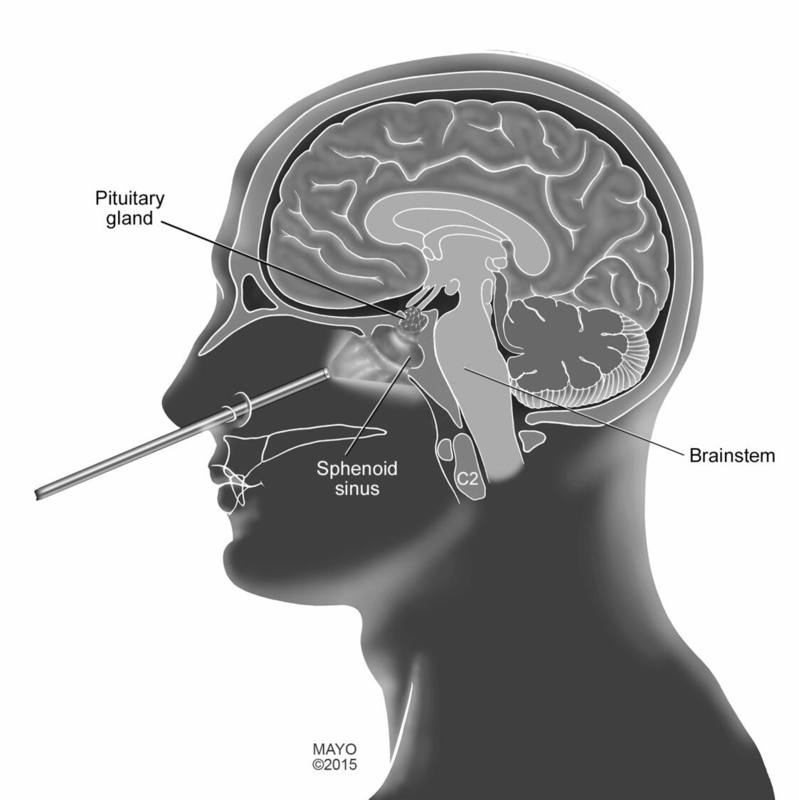
Jake Eide, M.D., an otolaryngologist specializing in sinus and skull base surgery, performed the initial endoscopic transnasal transsphenoidal (through the nose) approach to expose the tumor. Then Gelareh Zadeh, M.D., and the neurosurgical team performed the tumor removal itself.
The ENT and neurosurgery teams remained together throughout the 10-hour operation, sharing visualization and helping navigate critical anatomy near the optic nerves and internal carotid artery, one of the major blood vessels supplying the brain.
For Aude, the time passed instantly under anesthesia. For Nicolas, the wait felt like time stood still.
Watch: Brain tumor surgery at Mayo helped protect a mother's vision during pregnancy
Journalists: Broadcast-quality video (2:58) is in the downloads at the end of this post. Please courtesy: "Mayo Clinic News Network." Read the script.
Careful monitoring after surgery
Aude awoke to the news that her surgery had been successful and that their baby was OK, although his heart rate was elevated. To be cautious, Aude was transferred to Labor and Delivery for closer obstetric monitoring in case delivery became necessary.
A few days into recovery, her vision improved dramatically and the baby's heart rate returned to normal.
During this time, she and Nicolas learned that the surgery team had left a small portion of tumor behind intentionally. This was because it was attached so closely to Aude's right optic nerve that removing it could have increased the risk of permanently harming her vision or causing other serious complications.
"My vision wasn't perfect at this point, but it was remarkable compared to where I had been before surgery," Aude says.
After receiving clearance to go home in mid-September, Nicolas and Aude made their way back to Iowa.
An unexpected return
They had been home for a week when Aude's water unexpectedly broke after just having ordered dessert at a restaurant.
It was September 21 — six weeks before her estimated due date. The couple rushed to their local emergency department, but because of Aude's recent surgery, the safest option was to return to Mayo Clinic, less than three hours away.
Back in Rochester, Aude was reunited with many of the same providers who had been with her just weeks earlier. There was comfort in knowing she was surrounded by a team that already understood her story, her condition and the complexity of her care.

A healthy delivery
On September 24, Aude and Nicolas met their son — a healthy baby boy born via cesarean section at Mayo Clinic Hospital — Rochester, Methodist Campus.
They named him Victor — a name meaning "conqueror."
For Aude and Nicolas, the meaning reaches far beyond the definition. Though they had loved and chosen his name long before his birth, it came to reflect the family's recent journey — one defined by overcoming adversity through one of the most difficult seasons of their lives.
Today, Aude's vision has been fully restored, and Victor is a happy, thriving 8-month-old.
Dr. Zadeh continues to connect with Aude while she receives follow-up imaging close to home. The small amount of residual tumor is being monitored and may be treated in the future if needed.
For now, Aude and Nicolas embrace parenthood with gratitude — for restored vision, a healthy son and a care team that helped protect both.