-
Neurosciences
A window into the brain: Retinal imaging and Alzheimer’s disease
Share this:






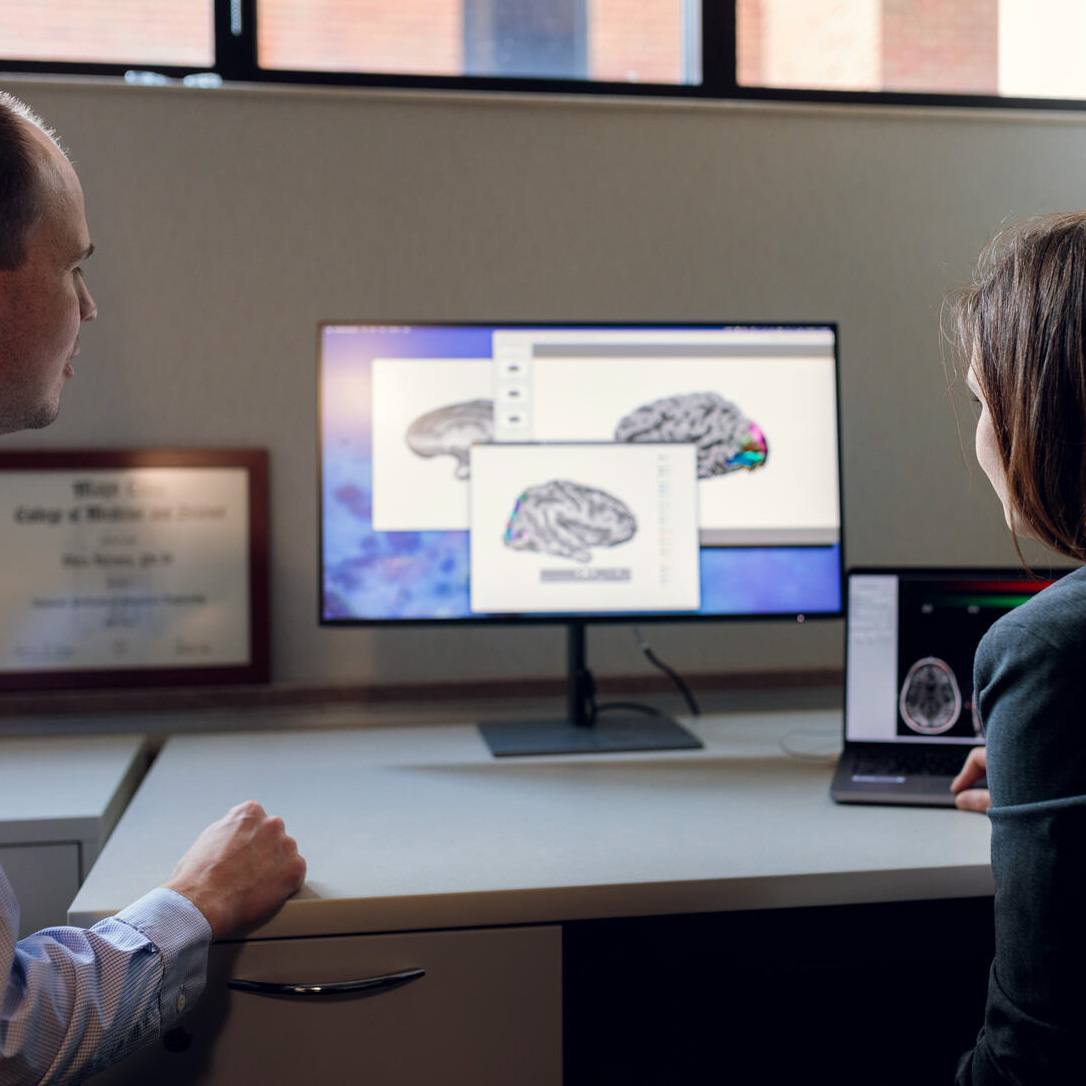
This episode of "Tomorrow's Cure" features Oana Dumitrascu, M.D., a vascular neurologist at Mayo Clinic in Arizona, and Yalin Wang, Ph.D., program chair of the Computer Science Graduate Programs in the School of Computing and Augmented Intelligence at Arizona State University, as they discuss a new, noninvasive approach to learning more about Alzheimer's disease.
The episode explores how researchers are using artificial intelligence (AI) and routine eye scans to look for early signs of Alzheimer's disease. Scientists believe changes in the retina, the light-sensitive tissue at the back of the eye, may reflect changes happening in the brain years before memory problems appear.
Other benefits of exploring retinal imaging include its ease and popularity. The AI that Mayo Clinic researchers have developed uses the regular scans many people get at their optometrist appointment annually. AI can analyze retinal images and detect patterns too subtle for the human eye to see. Early studies have shown promising results, with AI models helping distinguish people with Alzheimer's disease from those without it.
Their work suggests that medium-sized and small retinal blood vessels, along with changes in the tissue surrounding those vessels, may serve as important biomarkers of Alzheimer's disease. Current efforts are focused on validating these findings against established measures such as amyloid PET scans, cerebrospinal fluid testing and emerging blood-based biomarkers.
"What is especially exciting about this work is its potential to transform how we detect and monitor Alzheimer's disease by combining artificial intelligence with a simple, widely available retinal image to identify changes that may reflect brain health years before symptoms emerge," says Cumara O'Carroll, M.D., a neurologist and chair of stroke and cerebrovascular diseases at Mayo Clinic in Arizona. "This is precisely the type of transformative, cross-disciplinary innovation that has the potential to redefine our approach to neurodegenerative disease."
The team's goal is to move retinal vascular assessment from its research setting into routine eye care. In the future, a standard retinal photograph taken during an annual eye exam could be analyzed by a validated AI tool to assist in building an individualized risk profile for neurodegenerative and cerebrovascular disease.
Dr. Dumitrascu says the power of "seeing" these early indicators in this way will be beneficial.
"It will help with guiding, counseling, prevention and, when appropriate, early treatment, as well as screening patients for clinical trials," she says. "We need to find better ways to conduct clinical trials in neurodegeneration to identify patients early, and we also need an accurate modality to monitor them during those particular therapies that are being studied."
Listen to the latest episode of "Tomorrow's Cure" wherever you get your podcasts. You can explore the full library of episodes and guests on the show's playlist.