-
Surgery
Mayo Clinic Q&A: How is robotic technology changing liver and abdominal surgery?
Share this:





DEAR MAYO CLINIC: I have a benign lesion on my liver that needs to be removed. My surgeon said he would use robotic-assisted surgery. Can you tell me more about that?
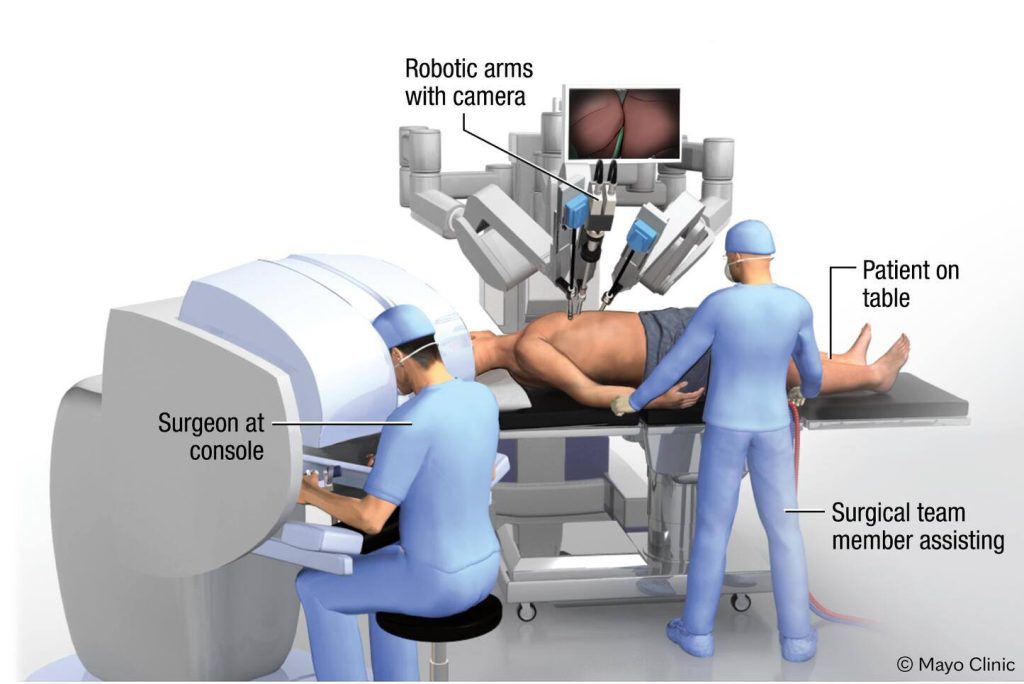
ANSWER: Yours is a common question. When people first hear "robotic surgery," they often think of a robot on autopilot doing the procedure. However, that couldn't be further from the truth. The robotic arm is a tool driven by the surgeon, following maps created from preoperative imaging.
Robotic technology is being used during abdominal surgery for benign and cancerous tumors in the liver, pancreas, colon and rectum, as well as gallbladder removal.
Your liver helps digest food, rids the body of waste products and makes clotting factors that keep blood flowing well, as well as performs other tasks. Parasites, diseases, viruses, infections, injury, cancer, alcohol use, obesity and inherited factors can all damage your liver.
Any of these causes may lead to surgery, including the use of robotic technology, which can benefit patients in several ways.
With open surgery, an incision would be made from the breastbone to your navel or sometimes with a right-angle turn like a hockey stick. The benefits of robotic-assisted surgery include:
- Smaller incisions, which lead to less blood loss and stress on the body.
- Reduced postoperative pain.
- A lower risk of surgical complications.
In general, with less pain, recovery is faster, and the risk of complications such as pneumonia or intestinal temporary paralysis, which can occur in up to 20% of all open abdominal surgeries, is less because patients are up and moving sooner.
Prior to surgery, patients undergo a CT scan and MRI, which will provide the imaging needed for your surgeon and for mapping. If surgery is due to cancer, this imaging may have been done periodically to watch for changes or as part of the patient's treatment.
The surgery includes a team of professionals who administer anesthesia, fluids and blood, if needed, and monitor the heart and blood pressure. Patients also have a urinary catheter inserted most of the time.
Once the patient is under anesthesia, the surgeon makes multiple incisions slightly less than 1/2 inch long and one incision about 2 inches long, if needed, to remove larger specimens from the abdomen. Using the robot's arms as extensions of their hands, the surgeon uses a variety of tools, including those to make incisions, apply clips, seal structures, sew sutures and remove tissue from the surgical site. Tiny cameras deliver magnified views to allow the surgeon to see the whole process in detail.
Once the surgery is complete, the incision typically is closed with absorbable sutures and glue so that stitches don't have to be removed postoperatively. No bandages are needed, and patients can shower 48 hours after the surgery.
Some surgeries require the removal of a portion of the liver. Up to 70% of a healthy liver can be removed and still function effectively. However, if a liver has been damaged by chemotherapy and other causes, as little as 50% may be removed. It's a myth that the liver regenerates. However, the remaining liver segment will grow large enough to function and compensate for the loss.
While robotic-assisted surgery is minimally invasive, it's still invasive. After surgery, patients are watched for complications from bleeding and anesthesia, as well as any effects on their hearts and lungs, similar to other general surgical procedures.
In liver surgery, there's also a small risk of bile leakage. Bile is the green fluid produced by the liver and channeled to the small intestine to aid with digestion. Leaks typically can be spotted during surgery, but if one develops, it can be corrected with endoscopic procedures or radiological interventions.
Opportunities for using robotic technology in liver and abdominal surgeries are expanding. Robotic technology opens the door to training more physicians in its use for surgeries ranging from less complex to more complex. As more surgeons become proficient in its use, the pool of patients who can undergo surgery to benefit their health, recovery and general well-being also widens.
Guido Fiorentini, M.D., Ph.D., Surgery and Surgical Oncology, Mayo Clinic Health System, Eau Claire, Wisconsin