Share this:





Life on the mat
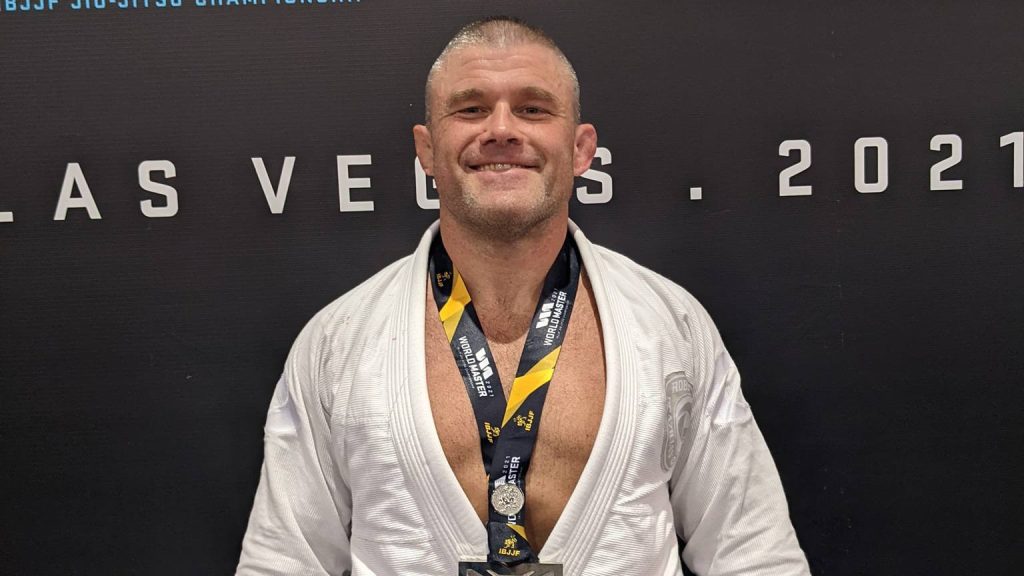
For Casey Lamb, the mat has never just been a place to compete. It's where he's spent more than four decades teaching, mentoring and testing himself.
"It's really who I am," Casey says.
As a Brazilian jiu-jitsu instructor, gym owner and lifelong competitor, Casey's life has long revolved around helping others grow through the sport he loves. Then chest tightness during training forced him to imagine a future without the life he had spent decades building.
A diagnosis that raised difficult questions
While ramping up training at his Rochester, New York, gym for an upcoming jiu-jitsu competition and staying active with his children's wrestling, Casey began experiencing chest tightness and pressure. Having seen friends and students suffer serious heart-related emergencies, he decided not to ignore the warning signs. Hoping for reassurance and a quick return to training, he sought care at his local hospital.
Instead, he left with an unexpected diagnosis: an ascending aortic aneurysm, a dangerous weakening of the body's largest artery that can tear or rupture without warning.
Just as devastating for Casey, the diagnosis meant he was told to stop competing and avoid the heavy exertion that had defined both his work and personal life.
At about 4.7 centimeters, Casey's aneurysm fell below the size threshold at which surgery is typically recommended. Physicians usually continue monitoring an aneurysm until it reaches 5 centimeters or larger.
Until then, treatment often focuses on reducing risk through lifestyle changes, including avoiding heavy lifting and limiting strenuous activities that can place additional strain on the aorta.
For Casey, avoiding strenuous activity wasn't a temporary inconvenience. Coaching, training and competing in jiu-jitsu were central to his livelihood and daily life.
"I'd rather have 15 years doing what I love than 30 years miserable sitting in a chair," Casey says.
For Casey, the diagnosis threatened far more than his health. It jeopardized the identity he had spent most of his life building.
Searching for another option
That conviction led Casey to seek another opinion at Mayo Clinic in Rochester, Minnesota.
There, the conversation shifted. Instead of focusing only on the size of Casey's aneurysm, specialists from cardiology, vascular medicine, sports cardiology and cardiovascular surgery worked together to understand the person behind the diagnosis — his profession, his goals and the life he hoped to return to.
Although his aneurysm had not yet reached the standard threshold for surgery, the demands of his life as a coach, competitor and gym owner called for a more individualized approach.
"Guidelines are essential," says Dr. Thais de Azeredo Coutinho, a Mayo Clinic cardiologist and vascular medicine specialist in the Mayo Clinic Aortic Center. But they don't replace individualized care. Some patients deserve a closer look because their circumstances aren't fully captured by the guidelines. This was Mr. Lamb's situation."
"It wasn't, 'Here's what you have to do,'" Casey says. "It was, 'Here are your options. What do you want to do?'"
Rather than asking him to walk away from the sport, Casey's Mayo Clinic care team focused on helping him understand the risks, weigh his options and choose the path that aligned with his goals.
"Let's figure out how to get you back doing what you want to do," Casey recalls. "We'll tell you the risks; we'll make the risks as low as possible; we'll let you know what they are; and you make the decisions."
For the first time since his diagnosis, Casey saw a path forward — one that didn't force him to choose between protecting his health and preserving the life he loved.
After weighing the risks with his care team, Casey decided surgery offered the best chance to continue the activities he wanted.
A surgery built around his goals
The expertise and collaboration he experienced at Mayo Clinic gave him confidence in that decision.
"I believed I was at the best place to have this procedure, with the best surgeon and the best team," Casey says.
Dr. Gabor Bagameri, a Mayo Clinic cardiovascular surgeon who specializes in complex aortic surgery, repaired the enlarged section of his ascending aorta while preserving his native aortic valve.
"Our goal wasn't simply to repair the aneurysm," Dr. Bagameri says. "It was to repair it in a way that gave him the best opportunity to safely return to the life he valued."
For Casey, the operation wasn't simply about repairing his aorta. It was about preserving something equally important: the opportunity to return to coaching, competing and the community he had built on the mat.

Back to training
Recovery didn't end after surgery. Working with Mayo Clinic's Sports Cardiology team, Casey gradually rebuilt the strength and confidence needed to return to high-level competition.
Every walk, every rehabilitation milestone and every workout brought Casey one step closer to a single goal: getting back on the mat.
"I knew if I made it through surgery, I would get back to where I was because that was the plan we had put together," Casey says.
Just three months after surgery, that plan became reality. Casey stepped back onto the mats — not as someone watching from the sidelines but as a coach, mentor and athlete once again.
"I was back on the mats," Casey says. "I was teaching classes. I was training again."
For the first time since his diagnosis, Casey wasn't wondering what he might lose. He was back doing what he loved.
His students once again had their longtime coach leading classes, demonstrating techniques and training alongside them. Stepping back onto the mat wasn't simply a return to training, it was proof that the future he feared might slip away was still within reach.
"For someone like Casey, it's about helping him return to the activities that matter most while understanding the risks involved," says Dr. Kathryn Larson, a Mayo Clinic sports cardiologist who helps athletes safely return to activity after heart conditions and procedures.
Looking ahead
Nearly two years after surgery, Casey says he finally feels like himself again.
Today, Casey continues coaching, training and preparing for future competitions, including a return to the World Master Jiu-Jitsu Championship.
The chance to pursue those goals again is something he doesn't take for granted.
"It's just the fact that I've gotten back to it at that level," Casey says. "Doing what I love and what I've gone through, in itself, it's a victory."
For a man who once feared he might never return to the mat, stepping back onto it became more than a comeback. It became proof that personalized care can help restore the life that matters most.