Share this:






After years of unexplained symptoms and incorrect diagnoses, a former Division I athlete and nurse finally received a diagnosis — and coordinated care — that saved her life.
For years, Sara Hutchinson tried to make sense of a body that no longer felt like her own.
Sara's symptoms began in 2016, when she was 21 and balancing life as a Division I rower and nursing student at the University of Iowa.
Despite an intense training schedule and healthy habits, she began gaining weight rapidly. Panic attacks followed. Then came hair loss, severe acne, facial swelling and insomnia.
Over four years, Sara sought help from 12 different specialists, underwent exploratory surgery and multiple CT scans, and received a series of incorrect diagnoses — including, at one point, lung cancer.
Trusting her instincts
As the years passed and her symptoms worsened without answers, Sara, now in nursing graduate school, recalled a brief mention of Cushing syndrome from her coursework — and felt compelled to revisit its symptoms. One by one, they aligned with her own.
Unable to shake her intuition, Sara pressed for more specialized testing — but says her concerns were repeatedly dismissed.
"I was advised to see a psychiatrist because they believed I was a hypochondriac," Sara says.
After repeated rounds of testing and walking away with more questions than answers, Sara turned to Mayo Clinic.
"Mayo Clinic was my 13th opinion. I always call it my lucky number 13," she says.
Assembling her care team
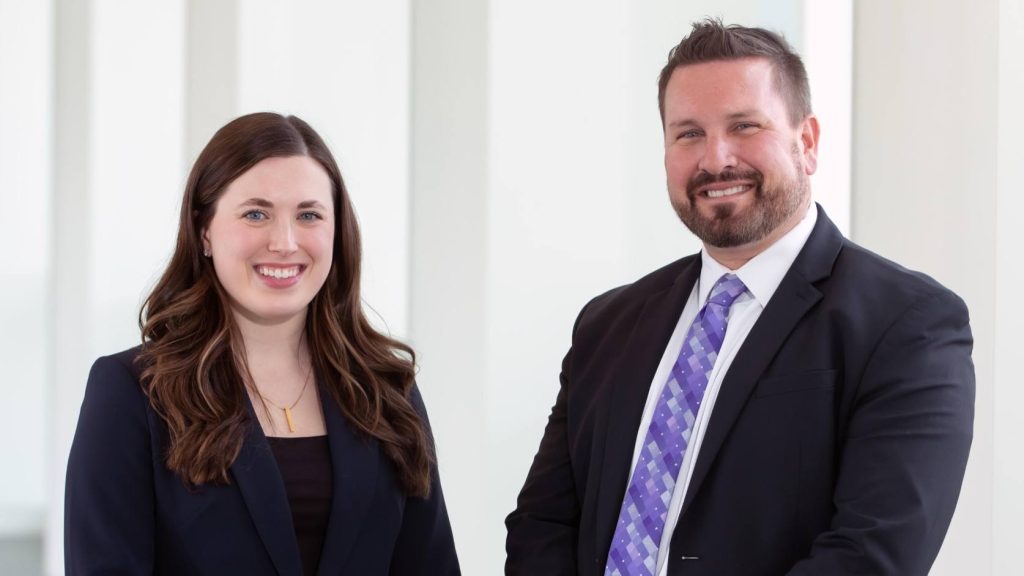
When Sara reached out to Mayo Clinic in Rochester, Minnesota, in December 2020, she did not ask for general help. She specifically requested Dr. Irina Bancos, an endocrinologist, and Dr. Jamie Van Gompel, a neurosurgeon. Sara says she viewed them as her "dream team" — the people most likely to recognize what others had not.
The response from Mayo Clinic was immediate. At‑home lab kits were sent to Sara's home in Iowa within 24 hours. She completed the testing, sent it back, and soon learned that her results showed a concerning elevation in her cortisol levels.
Dr. Bancos promptly scheduled a virtual visit with Sara to discuss the results.
"It was quite clear to me that Sara had Cushing syndrome just by looking at her face through the computer screen," Dr. Bancos says.
Cushing syndrome is the general term for cortisol overproduction and can cause symptoms such as rapid weight gain, a rounded or puffy "moon face," acne, and purple stretch marks. Because the condition is rare and shares symptoms with more common disorders such as polycystic ovary syndrome, it is often misdiagnosed in young women.
There are several types of Cushing syndrome. The most common is caused by a small, usually noncancerous tumor in the pituitary gland at the base of the brain. The tumor produces excess adrenocorticotropic hormone, or ACTH, which signals the body to make too much cortisol.
When Cushing syndrome is caused this way, it is called Cushing disease.
Although Dr. Bancos suspected this diagnosis, confirmation required imaging and further evaluation with Dr. Van Gompel in Neurosurgery.
Finally, a diagnosis
"Throughout my illness, I hadn't cried once," Sara says. "The night before my first in-person appointment for imaging at Mayo Clinic was the first time I cried — not out of fear, but out of relief and hope that I was finally going to get answers."
A 7-Tesla (7T) MRI at Mayo Clinic confirmed what her care team suspected: a pituitary tumor was driving excess cortisol and causing Sara's Cushing disease.
The 7T MRI produces ultrafine, highly detailed brain scans and can detect certain abnormalities with greater precision than most current imaging systems. As of May 2026, Mayo Clinic is the only institution in the world with three clinical 7T MRI scanners — one at each of its campuses in Rochester, Arizona and Florida
According to Dr. Van Gompel, these tumors are often so small that up to half of patients show no visible signs on standard imaging — making advanced, high-resolution imaging essential.
After years of uncertainty, the diagnosis brought relief.
"I felt overwhelming confidence in my care team," Sara says. "I was genuinely excited to move forward with surgery and hopeful about returning to a normal life."
Caring for patients with Cushing disease requires a seamless, multidisciplinary approach. Endocrinology and Neurosurgery work in close coordination, with Drs. Bancos and Van Gompel guiding patients from diagnosis through treatment and engaging additional specialists to support each patient's individual needs.
With the tumor identified, Sara was offered urgent surgery — as soon as the following day. Without treatment, she was told, excess cortisol would continue to damage her organs and become life-threatening within months.
"After years with no answers, it all felt so sudden," Sara says. "I didn't want to let my co-workers down, so I asked to work a few more shifts before surgery so they could prepare for my absence."
The turning point
On Feb. 18, 2021, Sara returned to Mayo Clinic for minimally invasive endoscopic surgery to remove her tumor. The procedure was completed without complications, and no residual tumor tissue remained.
"I had been struggling for many, many years," she says. "I remember counting down the minutes until surgery, thinking, 'Let's do this.'"
After surgery, she put her nursing graduate studies on hold to focus on recovery. The procedure itself was easy, she says, but recovery from the effects of Cushing disease can be long and challenging, even after successful treatment.
As the body adjusts to lower cortisol levels, patients may experience long-term fatigue, body aches, nausea and mood changes.
Dr. Bancos often compares this phase to caffeine withdrawal.
"Imagine drinking six cups of coffee a day for years, then suddenly cutting back to just one. Just as the body adapts to high caffeine levels, it also adjusts to elevated cortisol in Cushing disease," she says. "Even normal levels can feel way too low at first."
For Sara, recovery required patience. She began hormone therapy to help regulate her body, then gradually tapered off as her system adjusted. The process brought months of fatigue and discomfort before she slowly began to feel like herself again.
Her annual lab results have remained stable, and she has been in remission since 2021.
A future reclaimed
Sara's experience at Mayo Clinic showed her what care can look like when patients are heard, believed and supported by the right team.
"After everything I went through, I felt incredibly grateful for a second chance at life and began thinking about how I wanted to use it," Sara says.
Within six months of surgery, she was able to return to graduate school and received her nurse practitioner license. Soon after, Sara came back to Mayo Clinic as a healthcare professional — a way to give back to the place she credits with saving her life.
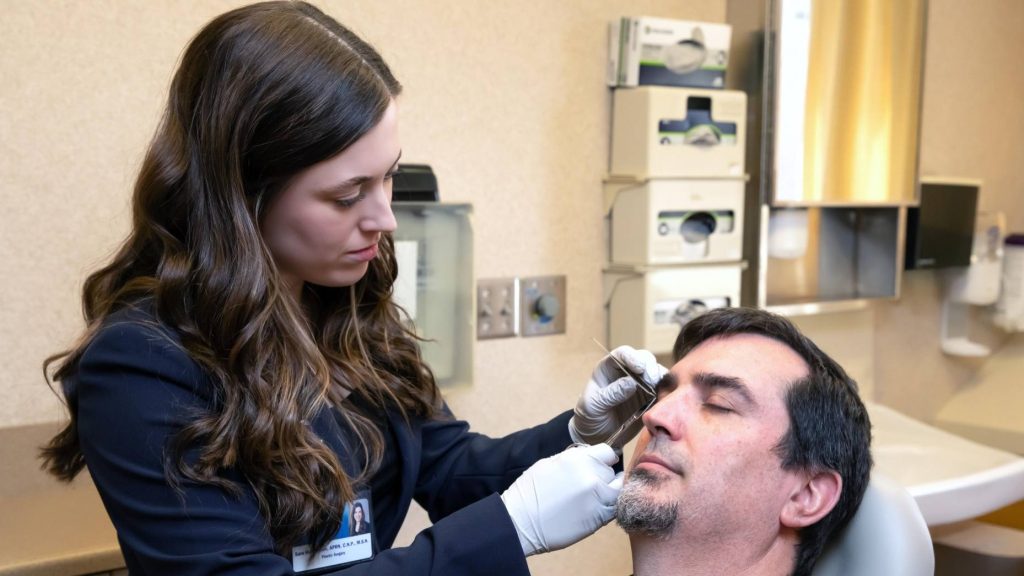
Today, she works in the Plastic Surgery Cleft and Craniofacial Clinic, where she says she occasionally cares for Dr. Van Gompel's post-neurosurgery patients — a connection not lost on her.
Her story now carries a message for others who feel unheard: Keep pushing.
"Advocating for yourself is incredibly important," she says. "It's essential to find healthcare professionals who listen to you and feel like the right fit."
For Sara, the turning point came when persistence met the right expertise at Mayo Clinic.
As both a former patient and a clinician, she carries that experience forward. The date of her surgery — engraved on a necklace from her grandmother — is a reminder of the life she fought for and the care she now hopes to provide others who are still searching for answers.