Share this:





"Today the only thing that is permanent is change." - Charles H. Mayo, M.D., Northwestern University Alumni News, July 1931.
Florida businessman J.E. Davis first took a special interest in healthcare after the passing of his father, Winn-Dixie founder William Milton Davis, following what the family felt was "an unnecessary loss."
After William Milton's death, the Davis family became highly selective about where they sought care. At the recommendation of friends, the family began traveling to Mayo Clinic in Rochester, Minnesota, for their healthcare needs.
During treatment for kidney stones in the 1970s, J.E. Davis developed a friendship with Hugh Butt, M.D., a gastroenterologist and internist at Mayo Clinic. One winter morning in 1978, Dr. Butt got frostbite on his cheek while walking to work. Upon hearing this, Davis quipped that Mayo Clinic ought to consider a location in a more temperate climate.
A year later, as an evolving healthcare landscape that incentivized patients to seek local care rather than travel to a destination medical center brought new challenges to the enterprise, J.E. Davis hosted a group of Mayo Clinic leaders in Jacksonville, Florida, to scout land for a potential site, the first outside of Minnesota.
Initially, Mayo Clinic leaders chose not to pursue building a Jacksonville site due to potential financial risk, the challenges of replicating the Mayo model of care outside of Minnesota and relocating staff, among other concerns. But J.E. Davis persisted, writing in his journal, "Someone has to get on fire for the great potential."
In August 1984, Davis' efforts and those of a group of community members committed to bringing Mayo Clinic to Jacksonville came to pass. Then-Jacksonville Mayor Jake M. Godbold announced that Mayo Clinic would open a "satellite" clinic in the city, marking the start of the 120-year-old institution's expansion outside of Minnesota.
Seventeen months later, on Oct. 13, 1986, Mayo Clinic in Florida opened its doors to 2,700 patients from 30 states and six foreign countries. In a year's time, physician head count had nearly doubled from the original 35 to 56. They, alongside 325 health staff, had seen over 10,000 patients.
Mayo Clinic in Florida approached its 10th anniversary in 1996 as then-CEO Leo Black, M.D., oversaw considerable expansion to accommodate the imminent growth he envisioned for the campus.
The institution's flagship Davis Building expanded by four floors, followed by the openings of both the Birdsall Medical Research Building and the Outpatient Surgery and Radiation Oncology Centers. Education and Research, two of the three shields comprising the Mayo Clinic portfolio, became prominent fixtures to the campus presence.
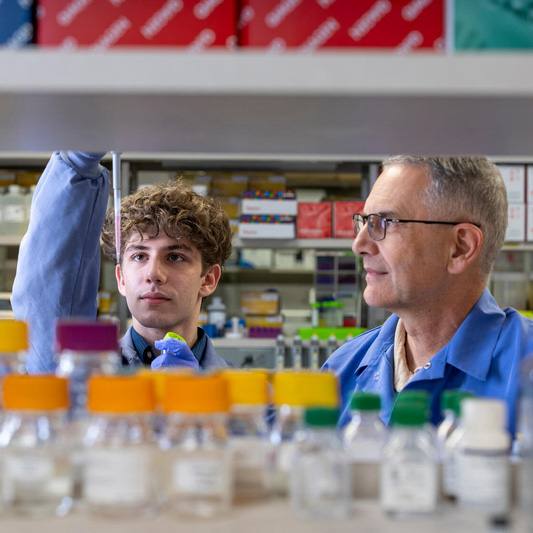
A decade in, hundreds of medical students and more than 15,000 physicians had sought education at the Florida campus. Research portfolios grew from one trailer to 10 fully operational laboratories, producing 320 clinical studies exploring Alzheimer's disease, cancer and cardiovascular disease.
As years passed, changes in healthcare and patient needs accelerated growth.
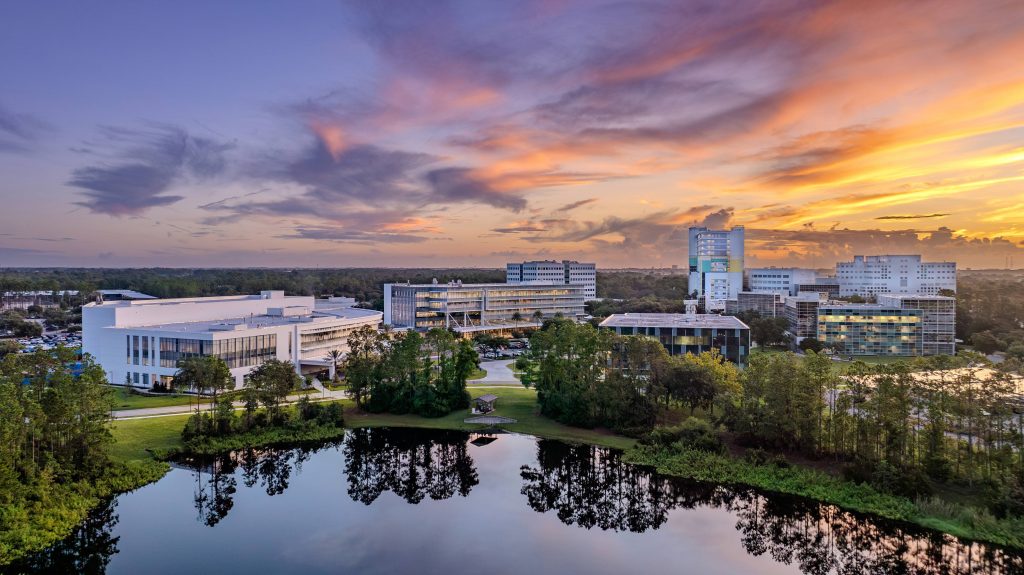
Mayo Clinic in Florida's campus footprint had grown to over 2 million square feet across 13 buildings by 2006, with two off-site primary care centers and a forthcoming hospital tower. Three hundred physicians across 43 areas of expertise had seen approximately 500,000 patients from all 50 states and 131 countries.
Today, after 40 years, more than 184,000 patients are seen annually at Mayo Clinic in Florida. Their multidisciplinary care teams, made up of 878 physicians and nearly 12,000 medical and health staff, united to inspire hope and promote health.
Looking to the future of Mayo Clinic in Florida, Bold. Forward. Unbound., a multibillion-dollar investment across the Mayo Clinic enterprise, will grow hospital care and establish a biomanufacturing hub for cancer immunotherapies and transplantation advances. Among the most significant of these advancements is the opening of the Duan Family Building.
The Duan Family Building houses the first carbon ion therapy program in the Western Hemisphere, bringing advanced-technology treatment to patients diagnosed with the most aggressive and treatment-resistant cancers. Mayo Clinic in Florida expects to treat its first carbon ion therapy patients in 2028.
"The emerging treatments that will be offered in the Duan Family Building, including carbon ion therapy, are an important part of the integrated cancer practice at Mayo Clinic, ensuring constant, research-driven innovation in the care we are providing to patients," says Kent Thielen, M.D., CEO of Mayo Clinic in Florida.
After four decades in Jacksonville, Mayo Clinic's primary value remains the driving force behind growth in Florida: The needs of the patients come first.
For Sandra Hedrick, a pastor and yoga teacher who lives in northeast Florida, that meant having highly specialized care close to home after being diagnosed with olfactory neuroblastoma, a cancer affecting 1 in every 2.5 million people.
Mayo Clinic in Florida is one of the nation's highest-volume centers for complex and rare head cancers. Sandra received care — from consultation and surgery to postoperative therapy — just a short drive from her home.
Today, Sandra has returned to her daily life and approaches follow-up scans with confidence in her care team. Her experience reflects what Mayo Clinic's presence in Florida has made possible for patients in the region and what continued investment in the campus aims to carry forward.
When asked what she would tell patients considering Mayo Clinic for rare cancer care, she says, "I would encourage them to go to Mayo. That's the place to go. That Mayo Clinic is right across the bridge is an incredible gift to our community."
Read more: Mayo Clinic in Florida marks 40 years of transforming care and shaping the future.