Share this:





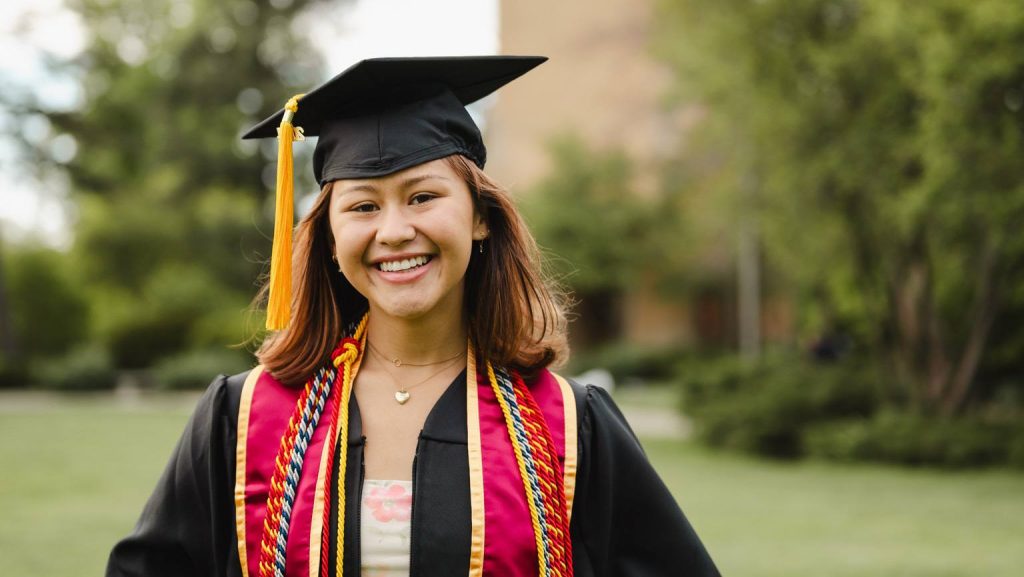
After being diagnosed with high-risk acute myeloid leukemia at age 19, Sky Toyne came to Mayo Clinic for a potentially curative stem cell transplant. Thanks to advances in transplant medicine, a lifesaving donation from her brother, and comprehensive care that addressed both her physical and emotional recovery, Sky overcame leukemia and returned to the life she loves.
In August 2021, Sky Toyne had just begun her sophomore year of college at a university in Iowa, where she was born and raised. With a love of learning and being active in organizations, she was excitedly thinking about her next semester. Should she run for an executive position in her sorority or study abroad in Australia?
Soon after the fall semester began, Sky started getting bad headaches. As the weeks went on, she experienced more symptoms — frequent colds, extreme neck aches and fatigue.
On Oct. 7, Sky woke with intense head and neck pain and a whooshing sound in her ears. Her mom drove her to the student health facility, where initial tests were inconclusive. Bloodwork, however, revealed dangerously low blood counts, and Sky went to the hospital immediately.
After receiving blood transfusions in the emergency department, Sky was admitted to the oncology floor. A bone marrow biopsy the next morning confirmed leukemia.
Further testing showed that Sky had acute myeloid leukemia (AML), and she had several mutations that put her at high risk of recurrence. To give her the best chance at a cure, she would need a bone marrow, or stem cell transplant.
"I decided to go to Mayo Clinic since it's the best hospital in the world and a leader in transplant," says Sky.
She completed induction chemotherapy at the hospital in Iowa and traveled with her parents to Mayo Clinic in Rochester, Minnesota, to meet Dr. William Hogan, a transplant hematologist.
"His expertise was astounding, and we immediately knew I was in good hands," says Sky.
Hope through innovation
"Sky's leukemia carried genetic abnormalities that we know place patients at much higher risk of relapse if treated with chemotherapy alone," says Dr. Hogan. "Fortunately, she had responded very well to her initial treatment and achieved a deep remission, which gave us an important opportunity to move toward a potentially curative stem cell transplant."
Stem cell donor matching depends on inherited immune system genes called human leukocyte antigen (HLA) genes. People with mixed ancestry, like Sky, often inherit combinations of HLA genes that are less commonly represented in donor registries, which means there may be fewer unrelated volunteers who share that exact genetic combination.
Because a perfectly matched unrelated donor wasn't readily available, Sky required a haploidentical, or half-matched, bone marrow transplant. Unlike a traditional transplant, a haploidentical transplant uses a donor who shares approximately half of the patient's immune system genes — usually a parent, child or sibling.
"This has probably been one of the biggest advances in transplantation over the past two decades, allowing nearly every patient to have a potential donor," says Dr. Hogan.
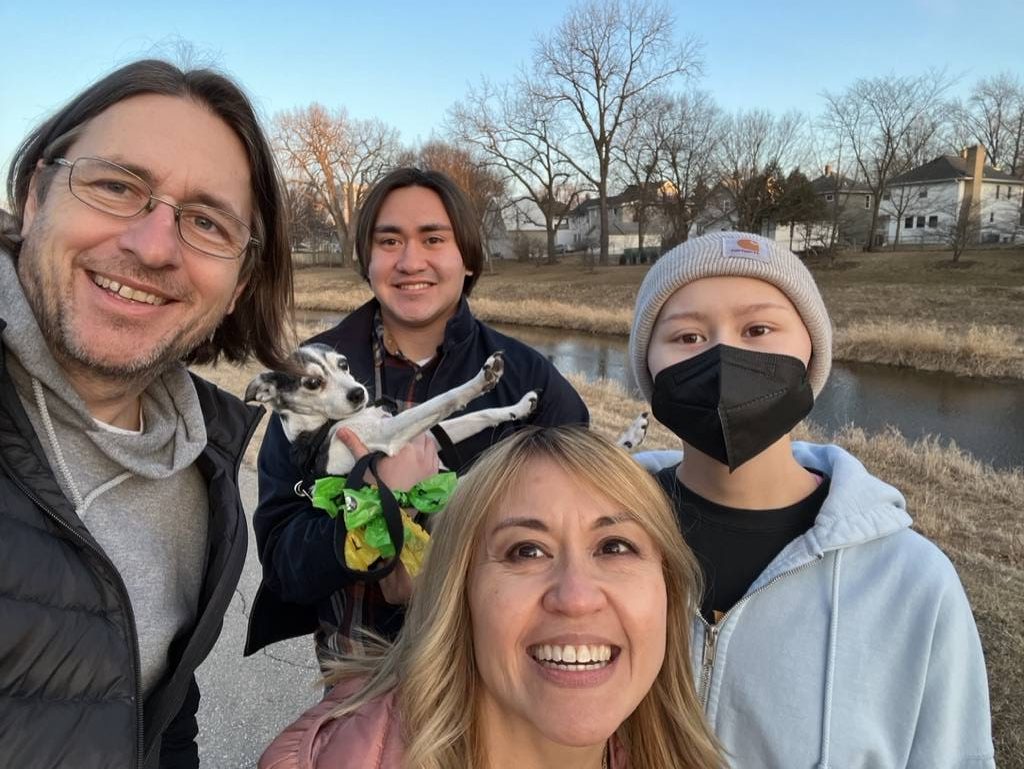
Sky's brother, Speed, agreed to be her donor.
"I will admit that I was nervous about the donation procedure, but the decision to be the donor was an easy one," says Speed. "It was simply what needed to be done to give my sister a chance."
The therapies Sky would receive could permanently affect reproductive function. Her care team worked closely with reproductive endocrinology colleagues so she could undergo egg retrieval before transplant.
"Our goal is never simply to cure leukemia — it's to help patients return to meaningful, fulfilling lives," says Dr. Hogan. "We needed to consider her long-term quality of life, including her fertility, education, career goals, emotional well-being and the many decades of life that hopefully lie ahead after treatment. Those conversations were just as important as the medical treatment itself."
On Feb. 25, 2022, Sky received the transplant and celebrated her "rebirthday." As the months progressed, Sky was recovering physically, but she began struggling mentally.
"Transplant recovery is not just a physical process. That's why psychological support is an essential part of transplant care, not an afterthought," says Dr. Hogan.
Honoring her past and embracing the future
"The nurses and physician assistants were amazing. They would give me pep talks," says Sky. "A nurse who also had leukemia when she was younger suggested the idea to hold a ceremony for my past self."
Sky, who had lost her hair, bought a wig, and the nurse made her a flower crown. With her care team and loved ones in attendance, people wrote and read eulogies, and then she did the same, saying goodbye to her past self.
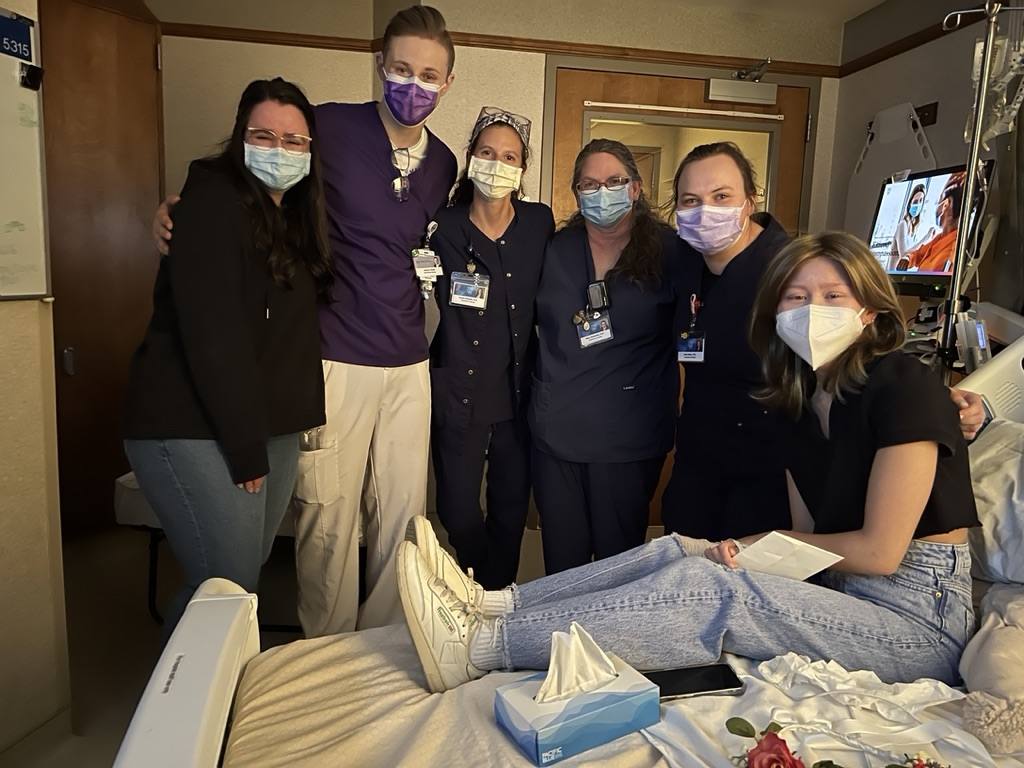
"It was so meaningful that my care team did that for me, and it really helped me get over my mental block," says Sky. "What I appreciated most about Mayo Clinic was its holistic approach. They cared for my mental health just as much as my physical health, which helped me have the best possible outcome. I felt seen by every staff member, many of whom became like family."
On her 100th day post-transplant, Sky rang a bell to celebrate her semipermanent remission. She's hoping to ring the bell again on her five-year transplant anniversary on Feb. 25, 2027, to signify permanent remission.
"Transplantation is never something a patient accomplishes alone. It requires extraordinary courage from the patient, incredible support from family and the coordinated efforts of a large multidisciplinary team," says Dr. Hogan.
Life beyond leukemia
Sky returned to school full time, served in an executive position in her sorority and was a leader in many other campus organizations. Since she continued her classes part time during treatment, she was able to graduate from college on time in May 2024.
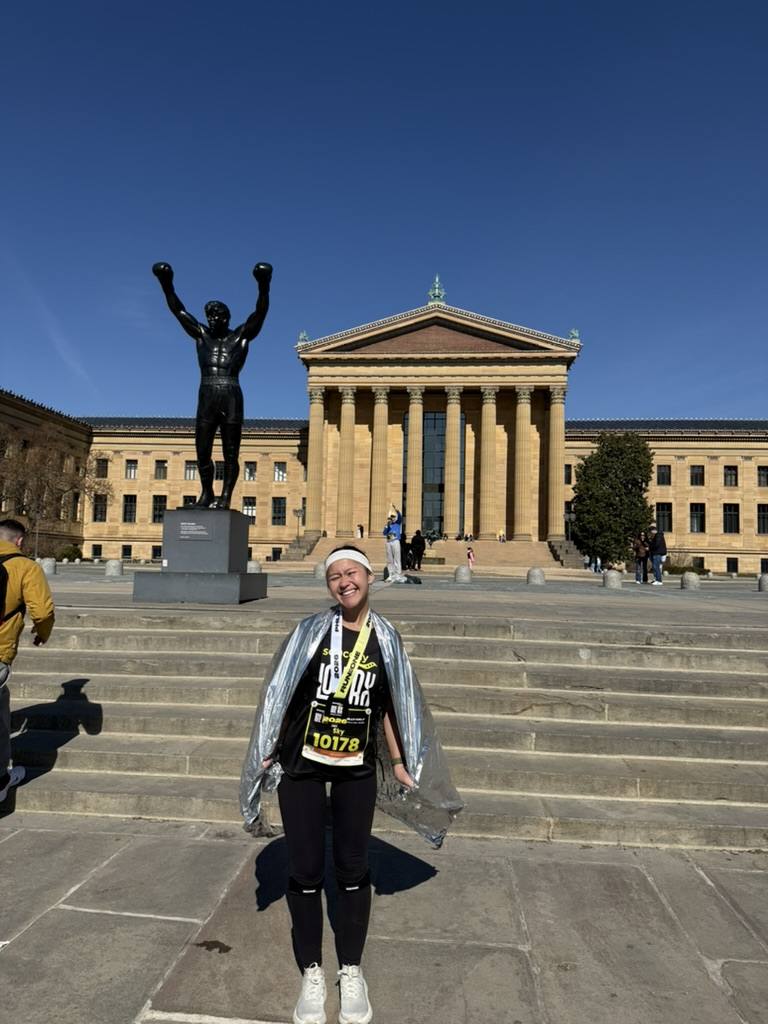
Now 24, Sky earned a master's degree, ran her first half-marathon in March and enjoys traveling around the country.
"Because of advances in molecular diagnostics, targeted therapies, donor selection, transplant techniques and supportive care, she has returned to an active, healthy life," says Dr. Hogan. "Seeing someone like Sky thriving years later is deeply rewarding for everyone involved and reminds us why these advances matter."