-
Cancer
Mayo Clinic Minute: What type of sunscreen should you use? (VIDEO)
Share this:





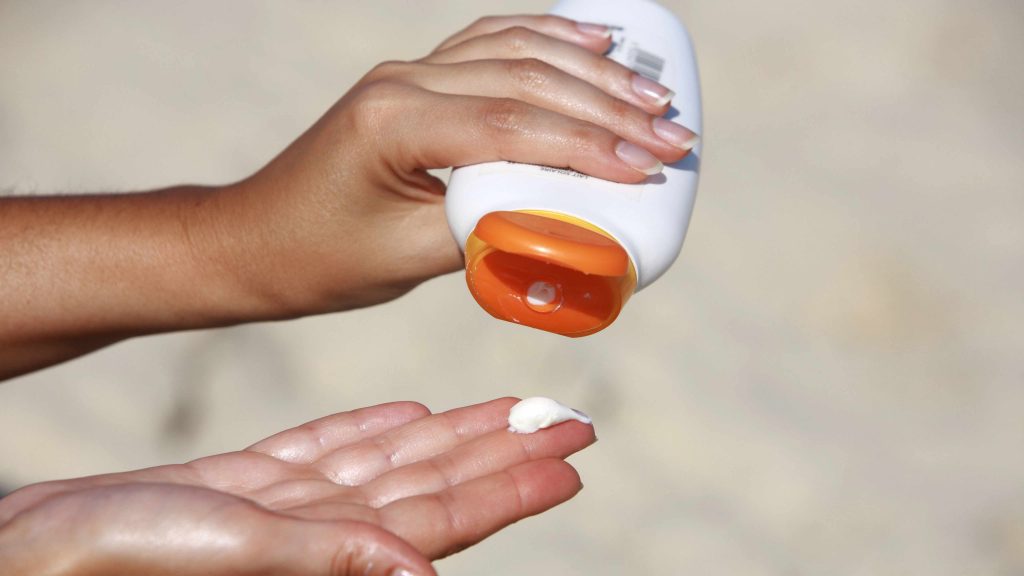
Finding the right sunscreen can feel overwhelming, but experts say the most important thing is choosing one that offers broad-spectrum protection.
"You should be looking for a sunscreen that's at least SPF 30 that's broad spectrum, which means it protects against both UVA and UVB rays," says Dr. Collin Costello, a Mayo Clinic dermatologist.
Journalists: Broadcast-quality video (1:00) is in the downloads at the end of this post. Please courtesy: "Mayo Clinic News Network." Read the script.
Ultraviolet (UV) radiation from the sun is the leading cause of skin cancer. Over time, UV exposure damages the DNA in skin cells, increasing the risk of abnormal cell growth and skin cancer. Both cumulative sun exposure and severe, blistering sunburns raise the risk of developing the three most common types of skin cancer.
"There's three common types of skin cancer: squamous cell carcinoma, basal cell carcinoma and melanoma. All three have been linked to too much UV exposure," says Dr. Costello.
In addition to helping prevent skin cancer, sunscreen also protects against premature skin aging caused by UV exposure, including wrinkles, brown spots and other signs of sun damage.
Using sunscreen is the single most effective way to protect your skin from UV radiation, which directly causes DNA damage, skin mutations and cellular breakdown. Regular daily use of sunscreen safeguards your long-term health and preserves your skin's structural integrity.
Dr. Costello says sunscreen should be just one part of your overall sun protection strategy.
"Sunscreen is always good to be using in conjunction with other sun-protective measures, like seeking shade; using sun-protective clothing, hats; and potentially avoiding the sun between 10 a.m. and 2 p.m., when the rays are the most intense," he says.
Learn more: Mayo Clinic Dermatology program