Share this:





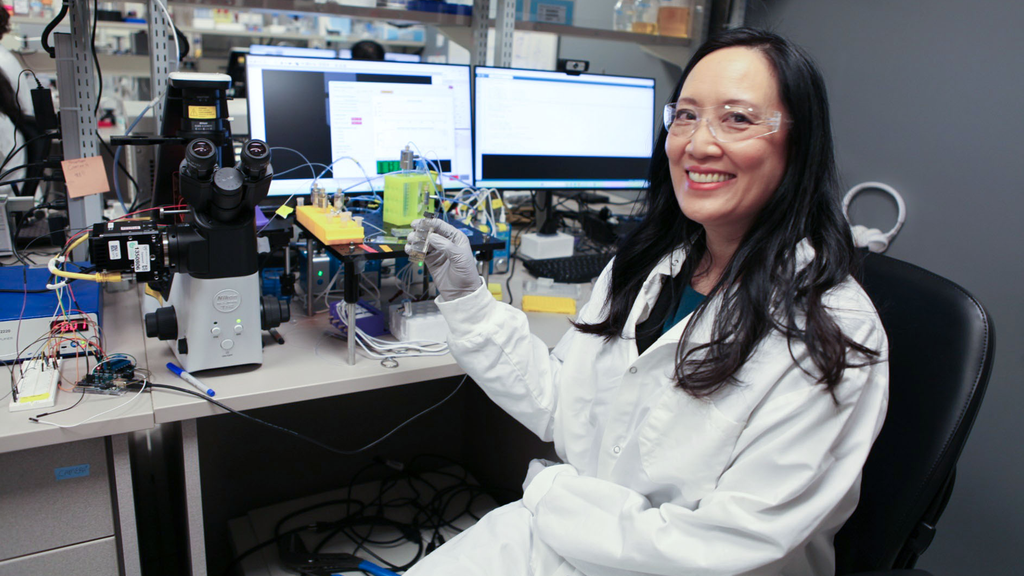
The experimental biosensor is designed to continuously monitor indoor air, detecting and measuring up to 100 biological targets in near real time — information that could help protect patients and others in shared spaces.
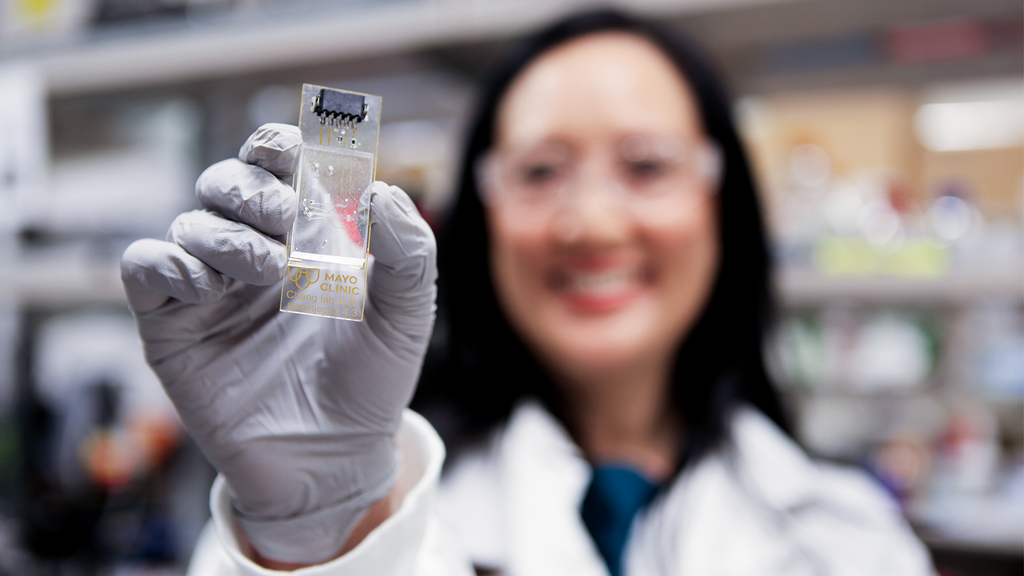
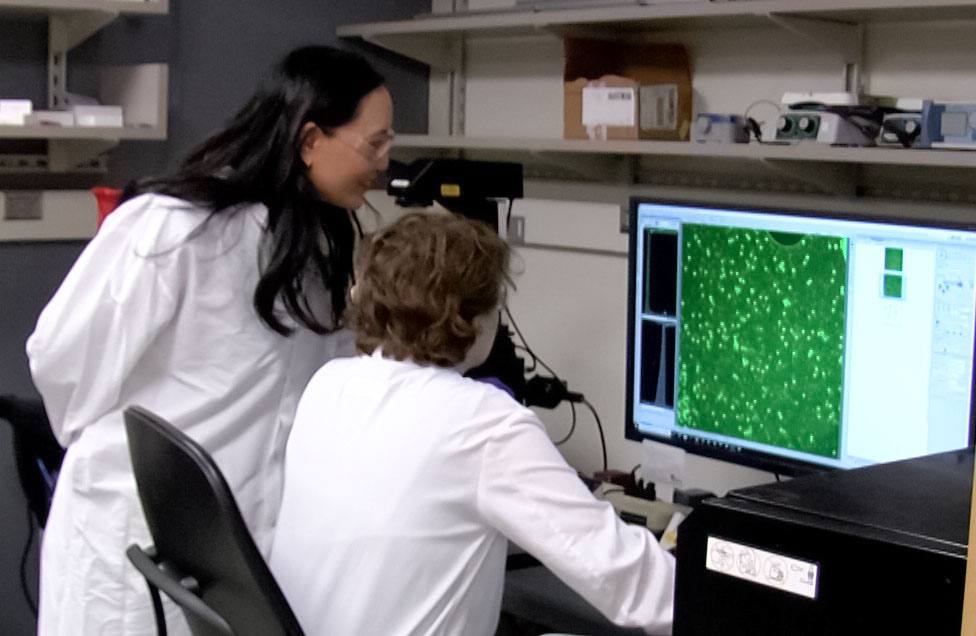
Connie Chang, Ph.D., holds up a small, clear chip, its microscopic channels barely visible beneath the lights of her Mayo Clinic engineering lab. Inside, those channels form a miniature plumbing system, directing a liquid sample containing biological particles captured from the air into a series of tiny chambers for analysis.
"Plumbing on a chip," she says with a smile. "That tiny scale gives us tremendous control."
Dr. Chang, a biomedical engineer, and her team are building the chip into a larger biosensor designed to continuously monitor indoor air.
"People spend about 90% of their time indoors, yet there is no widely available way to continuously identify the biological particles circulating around them," Dr. Chang says. "If we can actually collect them and detect what is in them, we can alert and protect people who might be in that space."
Watch: Dr. Connie Chang discusses the biosensor | Videography by Kevin Sullivan, Mayo Clinic
Journalists: Broadcast-quality video (2:33) is in the downloads at the end of this post. Please courtesy: "Mayo Clinic News Network." Read the script.
The power of a droplet
The system is designed to detect and measure up to 100 targets at once, from influenza and RSV to tuberculosis, mold and allergens. Inside the chip, the liquid sample breaks into thousands of microscopic droplets. Each becomes its own tiny test. A droplet carrying a target lights up. The others stay dark.
"If a new virus outbreak occurred, as long as we knew the gene sequence, we could very rapidly adapt our system to detect that virus," Dr. Chang says.
The work builds on years Dr. Chang has spent developing microfluidic tools to study viruses and bacteria at the level of individual particles and cells.
The race against exposure
But detecting what is in the air is only part of the challenge. The information also has to arrive quickly enough to matter.
Current methods typically require collecting an air sample and sending it to a laboratory, where results can take hours or even days. The team is aiming for a system that continuously samples the air and produces a new result about every 45 minutes.
That difference could be especially important in hospitals, where patients may be particularly vulnerable to infection. Faster results could give care teams more time to respond, adjust ventilation or take additional precautions for immunocompromised patients.
“Knowing results right then and there could reduce the number of people getting sick within these spaces."
Dr. Connie Chang
Researchers envision the technology in nurses' stations, patient rooms and emergency department waiting areas — places where people share air and vulnerable patients may be nearby. The same approach could eventually extend to schools, day cares and other shared indoor spaces.
Building it requires expertise well beyond Dr. Chang's lab, drawing on Mayo Clinic specialists in biomedical engineering, infectious diseases, emergency medicine and population science, along with university and industry collaborators.
A new era of air monitoring
The idea is a familiar one: Smoke detectors warn of smoke, carbon monoxide detectors alert people to dangerous gas and thermostats track temperature. What no device in the room can currently do is tell people what they are breathing.
The researchers are also exploring artificial intelligence to help them interpret biosensor readings alongside information about airflow and the number of people in a room. That information could be used to automatically adjust air filtration when potential risks are detected.
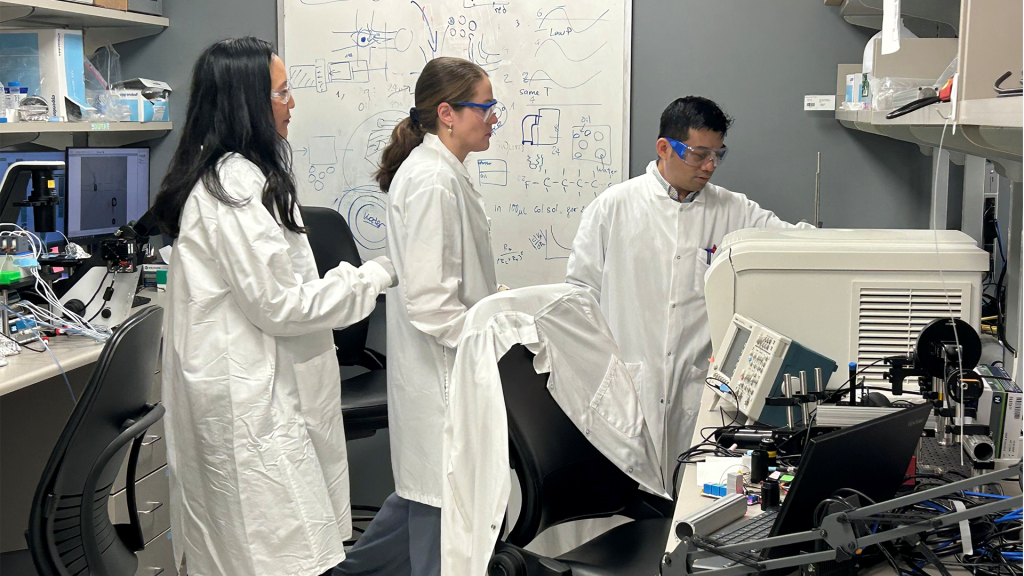
The concept echoes a broader shift in healthcare toward smarter hospital environments. As part of its Bold. Forward. initiative, Mayo Clinic is designing future care spaces with technologies that can monitor vital signs, support patient safety and adjust elements of the room environment.
In that vision, indoor air becomes another source of information, continuously monitored to help protect patients and caregivers alike.
The air people breathe has always held a hidden biological world. Dr. Chang and her team are working toward a new way for science to see it.
The Bigger Picture
The work aligns with Mayo Clinic's Precure Research, focused on identifying risk earlier and creating opportunities to intervene sooner.

The Beyond the Breakthrough special series goes inside Mayo Clinic research to meet the people advancing medicine and cures for patients.
For more stories like this, visit Beyond the Breakthrough.