-
Education
Mayo Clinic uses Biodesign to teach innovation as a clinical skill
Share this:





New educational programs are helping clinicians and trainees turn everyday healthcare challenges into solutions
Innovation is often viewed as the domain of entrepreneurs, engineers and technology companies. Mayo Clinic is challenging that notion by teaching innovation as a practical skill that healthcare professionals can learn, apply and use to improve patient care.
Through its growing Biodesign educational initiatives, Mayo Clinic College of Medicine and Science is training clinicians, trainees and students to identify unmet needs in healthcare and develop solutions using a structured, evidence-based methodology.
"When people hear the word innovation, it's kind of confusing. It's a fun word to use, but it's nebulous," says Aman Verma, D.O., a hospitalist and innovation educator at Mayo Clinic. "My passion is showing clinicians that innovation can be taught."
As an established framework, Biodesign follows three phases — identify, invent and implement — guiding participants from recognizing challenges in healthcare delivery to developing and implementing solutions.
"Biodesign is a framework. It's a validated, repeatable process. Biodesign is transforming innovation from an abstract concept into a teachable skill, one that Mayo clinicians, trainees and staff can learn and apply in their daily work," Dr. Verma says.
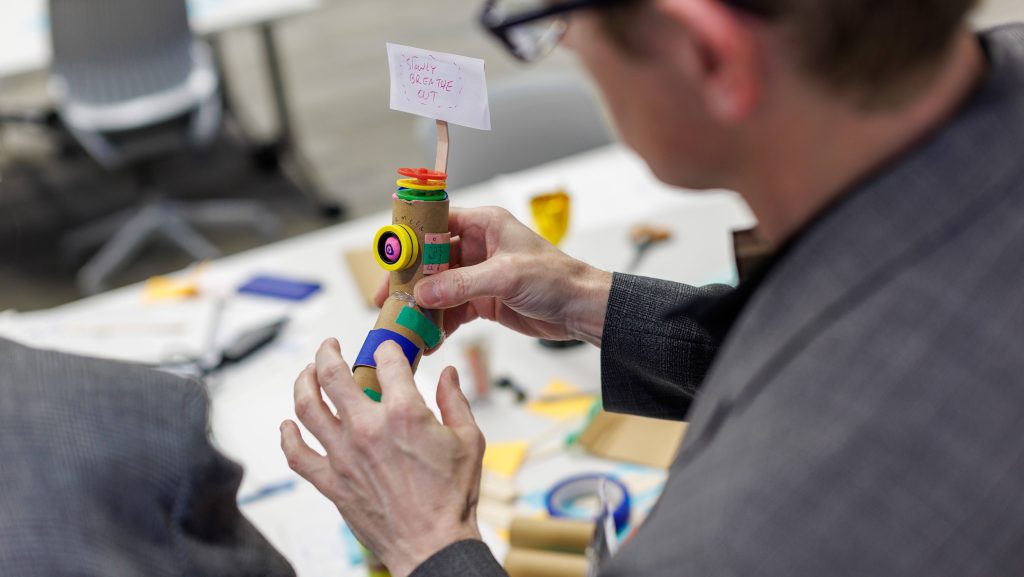
Mayo Clinic's approach focuses on embedding innovation training directly into healthcare education. Leaders believe clinicians are uniquely positioned to recognize opportunities for improvement because they experience healthcare challenges firsthand.
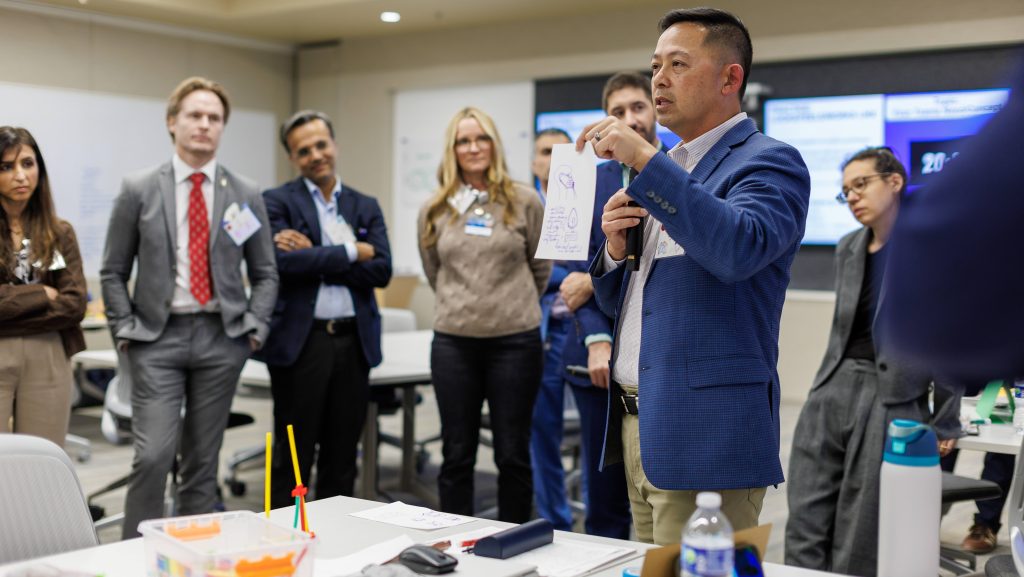
Recent educational offerings have included multidisciplinary workshops bringing together physicians, trainees, nurses and other health professionals to solve real-world healthcare problems.
Participants report that the training helps make innovation more accessible and actionable.
"Prior to the course, Biodesign innovation felt somewhat abstract and intimidating, but this workshop made it accessible and energizing," says Viet Do, D.O., a Mayo Clinic hospitalist and recent participant in Mayo's Biodesign workshop. “I now feel empowered to evaluate my clinical environment through a lens of innovation and improvement, and more confident in pursuing new ideas. It has also ignited my interest in innovation and entrepreneurship."
Dr. Do plans to incorporate innovation education as a core part of a proposed hospital medicine fellowship program.
Mayo Clinic is also expanding innovation education through graduate medical education programs, undergraduate medical education opportunities and a master's degree program developed in collaboration with Arizona State University focused on innovations in medical and patient care technologies, or IMPACT.
That program, with a foundation in biomedical engineering, combines academic training with extensive clinical immersion, allowing students to observe patient care environments, identify unmet needs and develop healthcare solutions.
"Clinicians aren't just the best people to drive innovation in medicine — they're the ones who see the problems every single day," says Pankaj Pasricha, M.B.B.S., M.D. Dr. Pasricha is a pioneer in Biodesign education, chair of the Department of Internal Medicine at Mayo Clinic in Arizona, and co-developer of the IMPACT program. "We don't have to imagine where healthcare falls short. We see it, we feel it, and now we can fix it."
By teaching innovation as a repeatable skill rather than an innate talent, Mayo Clinic aims to create a new generation of healthcare professionals equipped to improve patient care, advance medical practice and accelerate the development of healthcare solutions.
Another Biodesign workshop is scheduled for Mayo clinicians and learners in Phoenix on Nov. 5–6. While current efforts are centered in Arizona, Mayo Clinic leaders envision broader expansion of the Biodesign framework across the organization.
"Education powers the engine of innovation," says Devyani Lal, M.D., dean of Education at Mayo Clinic in Arizona. "With support from our executive leaders, we are building an ecosystem of programs and platforms that give clinicians, trainees, and teams the skills, structure, and support to transform unmet patient needs into meaningful solutions."