-
Transplant
How innovation is shaping the future of transplant care (VIDEO)
Share this:





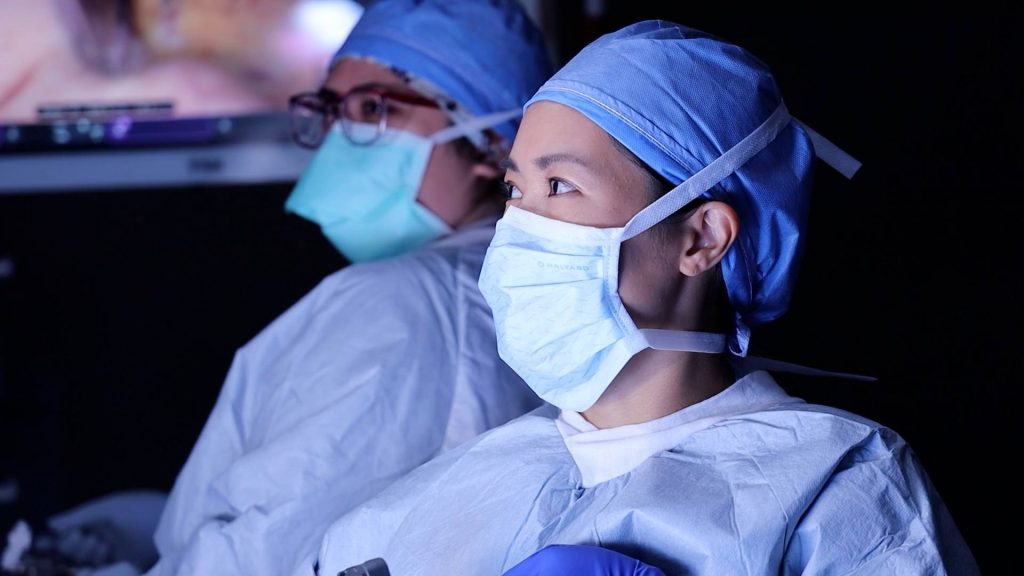
PHOENIX — This National Donate Life Month, Mayo Clinic is highlighting how innovation is shaping the future of transplant care.
"Over the last 50 years, transplant safety and outcomes have improved dramatically, making it a successful treatment for many patients. Since joining Mayo Clinic in 1976, I've seen how teamwork, research and high-volume expertise have driven advances," says Sylvester Sterioff, M.D., retired transplant surgeon.
Mayo Clinic performed its first transplant in 1963, marking the start of its pioneering work in transplantation. At that time, surgeons didn't typically specialize in transplants full time. The introduction of improved immunosuppression therapies in the 1980s greatly expanded capabilities, and surgical techniques have progressed from traditional open procedures to today's advanced methods.
"These innovations now allow us to accept a broader range of organs, and preservation techniques have improved considerably," says Dr. Sterioff. "Over the years, I've witnessed success rates in transplantation rise from 35% to over 90%. Mayo Clinic's foundation in collaborative, complex care makes these achievements possible."
Today, that progress is enabling less invasive options for some transplant patients.
Watch: Inside the Innovation — Robotic-assisted kidney transplant
Journalists: Broadcast-quality video (2:04) is in the downloads at the end of this post. Please courtesy: "Mayo Clinic News Network." Read the script.
Robotic-assisted transplantation expands possibilities
Now, that legacy continues with robotic-assisted kidney transplantation, a surgical approach available at only a limited number of advanced transplant centers nationwide.
"In robotic-assisted surgery, the surgeon controls every movement, the robot isn't operating on its own," explains Alex Cortez, M.D., a Mayo Clinic transplant surgeon. "It's a tool that gives us greater precision and a magnified view, so we can perform highly advanced minimally invasive surgery. With four robotic arms and a nearby console, the surgeon can make finer, steadier motions than the human hand alone. This can also make surgery possible for some patients with more complex cases. And because it's less invasive, patients often have smaller incisions, less pain and a faster recovery."
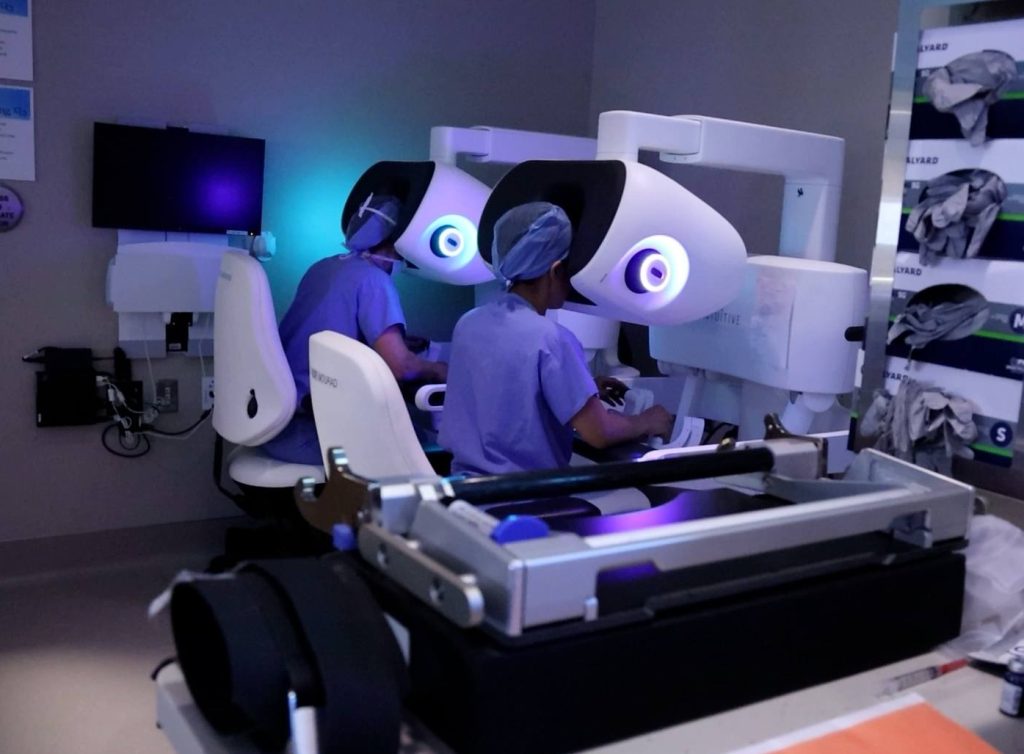
Robotic systems have come a long way since the first robotic kidney transplant in 2001. Much like smartphones, the optics, technology and access have improved. This efficiency enables surgeons to perform additional procedures, allowing them to assist a greater number of patients. Robotic-assisted surgery still requires extensive training and uses the same core surgical principles. Advanced haptics let surgeons feel tissue resistance and suture tension, improving precision and safety. This reduces tissue harm and complications over visual cues alone, and technology will continue to evolve.
The future of transplant innovation
Looking ahead, advances in robotics could help make complex transplants and multi-organ transplants less invasive and shape what the next era of transplant medicine looks like.
"I think this is just the beginning. We're able to merge innovation with patient-centered care to provide not only successful transplants, but also allow patients to recover faster and lead to a better quality of life," says Michelle Nguyen, M.D., a Mayo Clinic transplant surgeon. "For the first time at Mayo Clinic, we have been able to perform a simultaneous kidney and pancreas transplant using robotic surgery."
"Looking to the future, there's a lot of innovation occurring," she adds. "With the introduction of telepresence, the robot’s video camera and microphone allow users to see, hear and interact in a remote environment.” Surgeons from all over the country will be able to watch and learn from Mayo Clinic. There are also opportunities for leveraging the data to then potentially train the robot and other machine learning models to help us make the operation much smoother. "We hope this approach will expand access to care for more patients in the future."
Mayo Clinic is not only advancing today's transplant care, but helping define what comes next. Transplant teams at Mayo Clinic in Rochester, Minnesota, and Mayo Clinic in Arizona are continuing their work to expand robotic-assisted transplants to other organ groups and the Jacksonville campus at Mayo Clinic in Florida will be including robotics as part of their transplant practice in the near future. These advances would not be possible without the generosity of organ donors, who make lifesaving innovation possible.
Expert sources:
- Alex Cortez, M.D., transplant surgeon, Mayo Clinic in Minnesota
- Michelle Nguyen, M.D., transplant surgeon, Mayo Clinic in Arizona
###
About Mayo Clinic
Mayo Clinic is a nonprofit organization committed to innovation in clinical practice, education and research, and providing compassion, expertise and answers to everyone who needs healing. Visit the Mayo Clinic News Network for additional Mayo Clinic news.
About Mayo Clinic Transplant Center
Mayo Clinic Transplant Center is one of the largest and most comprehensive transplant programs in the world. With programs in Arizona, Florida and Minnesota, Mayo Clinic provides seamless, coordinated care across adult heart, lung, liver, kidney and pancreas transplantation. Guided by a commitment to innovation, research and education, Mayo Clinic Transplant Center delivers world-leading outcomes, compassionate patient care and advances that shape the future of transplantation worldwide.
Media contact:
- Carey Stanton, Mayo Clinic Communications, newsbureau@mayo.edu
Related Articles