Share this:





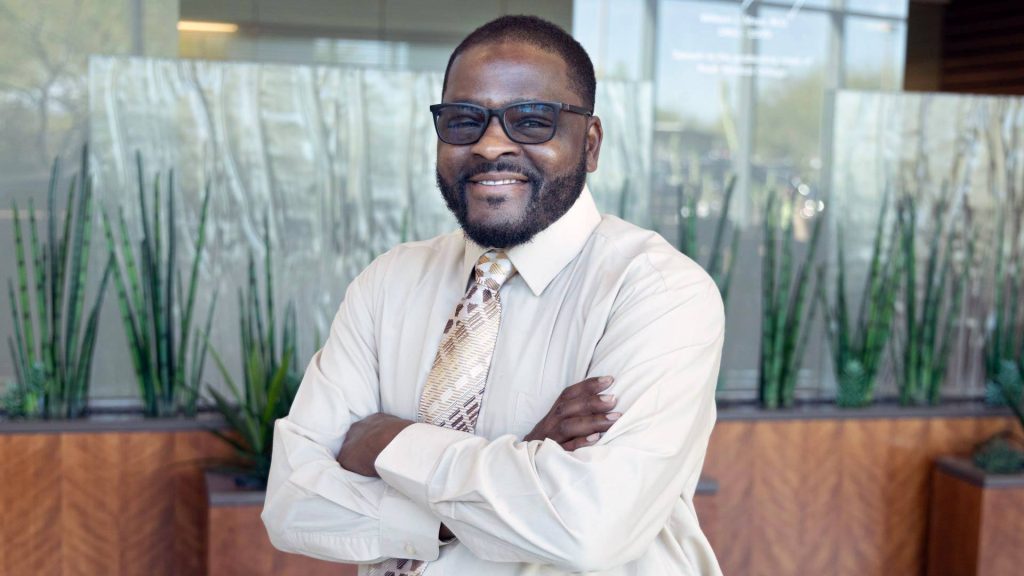
For patients with type 1 diabetes and end-stage kidney disease, a simultaneous kidney-pancreas transplant eliminates the need for dialysis and insulin injections by restoring insulin production and curing diabetes. Some people with type 2 diabetes may also be eligible.
For nearly four decades, 49-year-old Nakia Odom of Phoenix lived with type 1 diabetes, a disease that slowly took more than his health. It took his independence, his mobility and the tap dancing that once defined him.
Nakia was taught tap dancing by his grandmother, and it became an early passion. He even got to dance with tap legend Savion Glover at the Apollo Theater in New York. But a diabetes diagnosis at age 13 forced him to shift his focus from the stage to his health.

"Diabetes was livable at first," Nakia says. "But as I got older, it took more and more." As he approached his mid-20s, his health began to deteriorate. He had to give up tap dancing and eventually, playing football and basketball.
Diabetes to kidney failure
By his mid‑40s, diabetes-related complications had led to kidney failure. Nakia began dialysis at age 46, endured multiple surgeries, lost a toe to infection and developed sepsis, leaving him unable to walk or bear weight on his feet for months.
Nakia leaned into his faith. He also began to explore kidney-pancreas transplantation — but his case was too complex for most transplant centers.
That changed when he was referred to Mayo Clinic in Arizona, where transplant teams specialize in caring for patients others may turn away. Mayo Clinic is a leader in kidney–pancreas transplantation, with outcomes that meet and often exceed national averages. The team is also advancing the field through innovations such as robotic-assisted transplants, using minimally invasive techniques to support complex procedures.
Watch: Kidney-Pancreas transplant restores life without diabetes, the Nakia Odom story
Journalists: Broadcast-quality video (2:21) is in the downloads at the end of this post. Please courtesy: "Mayo Clinic News Network." Read the script.
Last spring, Nakia received a simultaneous kidney–pancreas transplant. "The first thing I noticed when I woke up was that the brain fog was gone," he says. "I wasn't in pain. And every day since, it's gotten better."
Now, one year post‑transplant, Nakia no longer needs insulin or dialysis. He's active again and has returned to tap dancing for the first time since 2001.
"My goal was always to dance again," Nakia says. "Dancing is how I connect with God."
Organ donors
His story reflects both the promise and the urgency of organ donation. More than 90,000 people in the U.S. are waiting for a kidney transplant, and around 2,500 are on the list for kidney–pancreas transplants. For many, the wait can stretch three to five years or longer.
Nakia is deeply aware of the gift he received. "I pray for the donor's family every day," he says. "Their loss gave me my life back. Without their sacrifice, I might not be here today."
Now, the sound of Nakia's second chance is the rhythm of his tap shoes touching the floor once again — showing how his transplant didn't just restore his health; it gave him back something he deeply loved.
"This is the best thing that's ever happened in my life," he says.
Related posts:
- Mayo Clinic Transplant performs record 2,065 organ transplants in 2025
- Robotic kidney transplant, when innovation meets family (VIDEO)
- How innovation is shaping the future of transplant care (VIDEO)
- Mayo Clinic Minute: What to expect as a living kidney donor