-
Cancer
Mayo Clinic in Florida advances lung cancer care with single-port robotic surgery
Share this:





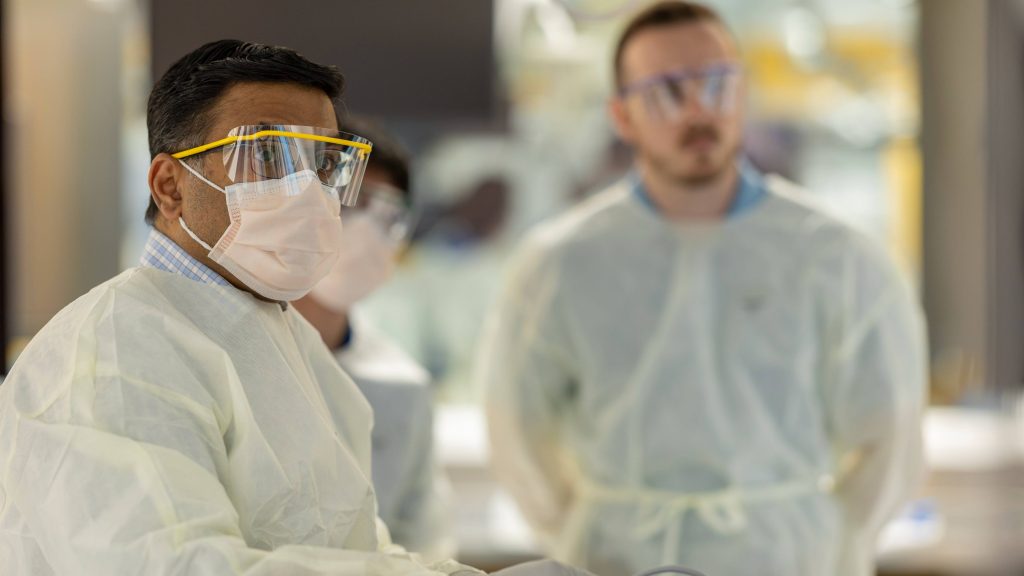
Lung surgeries, when performed by opening the chest to spread the ribs or divide the sternum, can be effective but highly invasive procedures that lead to weeks of significant pain and recovery.
Guided by the principle that "the needs of the patient come first," Mayo Clinic thoracic surgeons have begun using a single-port robotic system for surgeries that was recently cleared by the Food and Drug Administration (FDA). This minimally invasive approach enables surgeons to operate with enhanced precision and builds upon Mayo Clinic's leadership in advancing lung cancer care.
"What we have noticed is that Mayo Clinic is one of the few institutions that is starting to roll this out," says Mathew Thomas, M.B.B.S., M.D., a thoracic surgeon at Mayo Clinic in Florida who performed Mayo Clinic's first single-port robotic lung resection.
The evolution of thoracic surgery
As medical technology evolves, minimally invasive methods have emerged as alternatives to traditional lung surgery, including the multiport robotic system.
Multiport robotic systems require surgeons to make several small incisions between the ribs to place a camera and instruments, allowing them to operate with greater visualization and precision.
However, operating between the ribs can still present challenges for both patients and surgeons, like considerable postoperative pain and anatomical variance. Factors such as tight rib spaces or reduced rib density can lead to intraoperative complications, including rib fractures.
The single-port approach allows surgeons to operate through a single incision using similar robotic technology. In many cases, the procedure can be performed from beneath the rib cage, avoiding the need to work between the ribs.
Single-port robotic surgery has been used in other specialties for several years, such as for lymphedema and prostate cancer care. The FDA cleared its use for thoracic surgery in 2025.
At Mayo Clinic in Florida, where more than 90% of thoracic surgeries are performed using minimally invasive techniques, early experience with single-port lung resection has been positive.
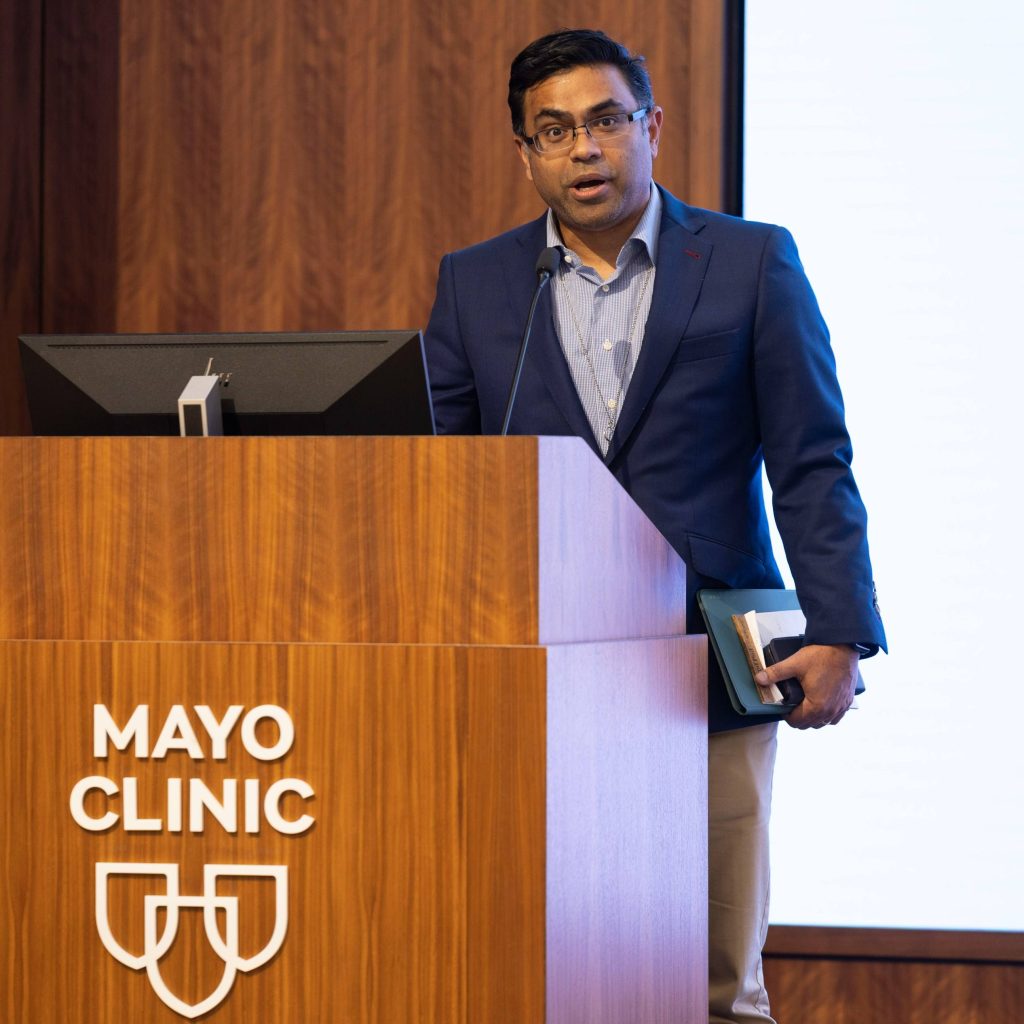
"Many patients are able to go home the next day or a day or two later," says Dr. Thomas. Recovery times are shorter, with patients often returning to baseline in about seven to 10 days, compared with several weeks for other approaches.
Bringing single-port robotics into practice
Introducing new surgical techniques supported by advanced tools — such as 3D imaging, virtual reality and navigation systems — demands careful preparation and coordination across the care team.
"We're so used to multiport and open surgery approaches, but single-port robotic surgery is a completely different way of operating," says Dr. Thomas. "The way we visualize the operation changes, and the instruments are also quite different from a multiport setup."
Dr. Thomas and his team met weekly for a month to complete simulation-based training, practicing with the single-port robotic system in a controlled environment before starting to perform these procedures on patients.
Their training also included hands-on experience in cadaver and animal labs, observing experienced surgeons and working with a proctor during initial cases to support safety. Dedicated operating room staff trained together throughout the process, building the coordination needed to perform the procedure effectively.
Next-generation thoracic care
For Dr. Thomas, single-port robotic surgery reflects a broader shift toward less invasive, precision-based care, offering faster recoveries and fewer intraoperative complications for patients with lung cancer.
The approach is also part of a larger effort across Mayo Clinic to integrate advanced technologies into thoracic surgery.
As experience with single-port surgery grows, the team continues to expand its use and refine the technique.
"It's exciting to be at the forefront of innovation with my colleagues and to know Mayo Clinic supports its growth," shares Dr. Thomas. "We're rapidly expanding the number of patients who can benefit from this approach. I take great pride in what we've accomplished."