Share this:






Minnesota's first formal surgical first assistant training program has graduated 170 professionals, helping address workforce needs while supporting surgical teams and patient care.
When Mayo Clinic leaders identified a growing need for certified surgical assistants more than a decade ago, they faced a challenge: Minnesota had no formal training pathway for the profession. In response, Mayo Clinic developed the state's first Surgical First Assistant Program through Mayo Clinic School of Health Sciences, creating a new route into the surgical workforce for both Mayo Clinic employees and external learners.
Since launching its first cohort in 2012, the program has graduated 170 surgical first assistants. The program reports a 93% completion rate, with 85% of graduates accepting positions at Mayo Clinic. Graduates have also achieved strong outcomes on certification examinations, including a 100% pass rate on the Certified Surgical Assistant exam.
The program reflects a broader effort by Mayo Clinic College of Medicine and Science to work with clinical and operational leaders to address workforce needs and develop healthcare career pathways that support patient care.
Supporting surgical teams and patient care

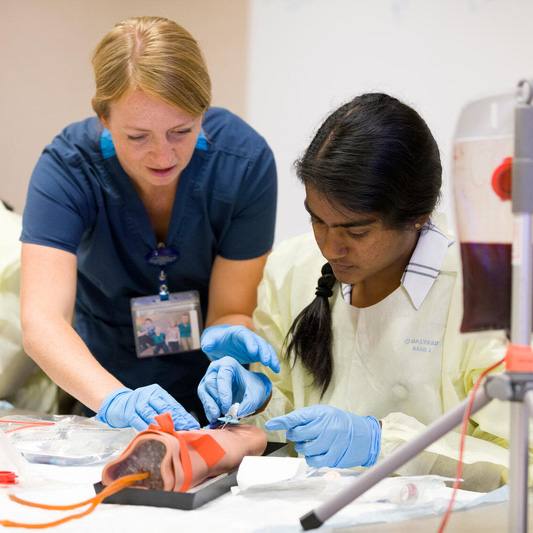
Surgical first assistants play a key role in the operating room, working alongside surgeons before, during and after procedures. They help prepare patients, assist during surgery and support the coordination required for efficient, team-based care.
"Certified surgical assistants fulfill a critical need, providing expert help and assistance to surgeons," says Mark Sawyer, M.D., medical director of the Surgical First Assistant Program. "They're a key component of what we do here."
For Allison Henning, the program provided a pathway into a career that combined technical skills, teamwork and direct involvement in patient care. Today, she works in the operating room as a certified surgical assistant, supporting surgical teams across a variety of procedures.
"What I first thought was a steppingstone led me into a career that I really enjoy," Henning says. "Being a surgical first assistant is fast-paced and exciting. I get to participate hands-on in the operating room while still maintaining a work-life balance."
Kenzie Fiedler followed a similar path. Before enrolling, she worked in Emergency Services at Mayo Clinic and was looking for an opportunity to expand her skills and become more directly involved in patient care. Through the program, she gained the surgical training and clinical experience needed to transition into the role.
Creating opportunities for growth while helping meet workforce needs
Many participants enter the program as Mayo Clinic employees, creating opportunities for career growth while helping meet workforce needs within the organization.

"When you're hired at Mayo and you've already proven yourself, that is a huge thing," Dr. Sawyer says. "We know these individuals. We know how they've performed. We know they understand the Mayo culture and our expectations. It gives people a path to do something more with their career."
More than a decade after its launch, the program continues to prepare surgical first assistants who support operating room teams across Mayo Clinic. By helping develop trained professionals for a specialized role, the program contributes to the workforce needed to deliver surgical care to patients now and into the future.