Share this:





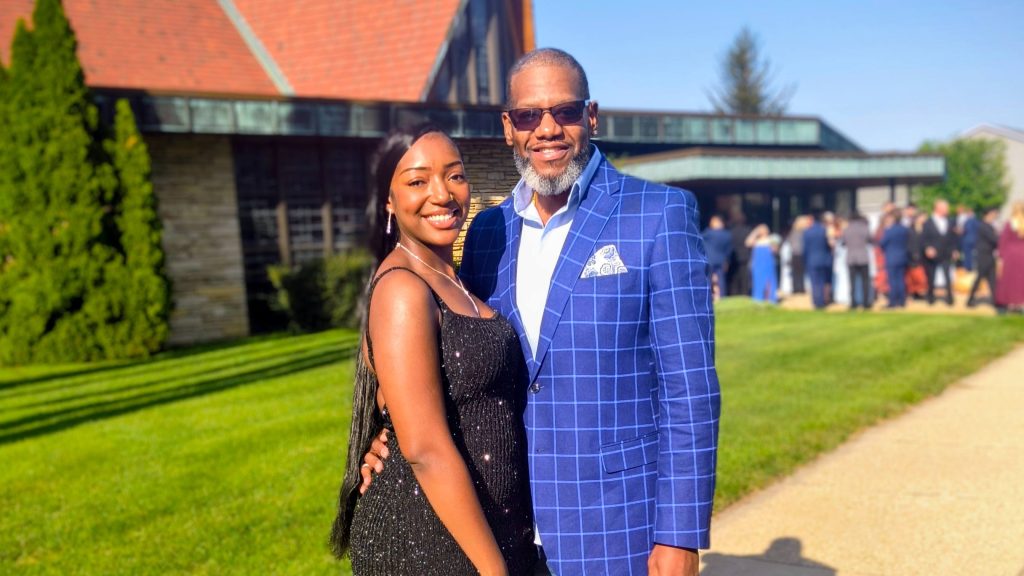
With a failing heart and little hope of healing, Alan Lewis sunk into depression, gaining 330 pounds. After he came to Mayo, bariatric surgery enabled the transplant he'd sought for so many years.
Alan Lewis was lying on the floor — the only position that eased his discomfort — watching a football game. When a Mayo Clinic commercial came on, the tagline seemed to leap off the screen.
"You know where to go."
With heart failure sapping his strength, Alan had begun to doubt there was an "other side" to his condition. At age 41, he'd already lived a decade with a poorly pumping heart, diagnosed during a hospital visit for a broken ankle.
For years, Alan had relied on a left ventricular assist device, or LVAD, to help his heart circulate blood through his body. After the first one malfunctioned, he received a second device in 2018.
What Alan really needed was a new heart.
Even after bariatric surgery helped him lose weight, he still wasn't added to the transplant list. "When we'd ask about transplant, our care team would just say, 'Oh, he's doing fine. Just keep doing what you're doing,'" says his wife, Vida.
As months became years, Alan's hope of healing waned. His mental health spiraled.
"I was a nervous wreck," he recalls. "What if the LVAD malfunctioned? What if there was a power failure? I was scared to go places, worried about backup batteries. I was in my head 24/7. It was torture."
Deeply depressed, Alan gained 330 pounds during the pandemic, reversing his previous weight loss. Without a clear path forward, he resigned himself to dying.
Then, in 2022, Alan saw the Mayo commercial — and Vida saw an opportunity. She made the decision for them. They were going to Rochester.
A journey toward hope
After driving from Chicago, weak and rapidly declining, Alan sought help from Mayo Clinic.
There, Vida's long-simmering concern was confirmed —a tough-to-kill bacteria had infected the wiring that linked his LVAD to its external battery. The battery for his defibrillator was also dead, leaving him vulnerable to potentially deadly arrhythmias.
Right away, Alan received IV antibiotics, a new defibrillator and an introduction to the transplant team. "Day one, they spoke of transplant," says Vida. "I was shocked."
At his first follow-up visit, Sarah Schettle, a physician assistant on the LVAD team, could see the emotional strain of all that Alan and Vida had been through. "There was a lot of hesitancy — 'Will Mayo accept us?'" she recalls. "I also remember the hopefulness, the desire to know what was possible here."
Recognizing that Alan needed complex, multidisciplinary care, the team began formulating a plan.
Within two weeks, the couple relocated to Rochester — and just one year into marriage, Vida unflinchingly pivoted to her new role as caregiver.
"It was embedded in me to love as hard and as much as you can," she says.
Vida vowed to do that for Alan.

Preparing for tomorrow
The team said Alan needed to adopt a healthier lifestyle before a second bariatric surgery — a necessary step toward transplant. So Vida signed them up for a gym. She walked next to him on a treadmill, urging him on. She made healthy meals. She pored over the lengthy care plan, still shocked that they had one.
"Back home, no one gave us clear answers. How long would he have the LVAD? Could he ever get a transplant?" she says. "At Mayo, we never experienced that. The focus was always on getting him well enough for a transplant, like he deserved to be transplanted."
Still, there was fear that the new heart wouldn’t happen. Sensing Alan's struggle, Adrian da Silva de Abreu, M.D., Ph.D., one of his cardiologists, spent an hour at his bedside, mostly listening.
"I'd never seen a doctor take that time," says Alan. "I put it all out there, and I could tell he was hearing me."
Peace replaced his once-crippling anxiety. At last, he knew his team wanted what was best for him. As Vida says, "They had a vision. They had a plan. It was healthcare like I've never seen before."
A risk with great reward
Alan's first bariatric surgery shrunk his stomach to the size of a banana.
To help him lose the weight he'd regained, Omar Ghanem, M.D., a bariatric surgeon, planned to reroute part of Alan's small intestine so food would bypass a long segment of his bowel. Known as a modified duodenal switch, this would reduce how many calories and nutrients he absorbed and alter the secretion of hunger-related hormones.
Dr. Ghanem knew the already complex surgery would be even more challenging in Alan's case.
With his heart essentially outside his body, monitoring — and maintaining — his vitals would be difficult. Blood thinners to prevent clots in his LVAD would also elevate his risk of bleeding. Then there was the looming infection, suppressed but still active, only curable if the LVAD was removed.
Seven Mayo Clinic teams — from Infectious Diseases to Anesthesiology — worked together to help Alan beat the odds.
"Where else do you have all this expertise in one place? I don't think anything like this can be done outside of a place like Mayo," says Dr. Ghanem. "Here we're able to safely push the limits."
Knowing this path was his best chance at healing, Alan and Vida agreed to go forward.
Despite its complexity, the revision was a success, and so was the recovery. Within months, Alan lost enough weight to qualify for a heart. He was finally on the transplant list.

Moving forward at last
Six weeks later, a middle-of-the-night call brought Alan back to Mayo Clinic.
After years of heart failure, two LVADs, two bariatric surgeries, dozens of pounds lost and hundreds of tears shed, Alan was receiving another chance at life. He was receiving a new heart.
Less than five hours after opening his chest, Philip Spencer, M.D., a cardiovascular and transplant surgeon, brought Alan to the "other side" of heart failure — that place he'd once thought didn't exist.
"We had an infection to deal with. And there was scarring within his chest," says Dr. Spencer. "But, once the LVAD was out, it went very well."
IV steroids enabled his body to accept the organ, and with the LVAD out, his infection could finally clear. Even from his hospital bed, Alan felt his confidence returning.
"I'd had this yoke on me. I couldn't move without the LVAD. I couldn't bathe without it. I couldn't eat without it. It was always present," he says. "Mentally, I'd been down so long. Now I had freedom."
For the first time in years, there were no wires to wrestle with. There was no battery to worry about.
Alan could be himself again.
A new life for Alan
With Alan's heart fully functioning, the couple is now back in Chicago, enjoying a renewed zeal for life.
For Alan, that means showing his gratitude for everyone who supported him — his family, his close friends and, of course, Vida. Every day, he focuses on caring for her in every way possible.
"When I wake up, I start catering to her," he says. "She had to cook and clean. She helped bathe me and put on my shoes and socks. It's a joy for me to be able to do things for her now."
During the night, Alan sometimes reaches across the mattress, making sure Vida is still there, even though he knows she always will be. She is his safe person, and Mayo Clinic is the safe place that showed him what healthcare should be.
Both their hearts remain in Minnesota, where hope first began to beat, strong and steady, in Alan's chest. The tagline from a football game ad — "You know where to go" — still feels like a summons.
"To have so many people involved in your care, and each one be a beautiful experience, is so rare," says Vida. "God has blessed him, and Mayo has been there for him. We want to move back because Rochester feels like home, you know?"
Related story:
- New year, new focus on health: Mayo Clinic expert highlights effective treatment options for obesity
Related Articles